The Viking Age · 793–1066
Ships and woodcarving
Most Viking art was carved in wood, and nearly all of it has rotted away. What we have survived because it was sealed in clay under a burial mound or built into a church. Here are 18 ships, pieces of furniture, carvings and gilded weather vanes from museums in Norway, Sweden and Denmark.
The Oseberg find
No Viking Age grave is richer than the Oseberg mound near Tønsberg. It was opened in 1904, and under the turf lay a whole ship with a burial chamber behind the mast. The ship stood in blue clay and was packed in stone and turf, which is why wood and textiles are unusually well preserved.
Two women lay in the chamber. One of them was long taken to be Queen Åsa from the sagas, but few researchers think so today, and we do not know who they were. Elsewhere in the ship lay beds, chests, kitchen equipment, a wagon, four sledges and five animal-head posts, and much of the woodwork is covered in carving. The grave was robbed not long after the year 953.
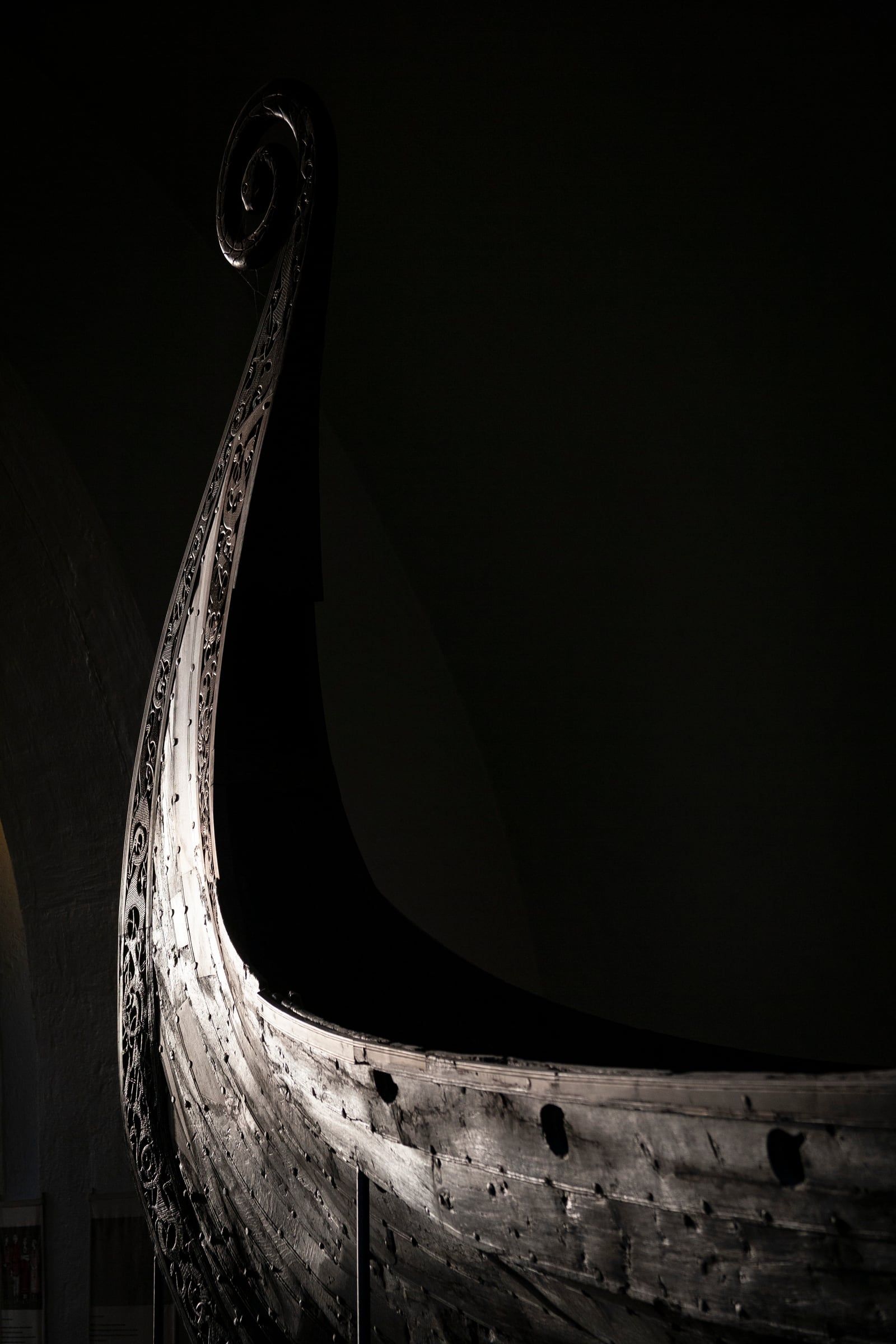
Built c. 820, buried 834 · Oseberg, Tønsberg, Vestfold, Norway
The Oseberg ship
The ship is built of oak, about 22 metres long and just over five metres wide, and could be both rowed and sailed. The tree rings in its timber show that it was built around 820, probably in western Norway. The burial chamber was built in 834, so the ship was about 14 years old when it was buried.
Both stems are covered in carved animals woven through one another, and they end in a tall spiral.
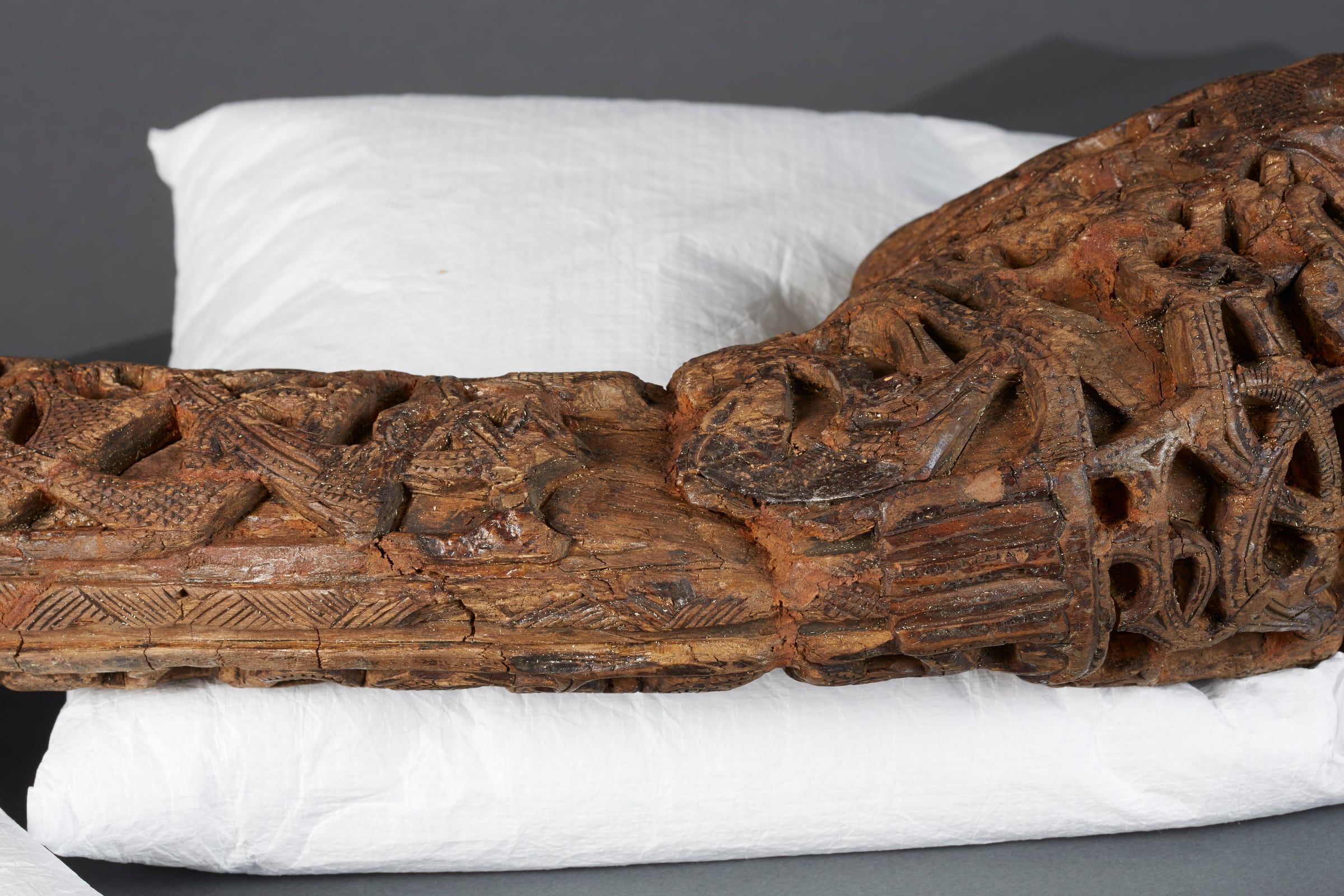
834 · Oseberg, Tønsberg, Vestfold, Norway
The animal-head post with the “lion head”
The post is carved in maple and is about half a metre long. The head leans sharply forward, the face is covered in geometric patterns and the neck in intertwined animals. It has been nicknamed the “lion with a cold”.
At the bottom is a square hole where the post sat on a shaft. We do not know what the five animal-head posts from Oseberg were used for.
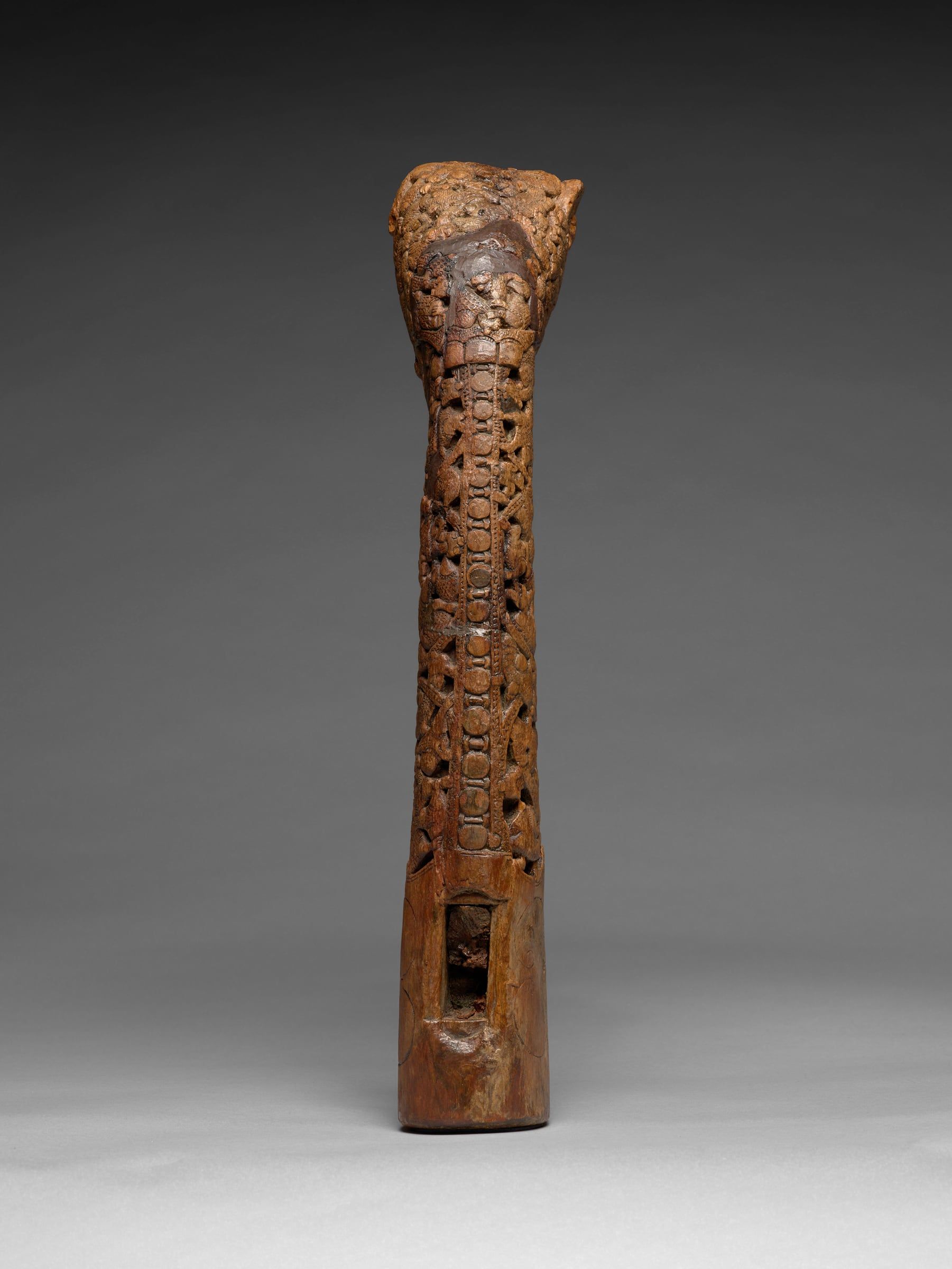
834 · Oseberg, Tønsberg, Vestfold, Norway
The Carolingian animal-head post
This animal has a long snout, large round eyes and an almost closed mouth full of teeth. The neck is covered in animals in relief, set in round medallions.
A hole has been cut between the jaws, and a rope once ran through it. At the bottom is a smooth panel with a hole for the shaft, decorated with simple incised lines.
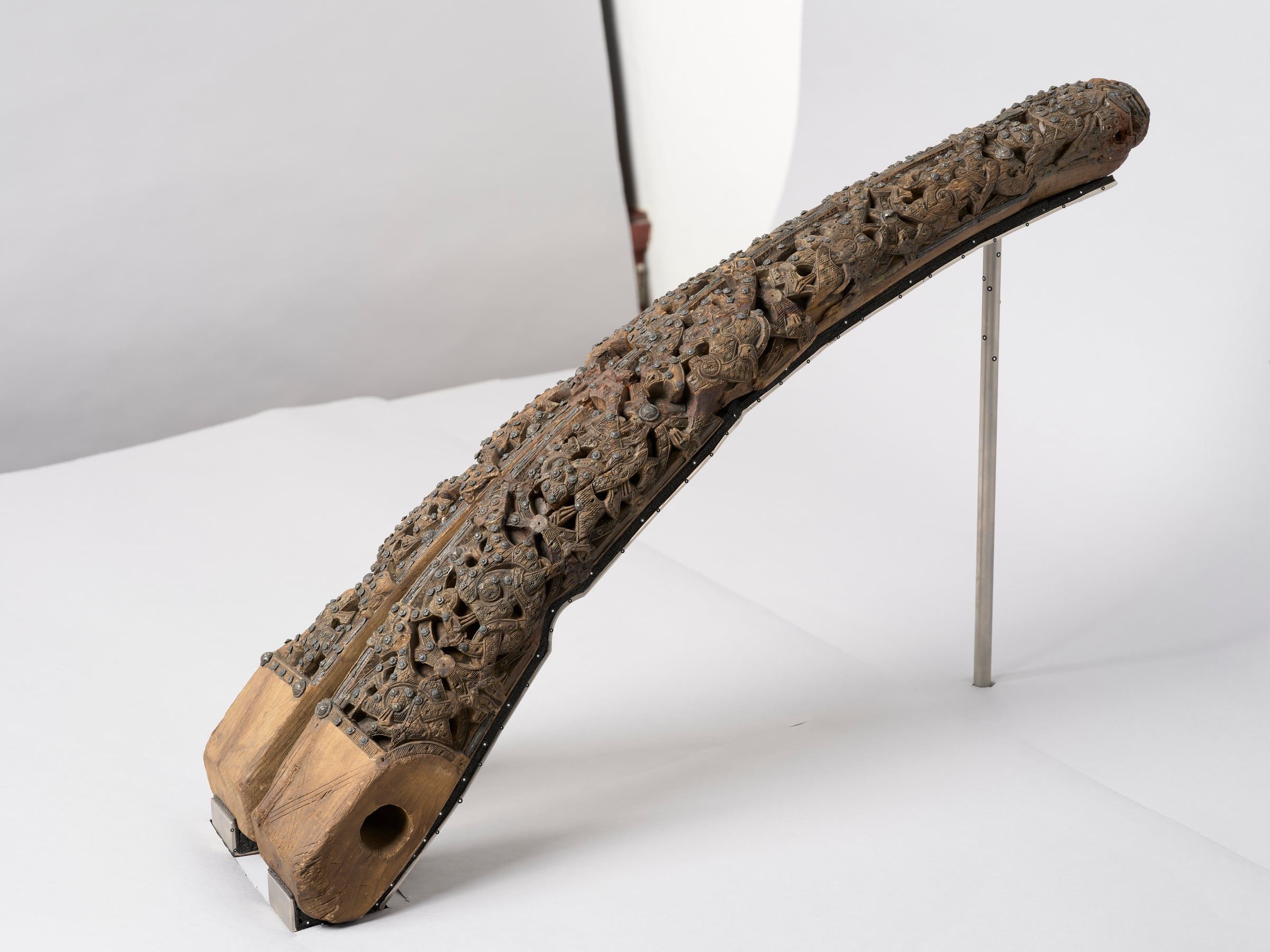
834 · Oseberg, Tønsberg, Vestfold, Norway
The finest sledge shaft
The shaft is carved from a single piece of maple and is more than a metre long. At the bottom it splits into two arms with holes for a crossbar that fixed it to the sledge. The upper side is covered in animals in relief, framed by striped silver bands and set thickly with small and large silver studs.
It was found in two pieces. The front part was broken off and taken out in 1903, before the real excavation began. The rest was still in the burial chamber and came to light the following summer.
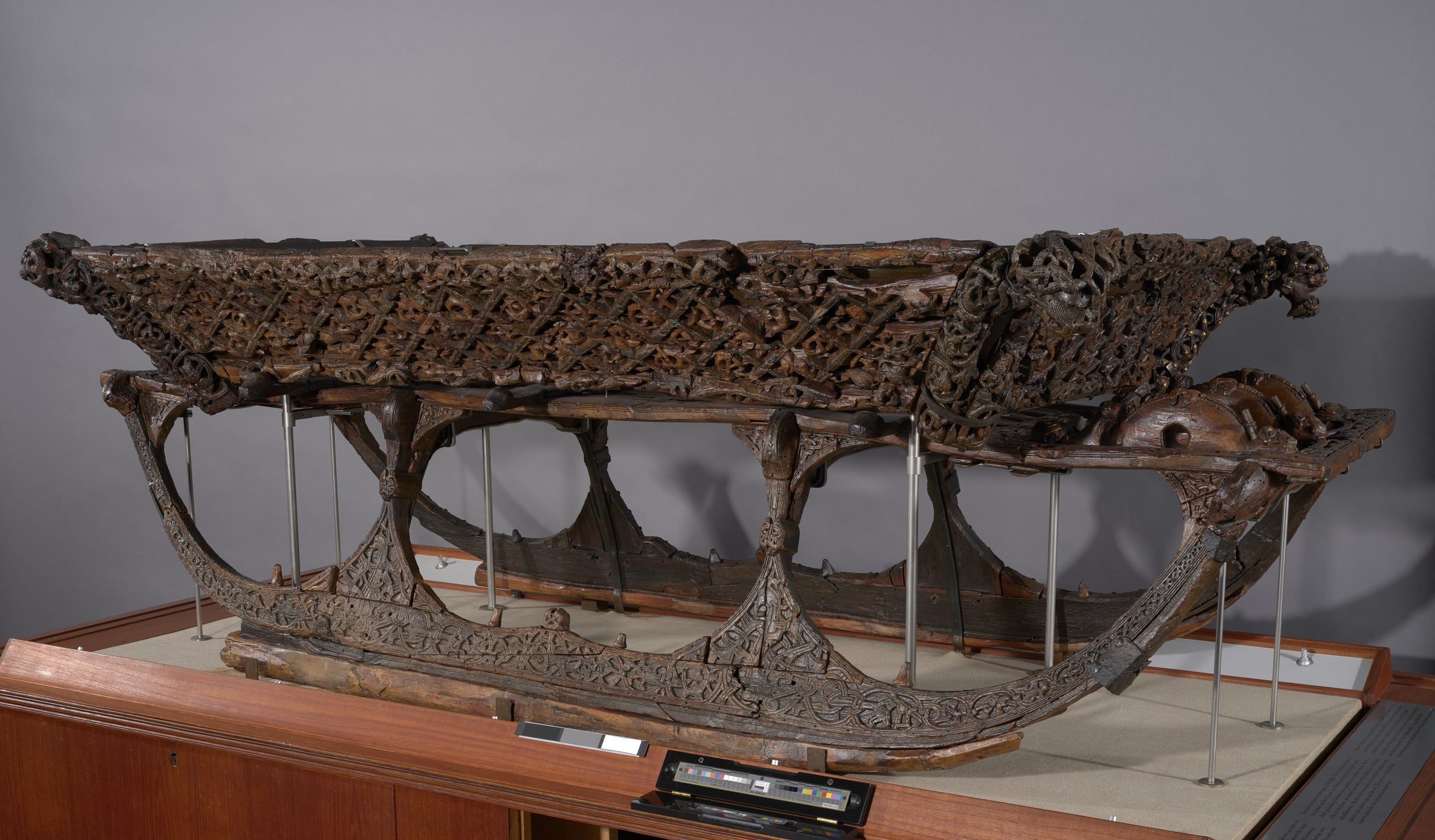
834 · Oseberg, Tønsberg, Vestfold, Norway
The fourth sledge
The sledge is about two metres long and made of beech and oak, with fittings of iron, brass and tin. The body is covered in openwork carving, and the runners and the supports beneath are carved too.
There were four sledges at Oseberg, and three of them are richly carved.
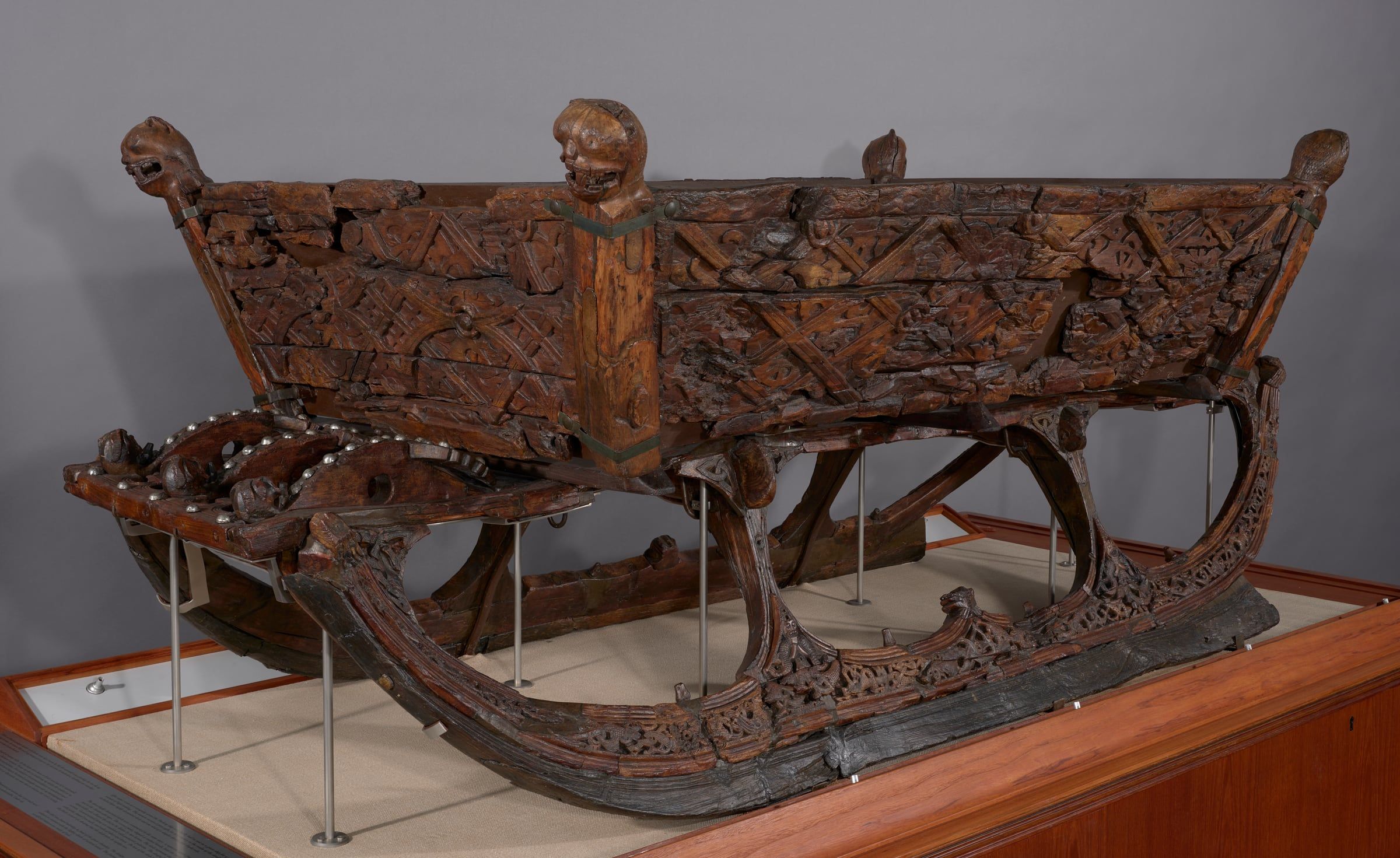
834 · Oseberg, Tønsberg, Vestfold, Norway
Shetelig's sledge
The sledge is named after the archaeologist Haakon Shetelig, who took part in the excavation and later wrote about the carving. It too is built of beech and oak, and is the same length as the fourth sledge.
Small animal heads with open jaws sit at the corners of the body, and the sides are covered in crossing bands with animals between them.
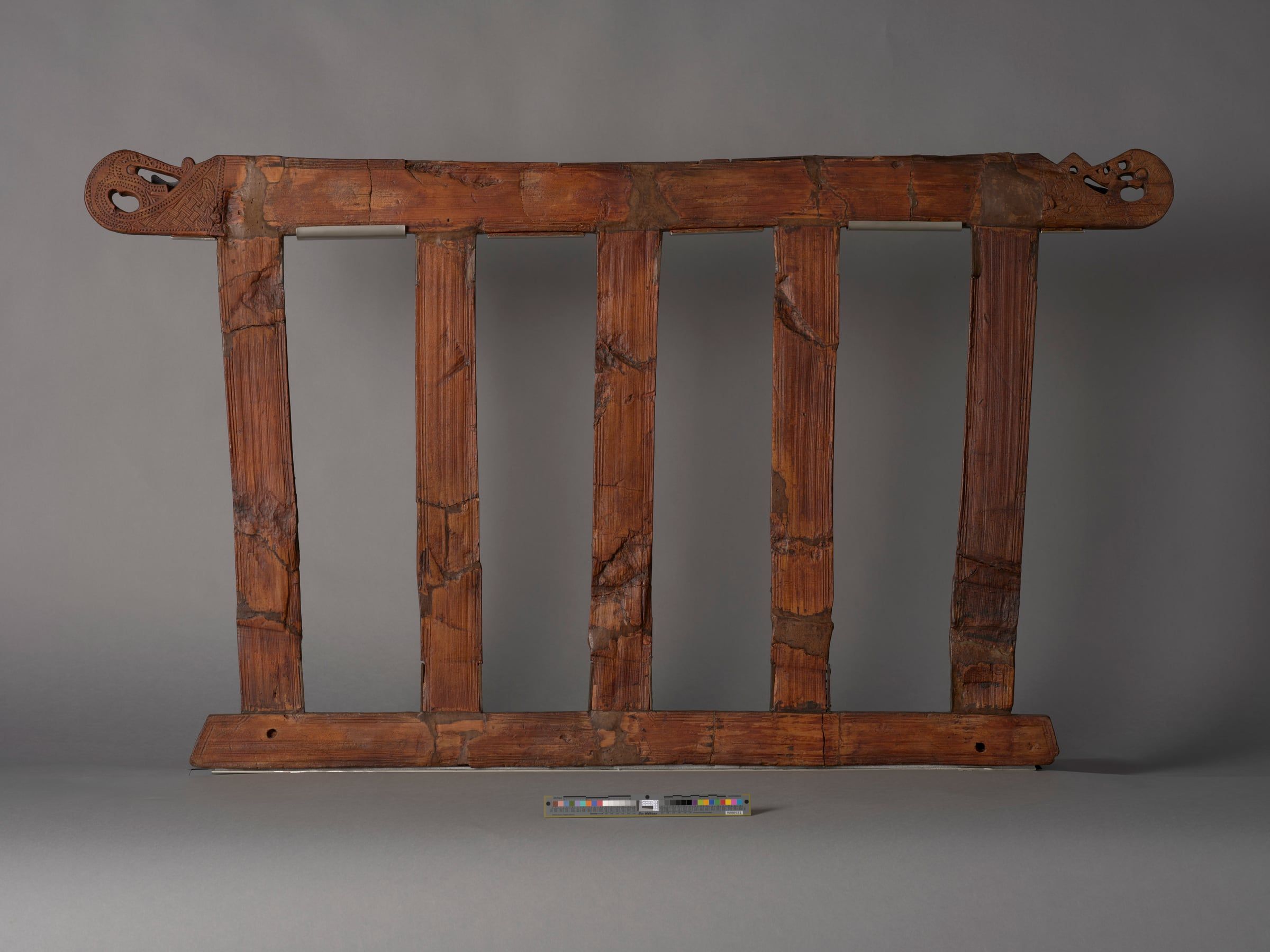
834 · Oseberg, Tønsberg, Vestfold, Norway
The bed end
The bed end is of beech, about 76 centimetres high and one and a half metres wide. The top beam ends in an animal head on each side. Several beds were found at Oseberg, and this one is an almost exact copy of another.
The Gokstad find
The Gokstad ship was dug out of the King's Mound (Kongshaugen) in Sandefjord in 1880. It is the largest Viking ship to survive, more than 23 metres long with room for 32 oars. It was built in the 890s, and around the year 900 a man was buried in it.
The carving from Gokstad is simpler and stiffer than at Oseberg. It belongs to the Borre style, named after the burial ground at Borre, also in Vestfold.
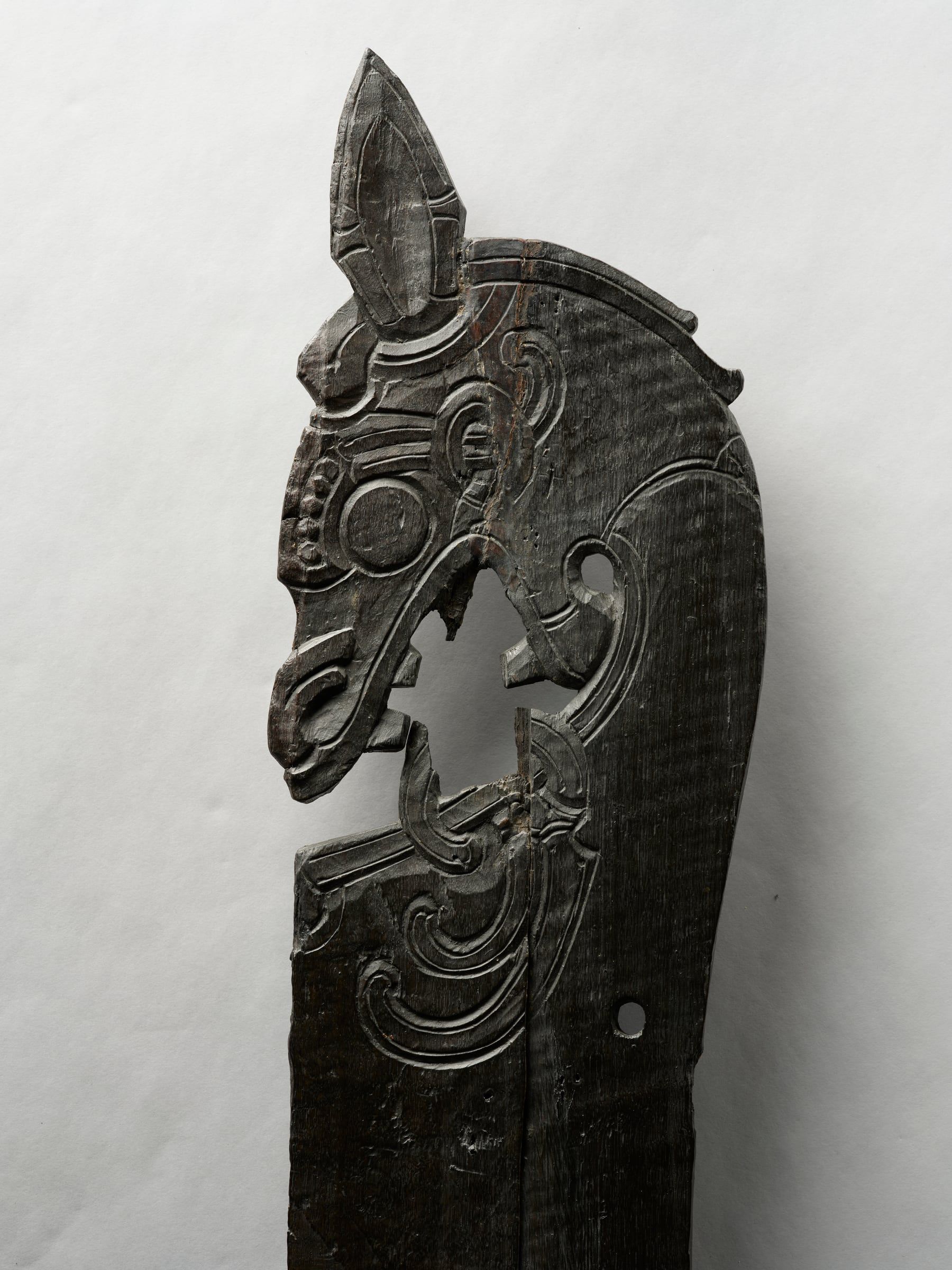
c. 900 · Gokstad, Sandefjord, Vestfold, Norway
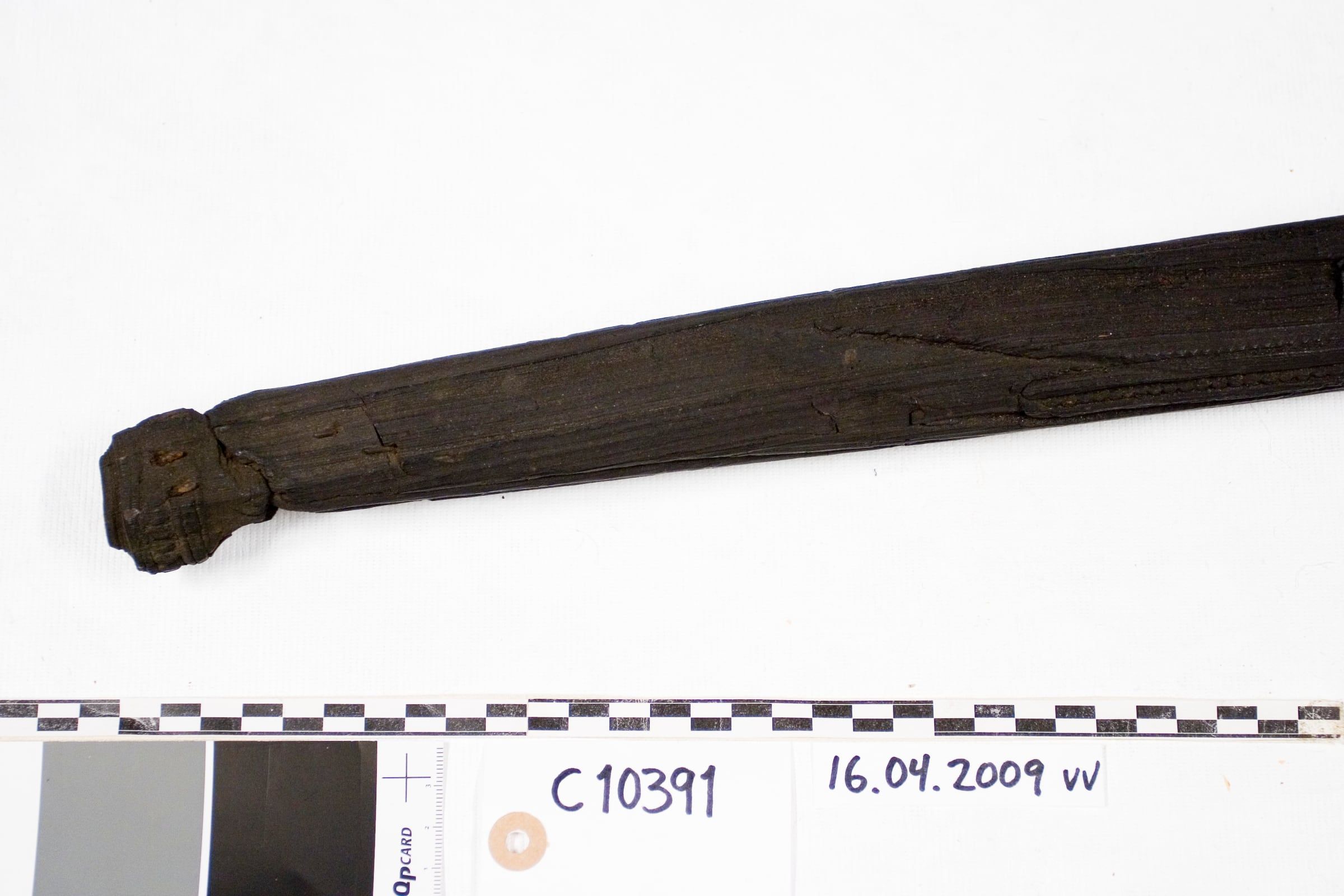
The animal-head bedpost
Two flat oak planks each end in an animal head, with the neck carved in openwork. The carving is on one side only. At first they were thought to come from a high seat, but today they are seen as the posts at the head end of a bed.
c. 900 · Gokstad, Sandefjord, Vestfold, Norway
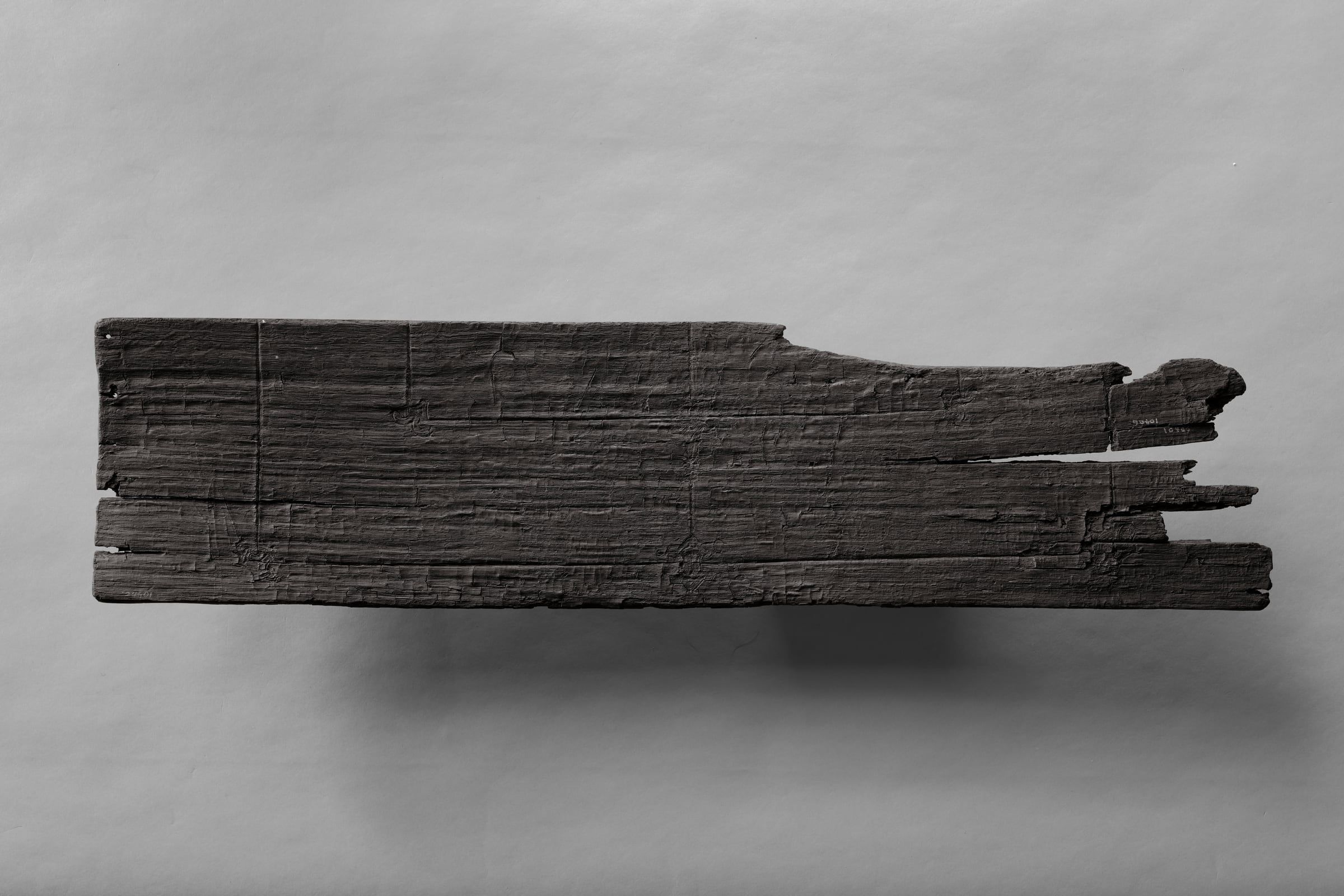
The tiller
A stick of light hardwood, now 94 centimetres long and badly shrunken. At the end is a peg that fitted into the rudder. Just inside it an animal head is carved, with traces of yellow paint, and the rest of the stick was decorated as well.
It was found standing at an angle in the bow of the ship, so it was taken to be the ship's tiller. Even so, it seems too slender for the large rudder.
c. 900 · Gokstad, Sandefjord, Vestfold, Norway
The gaming board
A thin oak plank, 70 centimetres long, with lines and figures cut into both sides. Along the ends are small holes left by iron pins. The board probably sat in a frame, and it could be turned over, so it was used for two different games.
Weather vanes
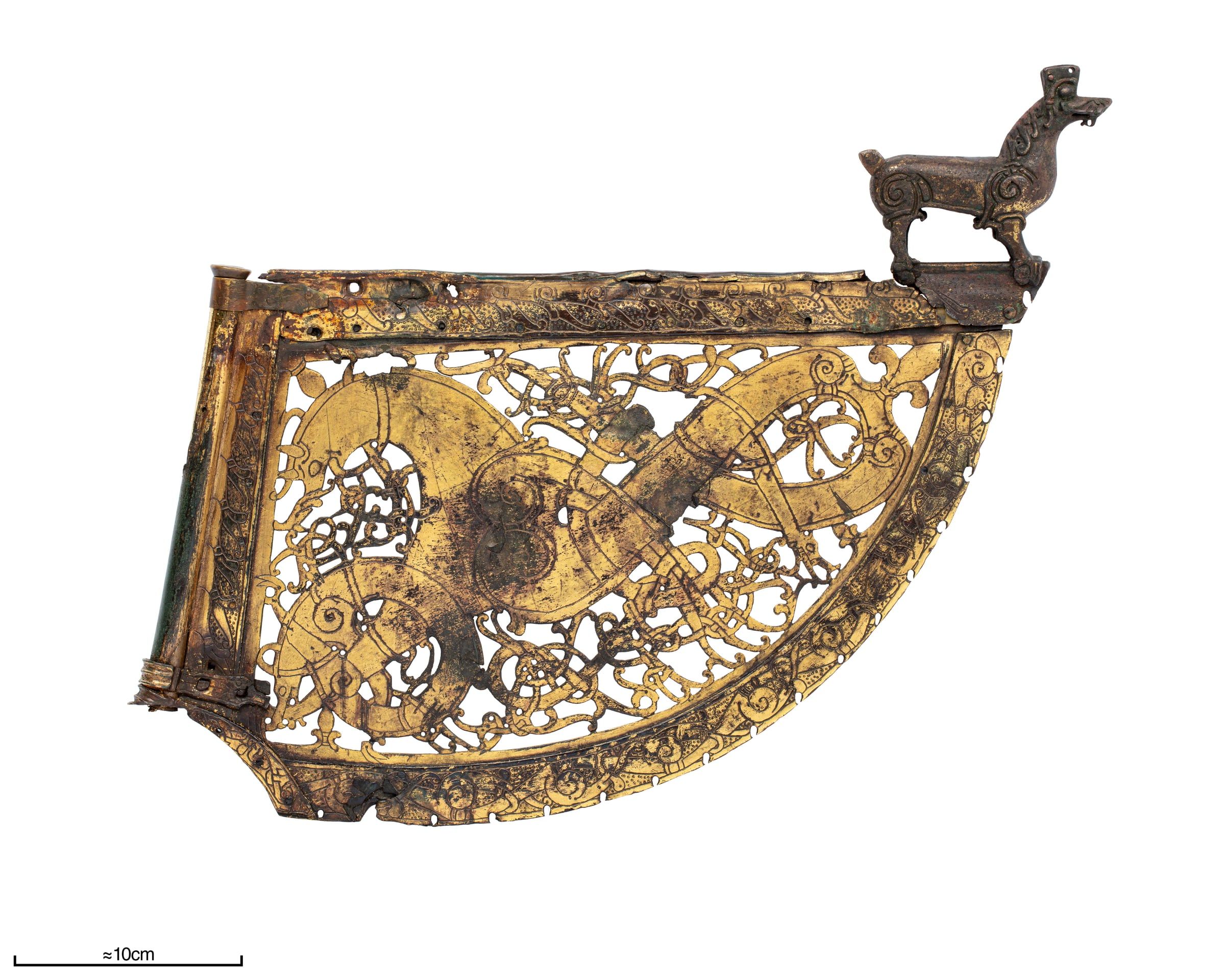
The vanes are shaped like a quarter circle of thin, gilded bronze, with an animal on top. They probably sat on ships, at the prow or on the mast. Along the curved edge are small holes where ribbons or small loose metal plates once hung.
When the age of the longships was over, several of them were put up on church towers. That is why they survive, and some stayed there until the 1900s.
1000s · Söderala church, Hälsingland, Sweden
The Söderala vane
The vane is of gilt bronze and 35 centimetres wide. The central panel is openwork, with three animals woven through one another. The largest has wings, a curved neck and an outstretched foreleg, and a ring-shaped animal bites over its foreleg. The pattern is in the Ringerike style.
The vane sat on the tower of Söderala church and came to the Swedish History Museum in 1917. The holes along the lower edge held small loose plates, which are now missing.
1000s · Heggen church, Modum, Buskerud, Norway
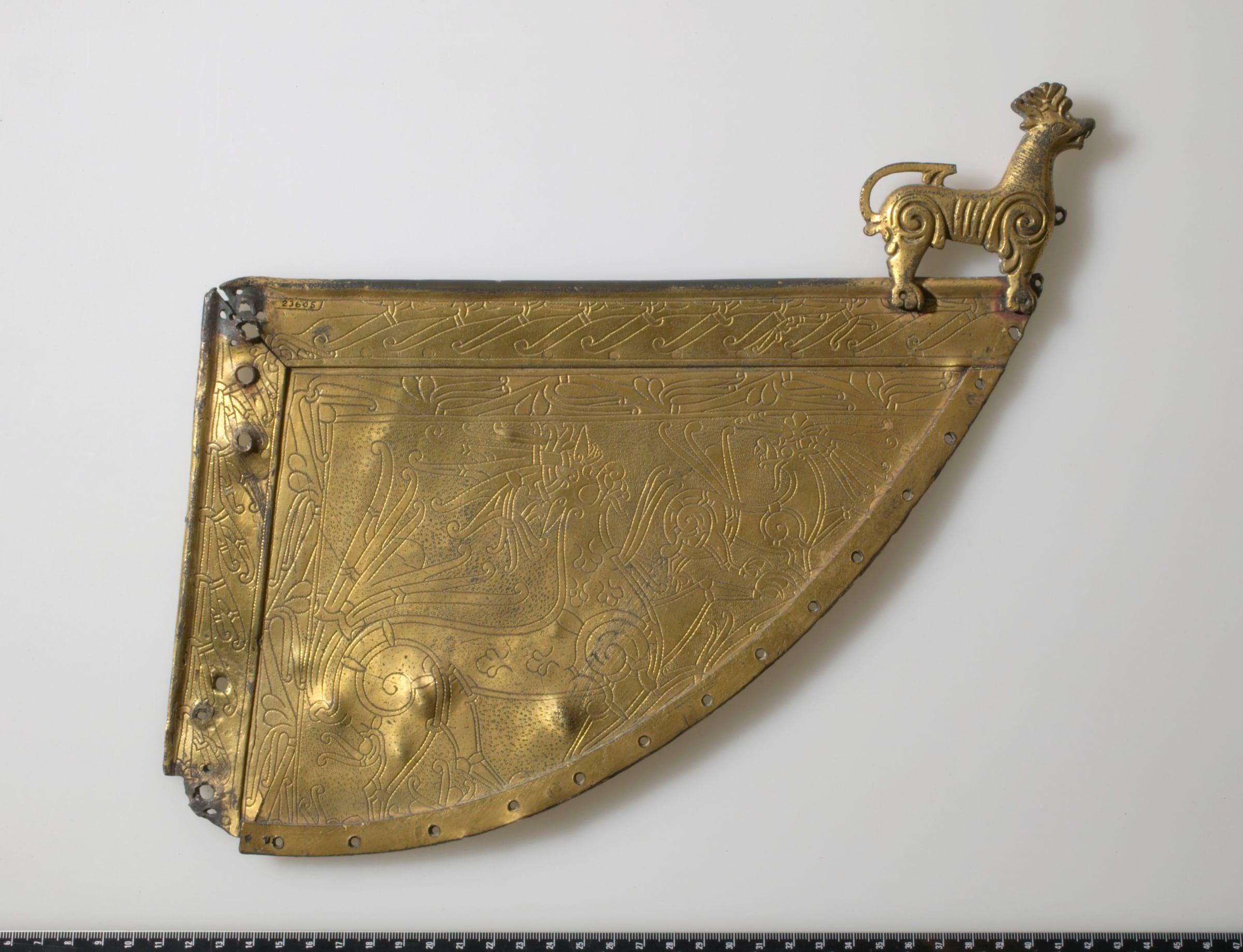
The Heggen vane
The plate is of gilt bronze, only three millimetres thick, and engraved with a large and a small animal on one side and a bird on the other. Broad decorated mounts run along the straight edges, and at the tip stands a free-standing cast animal.
The vane came to the museum in Oslo in 1923 from a private collection, and according to tradition it comes from Heggen church in Modum.
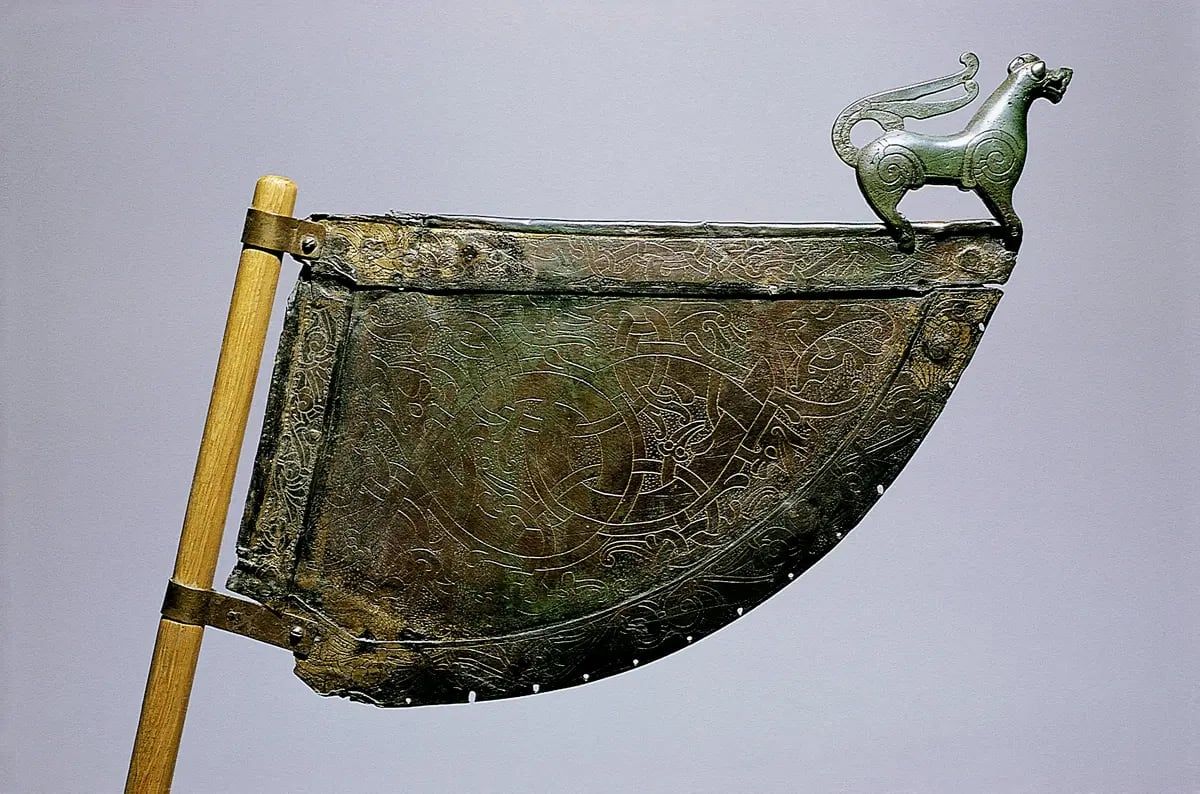
1000s · Källunge church, Gotland, Sweden
The Källunge vane
The vane is of thin bronze sheet that was originally gilded, and it is crowned by a lion. One side has seven animals woven through one another. The other shows a large four-legged beast with a snake round its neck, the same motif as on the great Jelling stone.
The museum believes the vane first sat at the prow of a ship and was later reused as a weather vane on the tower of Källunge church.
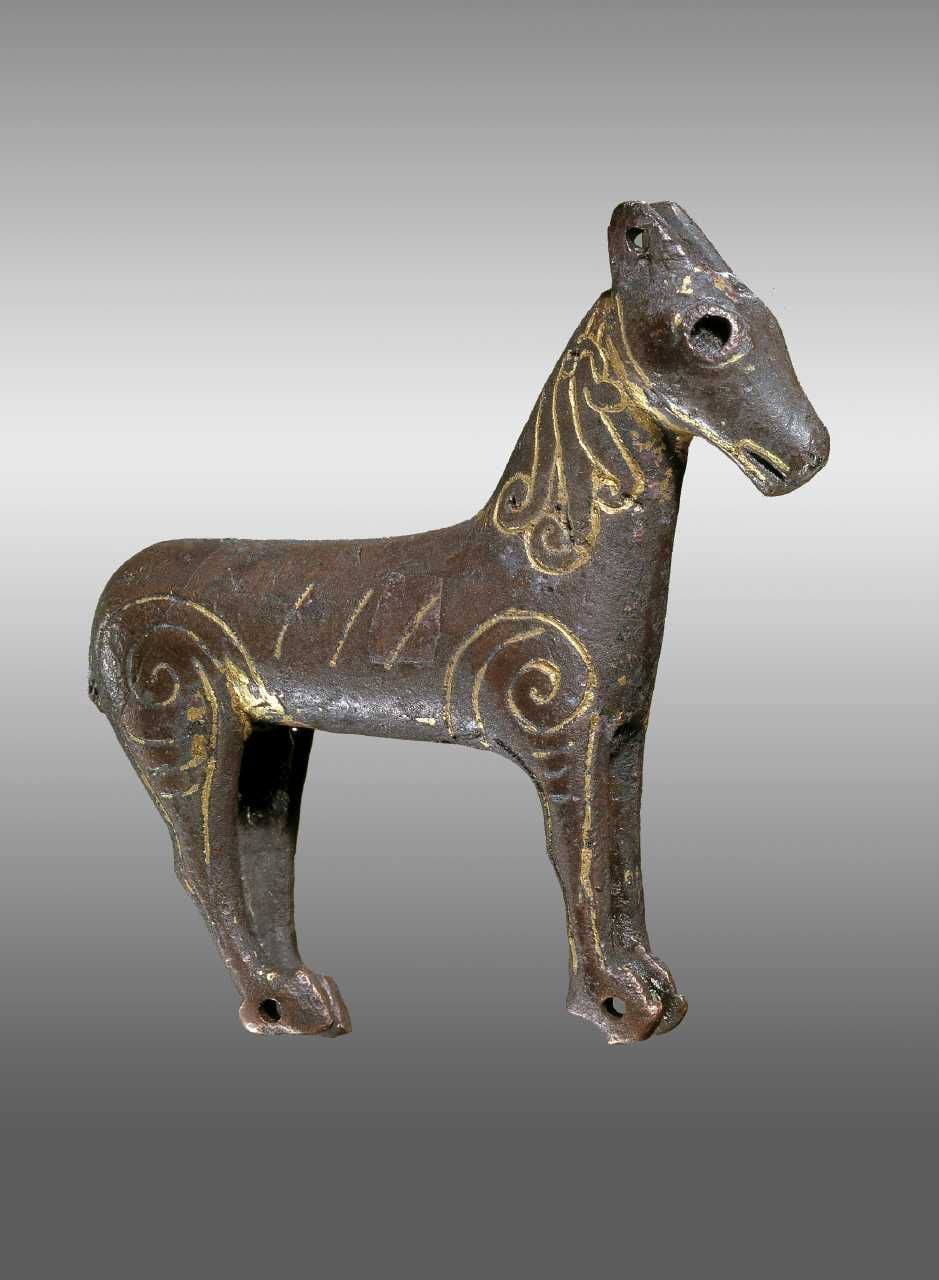
1000s · Lolland, Denmark
The horse from a vane
A small horse of gilt bronze with spirals on its shoulder and haunch. It once stood at the tip of a vane from a Scandinavian ship, as the animals on the other vanes do, and the holes in its hooves are for the rivets that held it in place. The horse was probably found in the ground on Lolland.
Carving in the first churches
When Scandinavia became Christian in the 1000s, the first churches were built of wood. The carvers carried on with the intertwined animals they knew, now on doorways, walls and gables. The last style of the Viking Age is named after Urnes stave church in Sogn.
Most of this is gone. What is left is often planks that were reused when new churches were built, or that were left lying under the floor.
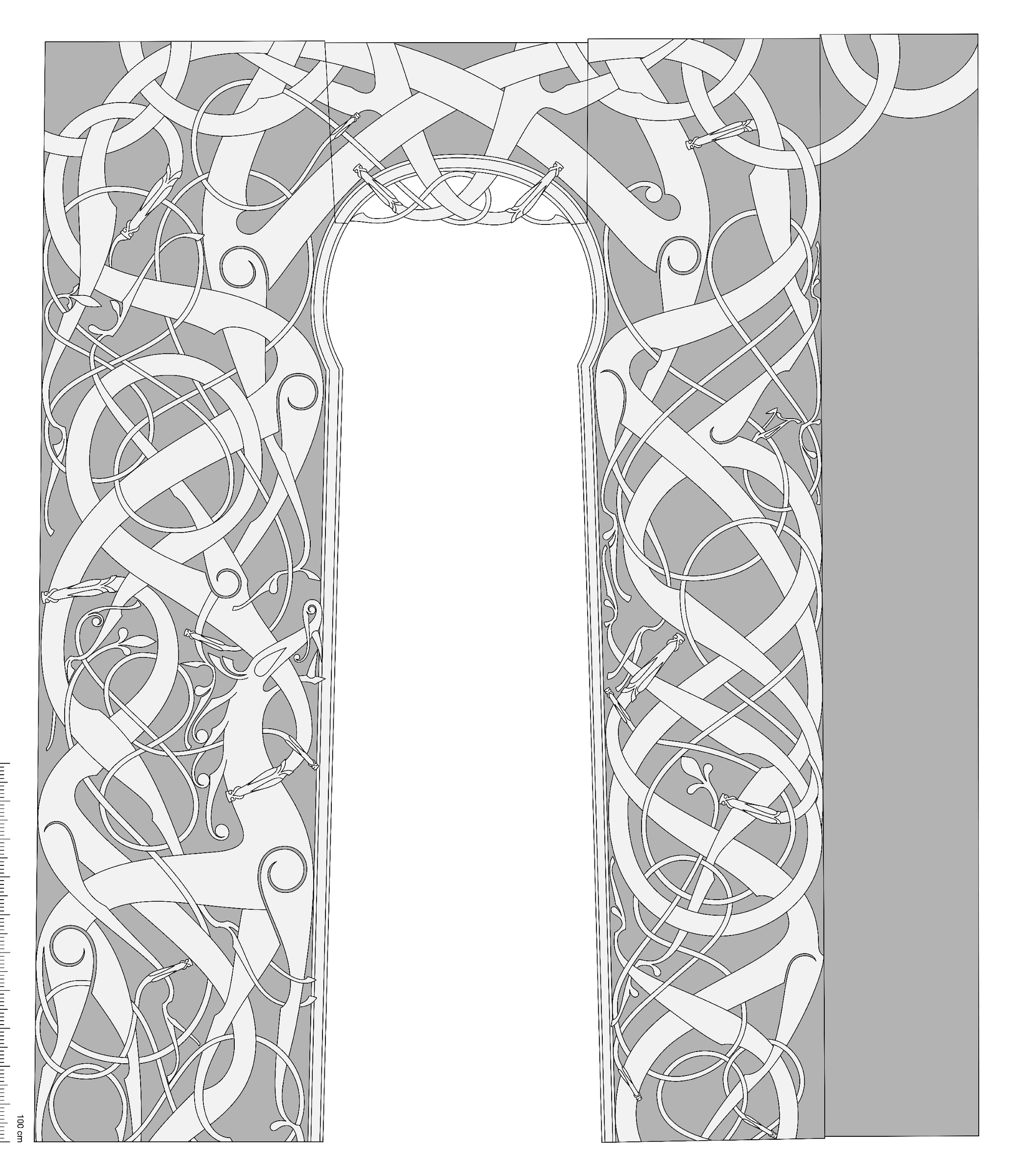
Second half of the 1000s · Urnes, Luster, Vestland, Norway
The north doorway of Urnes stave church
The present church was built early in the 1130s, but the carved planks in the north doorway, the north wall and the gables were kept from an older church on the same site. They are carved in high relief and show slender animals fighting, their bodies wound through one another like ribbons.
This carving gave its name to the Urnes style. Urnes is thought to be the oldest surviving stave church in Norway and is on the UNESCO World Heritage List.
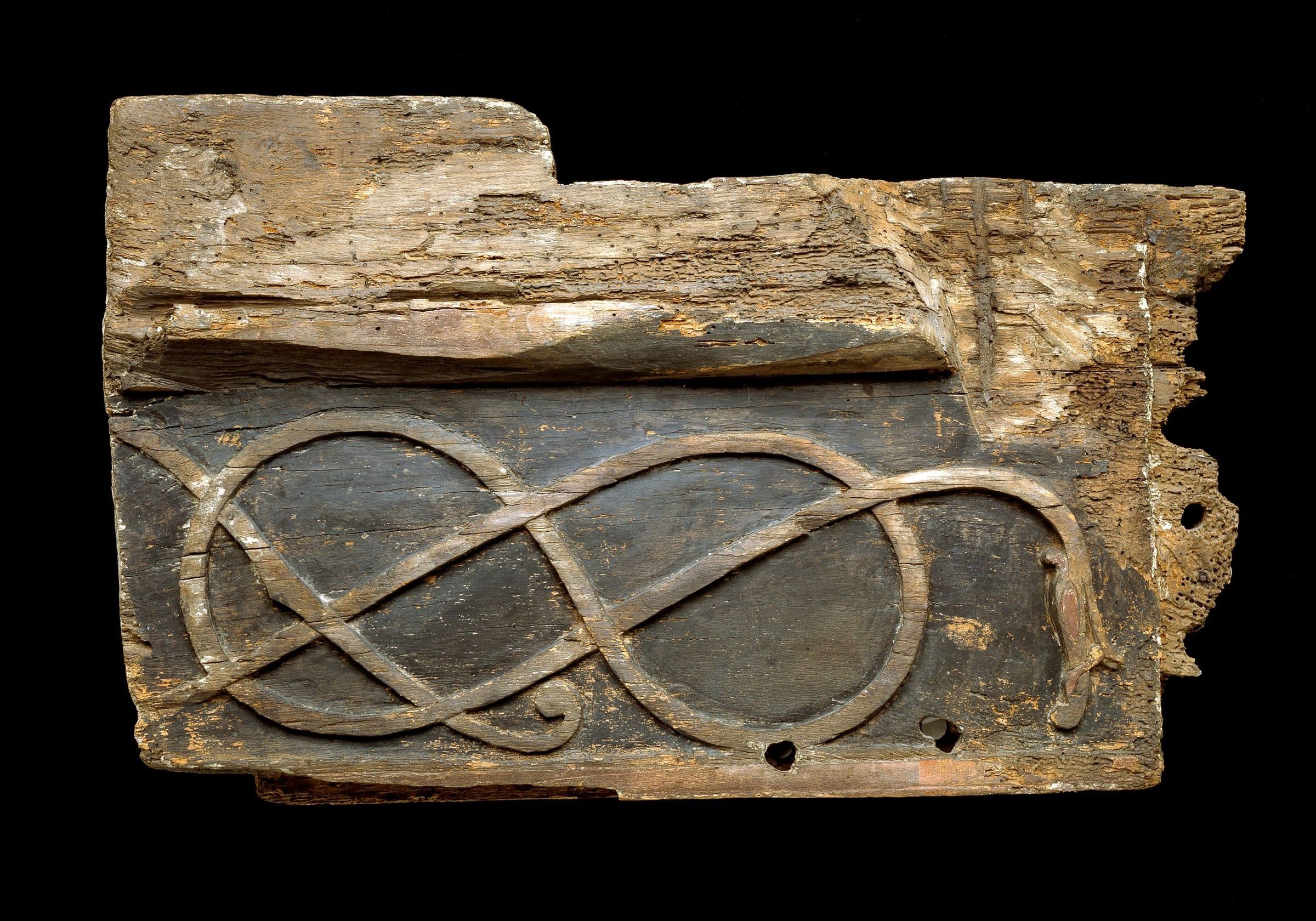
c. 1070 · Hørning near Randers, Jutland, Denmark
The Hørning plank
The plank comes from a wooden church built at Hørning around 1070. It lay along the top of a stave wall and held the upright planks in place.
On the outside a dragon-like animal is carved in the Urnes style, and it was painted in colours. On the inside were painted plant scrolls in a style common elsewhere in Europe.
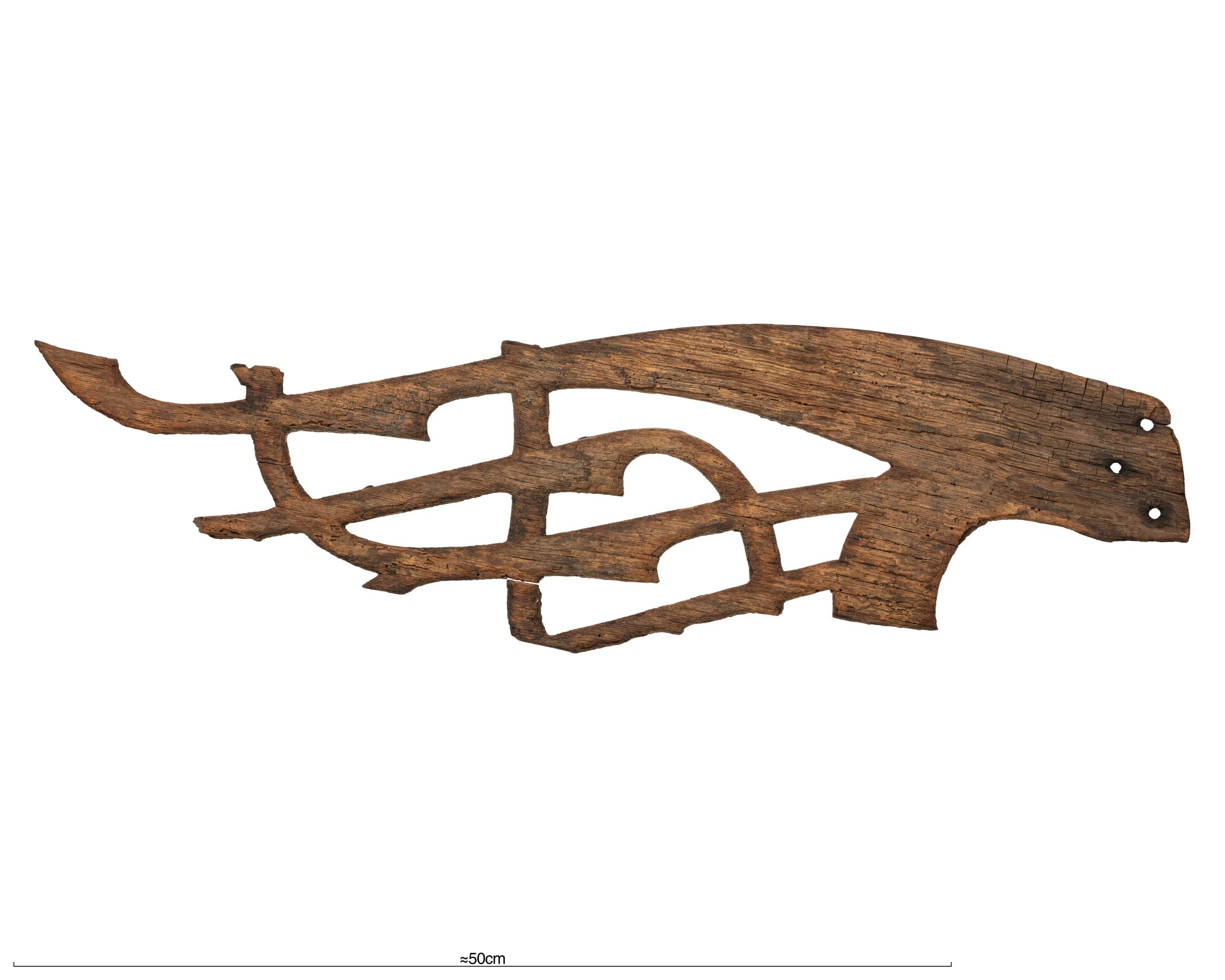
1100–1250 · Hemse church, Gotland, Sweden
The dragon head from Hemse stave church
An openwork oak ornament shaped like a dragon's head, in the same style as the doorway planks from the same church. It is not complete: older drawings show that the snout curled up and backwards.
Where it sat on the church is uncertain, perhaps on a gable or at the end of the roof ridge. It was found with other parts of the stave church under the floor of the stone church later built at Hemse.
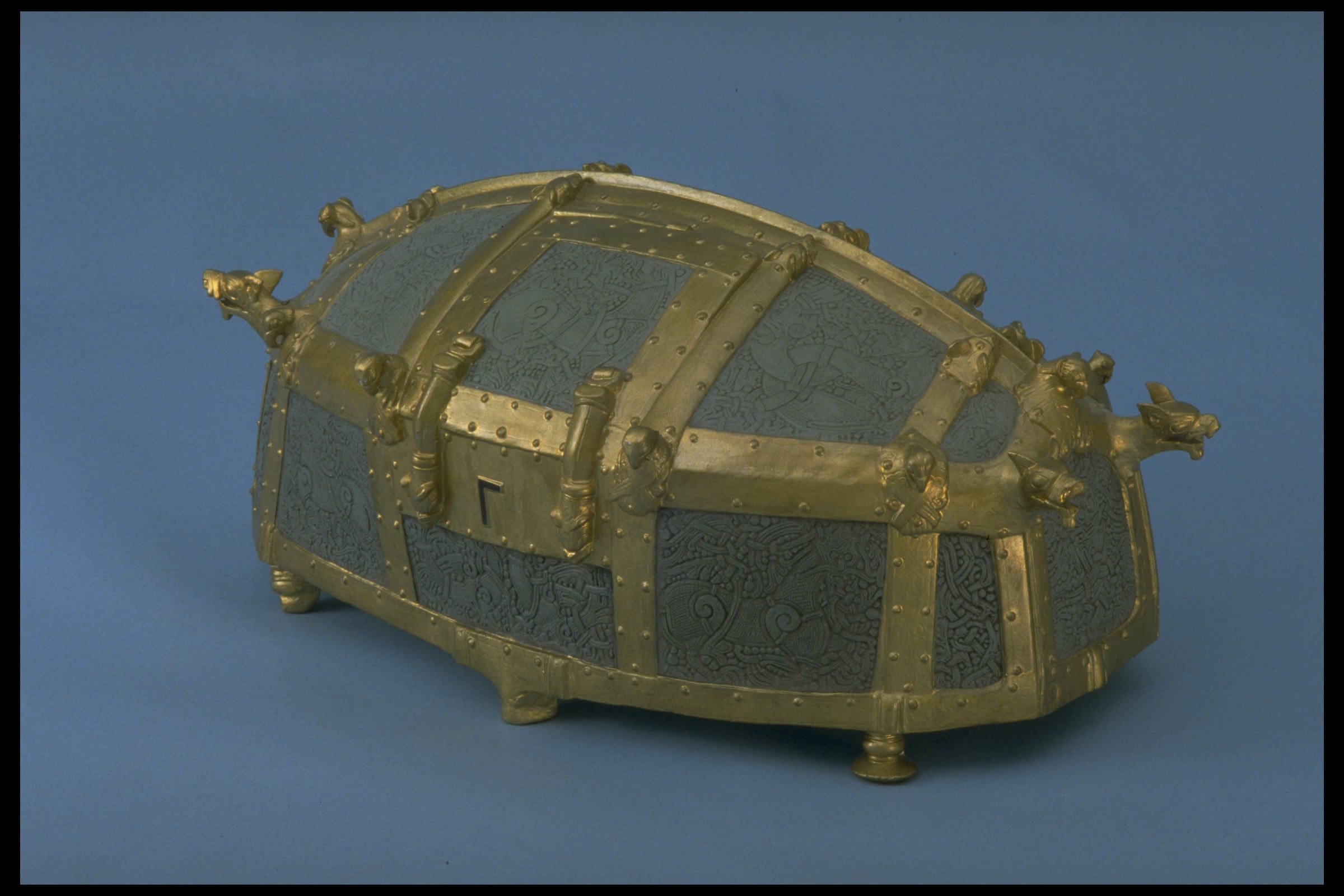
c. 1000 · Cathedral of Kamień Pomorski, Poland
The Cammin casket
The casket was shaped like a house with a curved roof. Its core was wood, covered with plates of elk antler decorated in the Mammen style and held together by gilt bronze mounts. It stood in the cathedral at Cammin, today Kamień Pomorski, and is said to have held relics of Saint Cordula.
The original disappeared in 1945, at the end of the Second World War. What we have today are casts and copies such as this one in the Swedish History Museum in Stockholm.
The images are the museums’ own, or drawings by Jonas Lau Markussen, and are used under the licence shown under each one. The text is our own, based on the museums’ records. See also jewellery and silver.
Interested in runes and Norse mythology?
Get the rune of the day, new articles and news from Norse mythology straight to your inbox. Free, and you can unsubscribe at any time.