The Viking Age · The 1000s
Staveless runes
Also called Hälsinge runes
Staveless runes are the short-twig runes cut down to the bare minimum: the main stave is gone, and only the twigs remain. The result looks more like small strokes than runes.
- ffé
- uúr
- þþurs
- ąóss (not found)
- rreið
- kkaun
- hhagall
- nnauðr
- iíss
- aár
- ssól
- tTýr
- bbjarkan
- mmaðr
- llǫgr
- ʀýr
Drawn by us after the inscriptions in Hälsingland. No staveless form of ą has been found, so it is left blank. How high a rune sits in the band is part of how it is read.
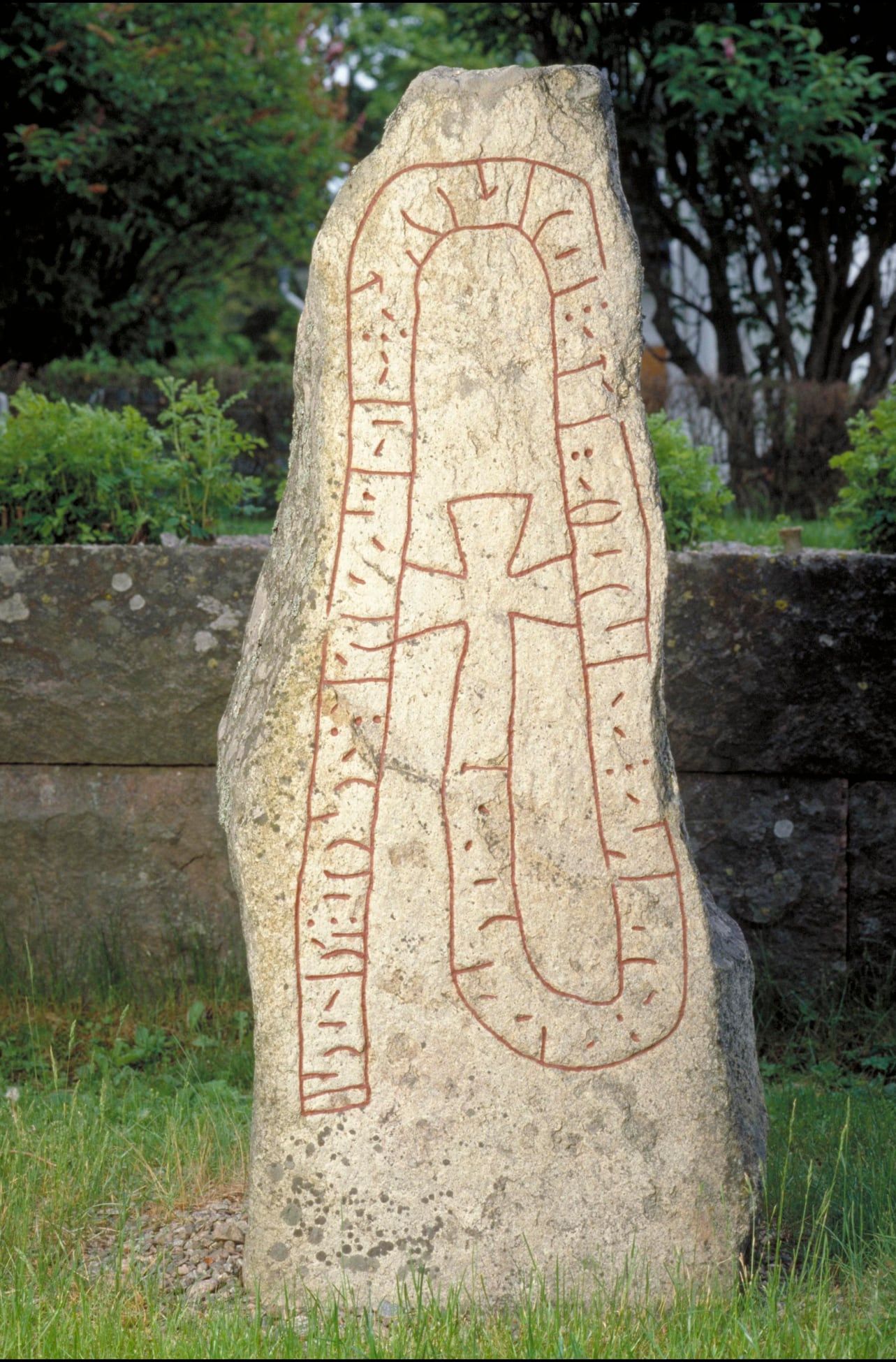
The runestone at Hög church in Hälsingland (Hs 12) is written in staveless runes: look at the short strokes and dots in the red-painted band.
Photo: Bengt A. Lundberg, Riksantikvarieämbetet · CC BY 4.0 · Riksantikvarieämbetet
A quick script
Because each rune is only a few short strokes, they were quick to carve. Most of the known inscriptions are on stone in Hälsingland and Medelpad in northern Sweden, and they are rare.
Deciphered in the 1600s
For a long time nobody could read them. The Swedish scholar Magnus Celsius cracked the code in the 1670s, and his son found the value of the last rune.
Interested in runes and Norse mythology?
Get the rune of the day, new articles and news from Norse mythology straight to your inbox. Free, and you can unsubscribe at any time.