The Viking Age · 793–1066
Jewellery and silver
To the Vikings, jewellery was more than decoration. A pendant could protect its wearer, an arm ring could be given as a reward or cut up and used as payment, and a cross showed that you had taken up the new faith. Here are 18 pieces of jewellery and silver from museums in Sweden and Denmark.
Pendants and amulets
Both women and men wore pendants, on chains, on strings of beads or fastened to their clothes. Some were simply decoration; others probably also had a protective power: a Thor’s hammer, a face, an animal. The simplest were cast in bronze in large batches. The most expensive were of silver or gold and covered in filigree, patterns of fine twisted wire, and granulation, tiny metal balls soldered on one by one.
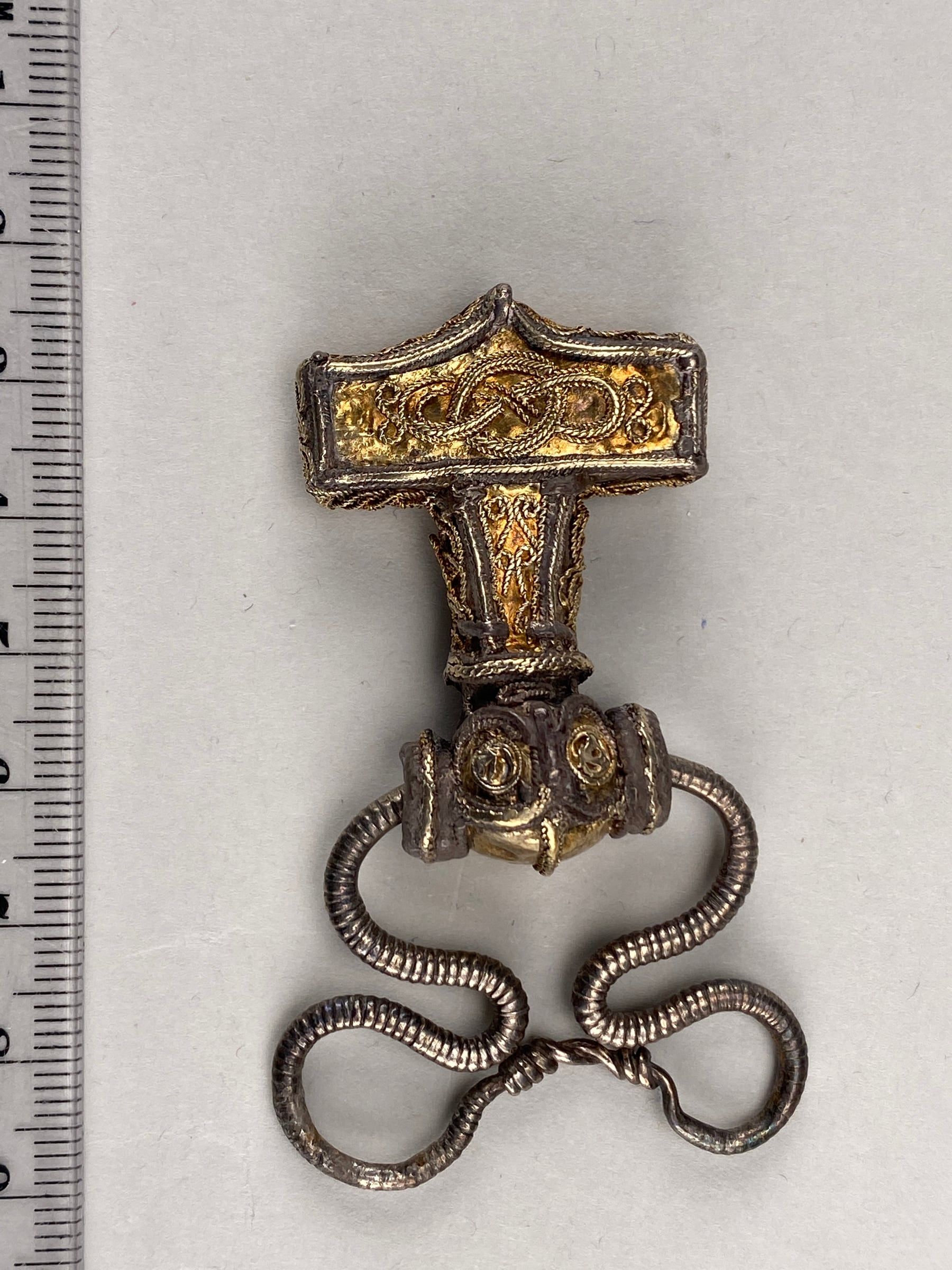
900s · Erikstorp, Ödeshög, Östergötland, Sweden
The Erikstorp Thor’s hammer
The hammer is silver, with gilt plates covered in looping filigree wire. At the top, where the chain is attached, it is shaped like a head with two large, round eyes. It is just over six centimetres long and weighs a little over 20 grams.
Small hammers like this were worn as amulets, after the god Thor’s hammer Mjölnir. This one came to the Swedish History Museum in 1876.
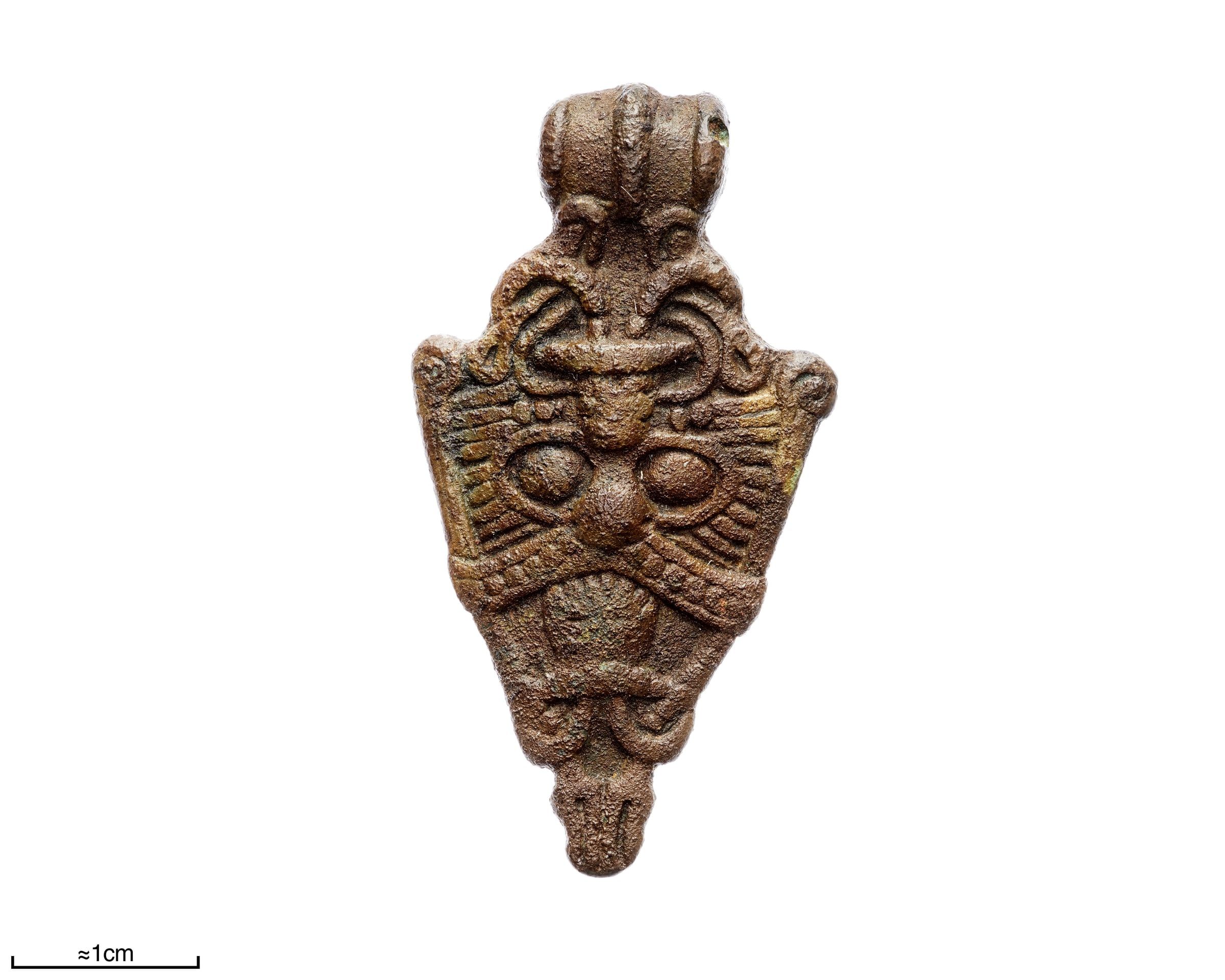
900s · Härads-Kumla, Strängnäs, Södermanland, Sweden
The Härad face pendant
A small bronze pendant, only four and a half centimetres long. In the middle is a face with large, round eyes and a broad moustache, with animals twisting around it. The museum suggests, with a question mark, that the face may be Odin.
The pendant was found in a grave during an archaeological excavation and came to the museum in 2004.
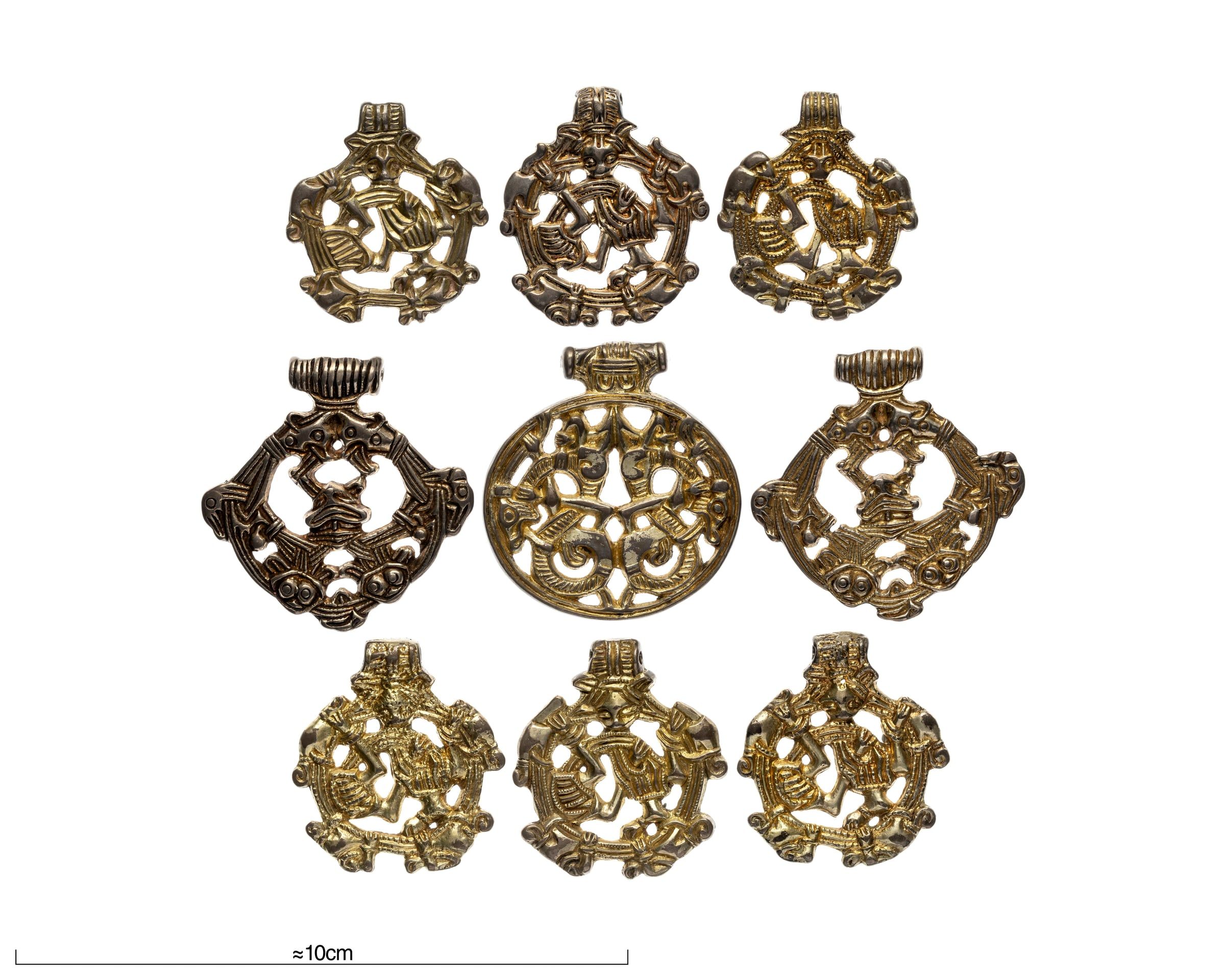
900s · Vårby, Huddinge, Södermanland, Sweden
The pendants from the Vårby hoard
Nine gilt pendants in openwork with gripping beasts, small animals that grab hold of themselves and each other with their paws. Eight are in the Borre style and one in the Jelling style.
The pendants were part of a hoard buried at Vårby, south of Stockholm. They once hung from shield-shaped mounts, one each.
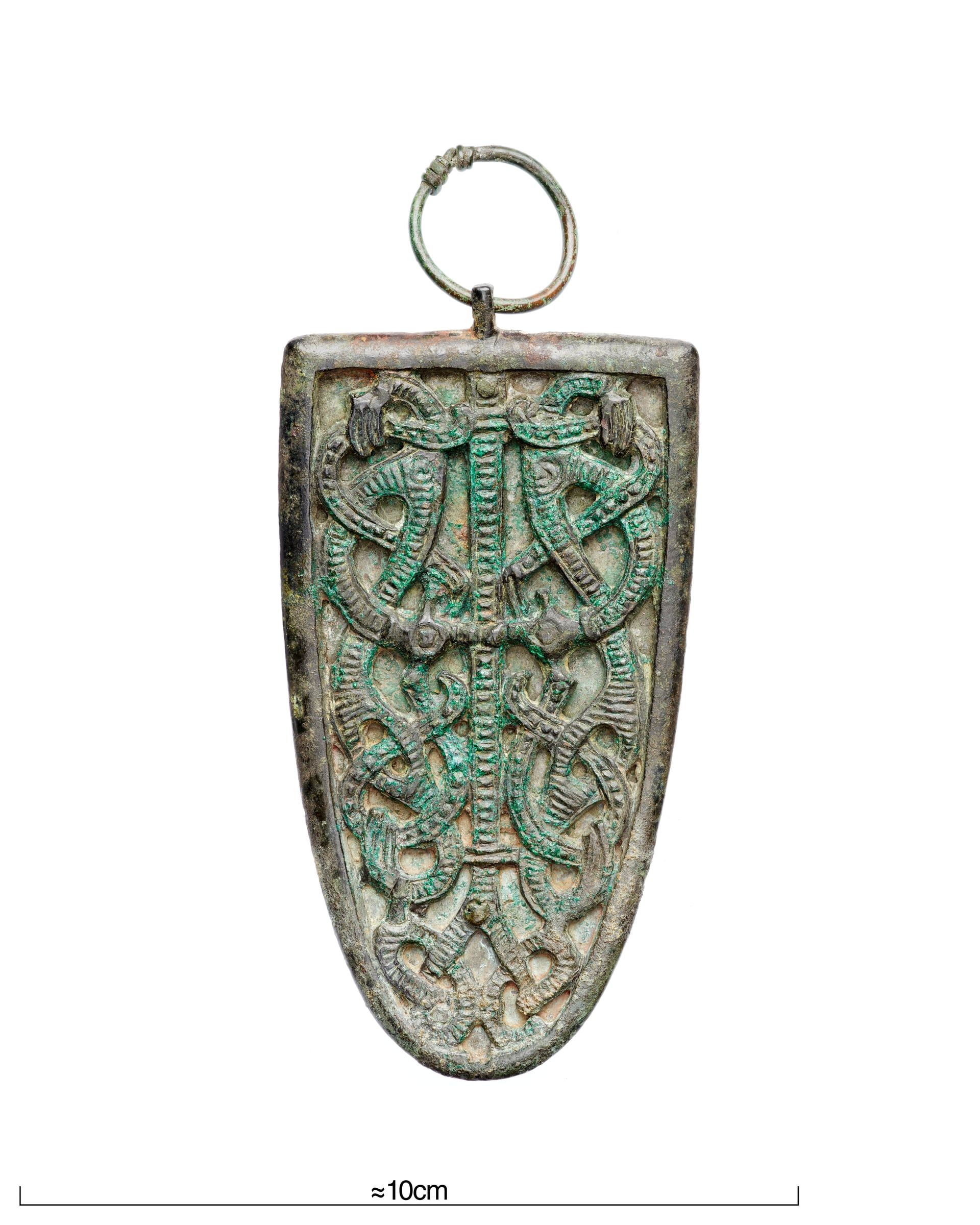
900s · Birka, Björkö, Uppland, Sweden
Tongue-shaped brooch from Birka
A bronze brooch about ten centimetres long, covered in intertwined Jelling-style animals that mirror each other along a centre line. A silver ring has been fixed to the top so that the brooch could hang from a chain.
It was found in the Black Earth, the dark settlement soil of the trading town of Birka on Lake Mälaren, during Hjalmar Stolpe’s excavations in the 1800s.
900s · Mammen, Jutland, Denmark
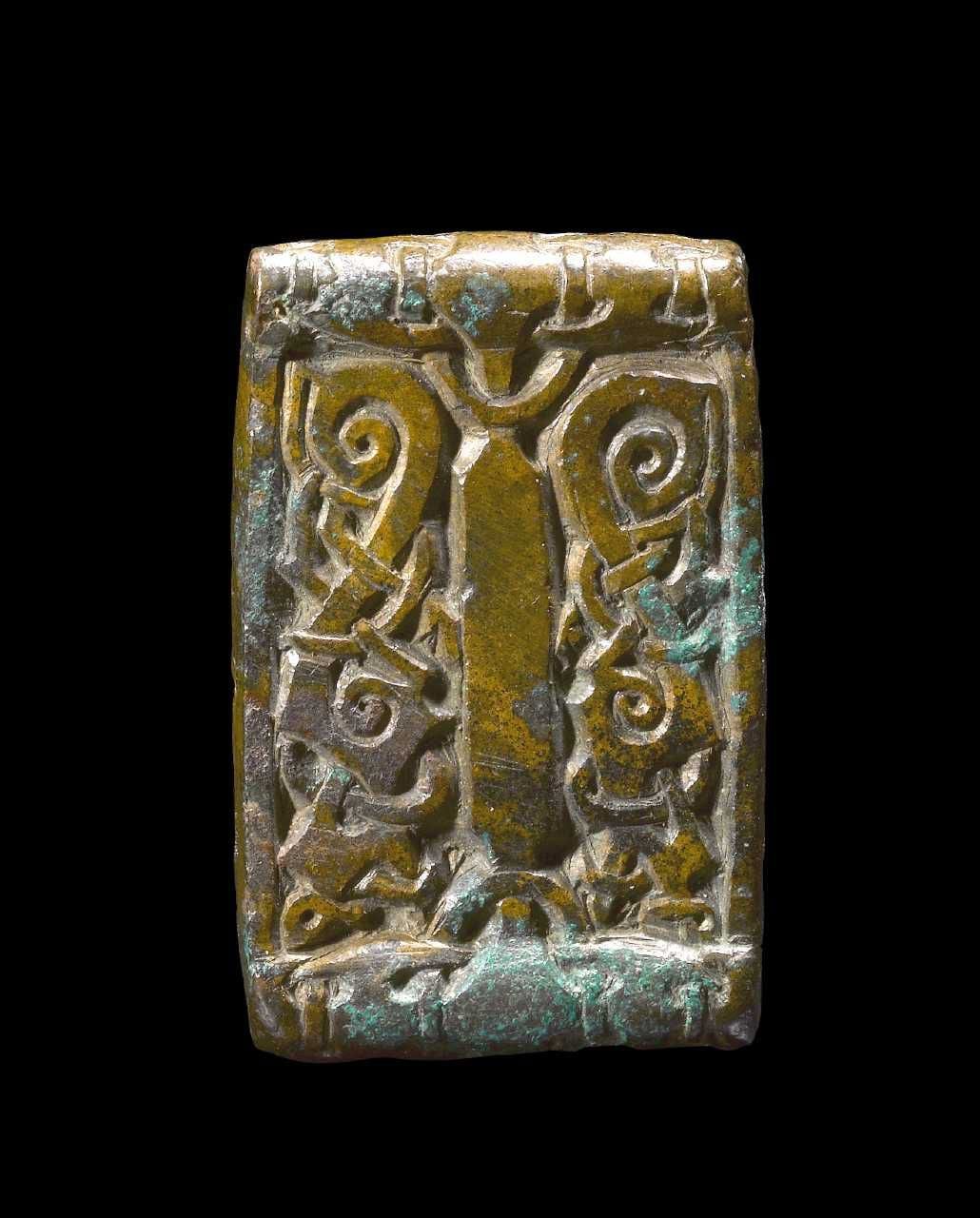
The Mammen die
This is how many pieces of jewellery were made. A die like this, called a patrix, has a raised pattern. The smith laid a thin sheet of silver or gold over it and hammered or pressed it down, getting the same pattern again and again.
This die is bronze and shows two animals mirroring each other. It was found at Mammen, the same place as the famous Mammen axe.
Arm rings and pins
Dress pins and brooches held clothes together, and they were also the most visible place to show off wealth. A silver arm ring was both jewellery and savings. A chieftain could give one as a gift to a man he wanted to bind to himself, and it could be cut up and used as payment.
1000s · Lilla Rone, Lye, Gotland, Sweden
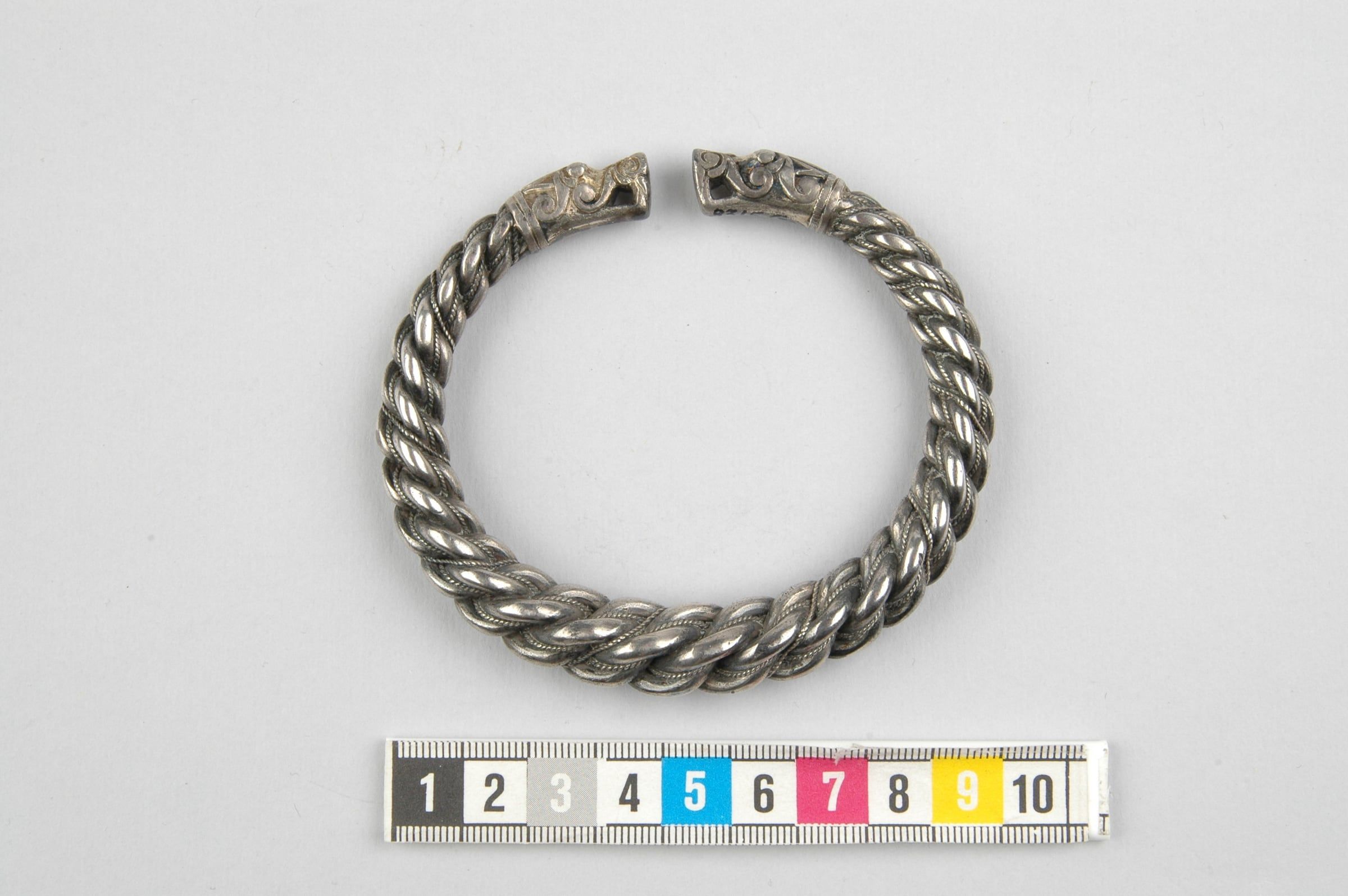
The Lilla Rone arm ring
The ring is made of several silver rods twisted together, and the ends are cast over with two animal heads that meet at the opening. The heads have traces of gilding. The ring is just over nine centimetres across.
1000s · Undrom, Boteå, Ångermanland, Sweden
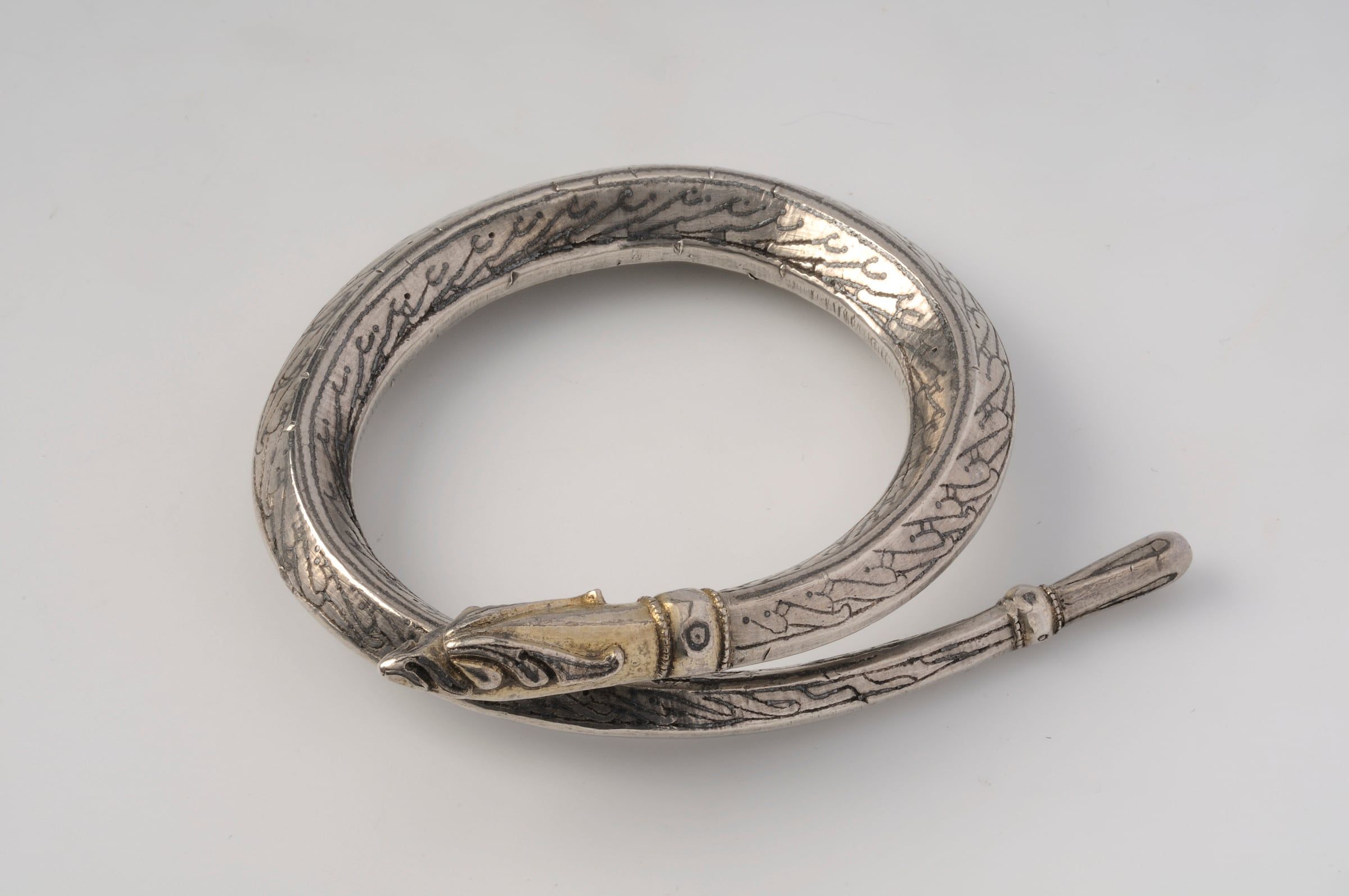
The dragon ring from Undrom
The ring is shaped like a snake or dragon coiling round the arm, with its tail sticking out past its head. The scales on the body and the details of the head are filled with niello, a black compound that makes the pattern stand out against the silver. The head has traces of gilding.
The ring weighs 132 grams and was part of a hoard found at Undrom in Ångermanland.
900s · Sojvide, Sjonhem, Gotland, Sweden
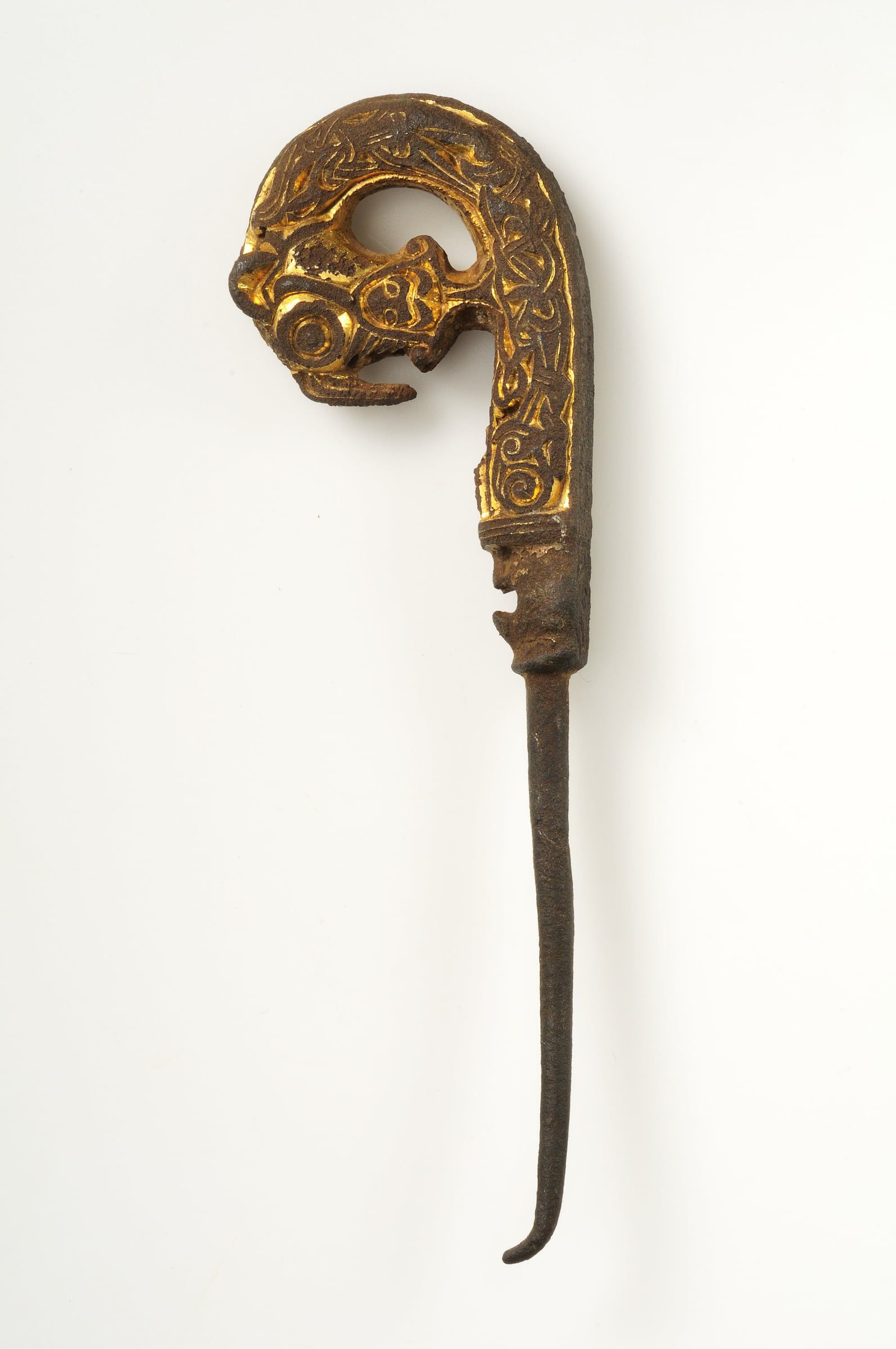
The Sojvide dress pin
The head of the pin is bent like a hook and shaped like an animal with open jaws. It is gilt and covered in Borre-style interlace. The pin is almost eleven centimetres long and weighs over 50 grams, so it was made to be seen.
900s · Kathrinelund, Voel, Jutland, Denmark
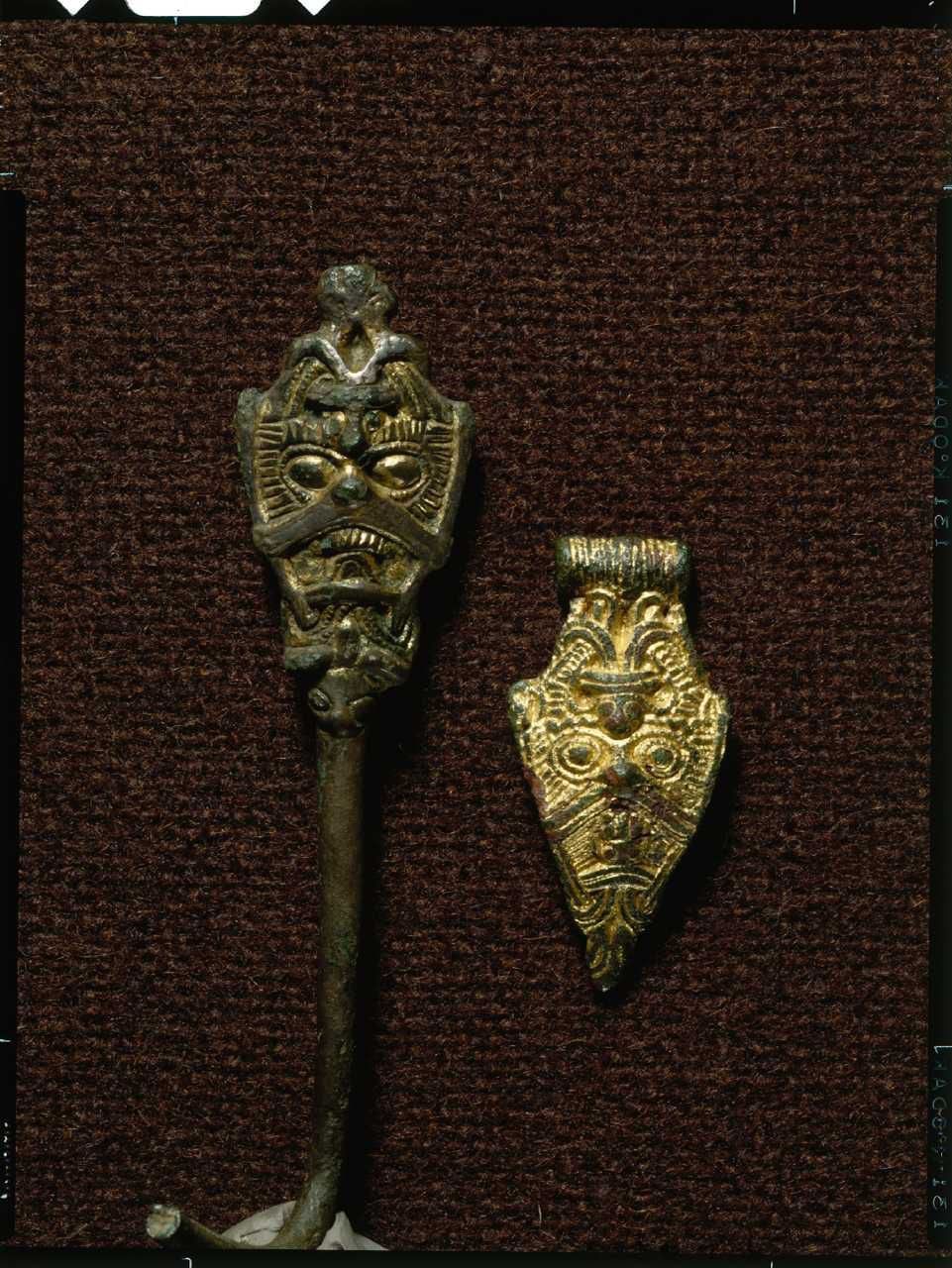
The mask pin from Kathrinelund
On the left is a gilt bronze dress pin from Kathrinelund. Its head is a mask with large eyes and a moustache. On the right lies a pendant from Ejby Mølle on Funen with almost the same face.
Masks like these appear on many Viking Age objects, from jewellery to runestones. We do not know for certain who they represent.
Hoards and silver vessels
Few coins were in everyday use in the Viking Age. Instead, silver was counted by weight: coins, bars and jewellery were cut into pieces, known as hacksilver, and weighed out on small folding scales. Many pieces have little nicks from knives, where someone tested whether the silver was genuine.
Why was so much buried? Some hoards were no doubt hidden to keep them safe, in troubled times without banks, and the owner never came back for them. Others may have been gifts to the gods.
900s · Fæsted, South Jutland, Denmark
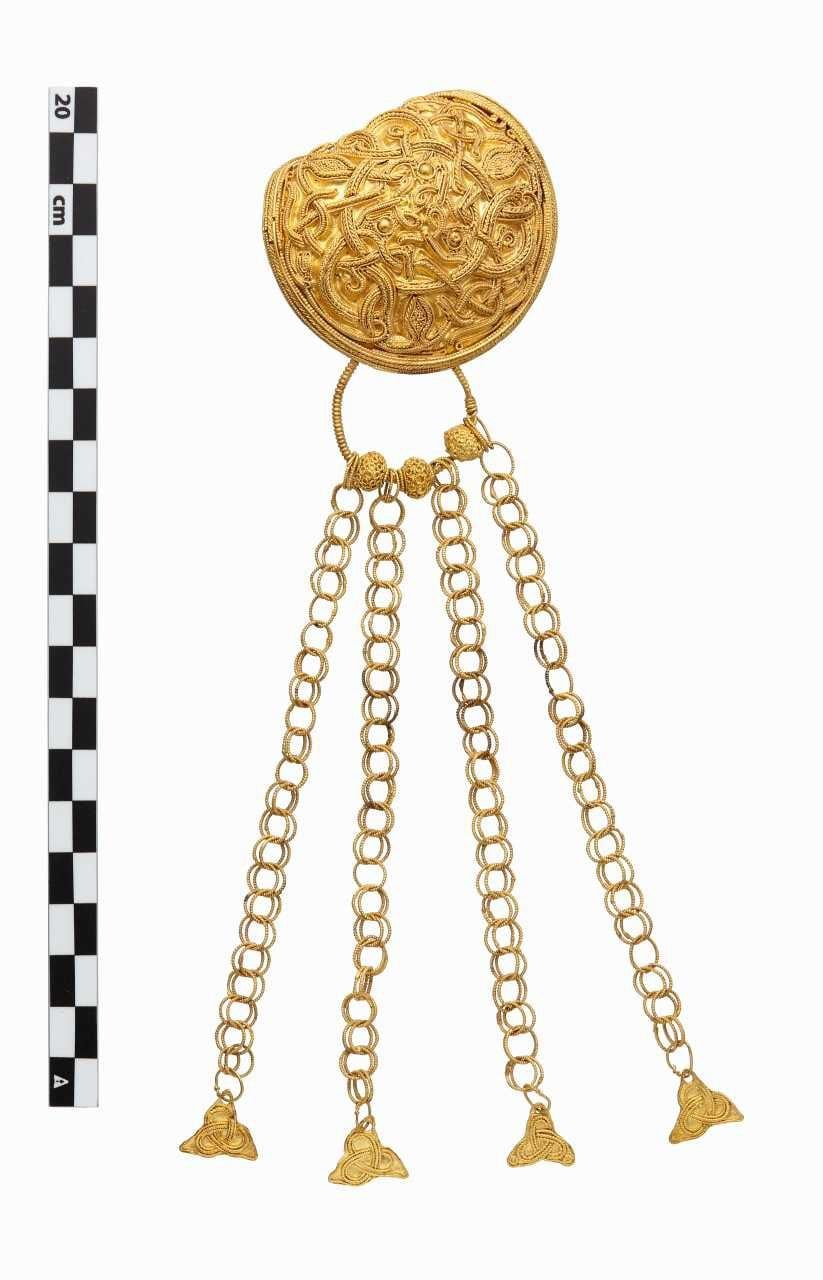
The Fæsted gold brooch
A round gold brooch, just under six centimetres across, covered with three Jelling-style animals made of twisted beaded wire and tiny gold balls. Four chains of double rings hang below it, each about 13 centimetres long, ending in small triangular pendants.
The brooch was part of the Fæsted hoard, found by a group of metal detectorists in 2016. The hoard is made up of more than 300 gold objects, among them eight large arm rings, and weighs just under one and a half kilos. It was probably laid down as an offering.
Second half of the 900s · Terslev, Zealand, Denmark
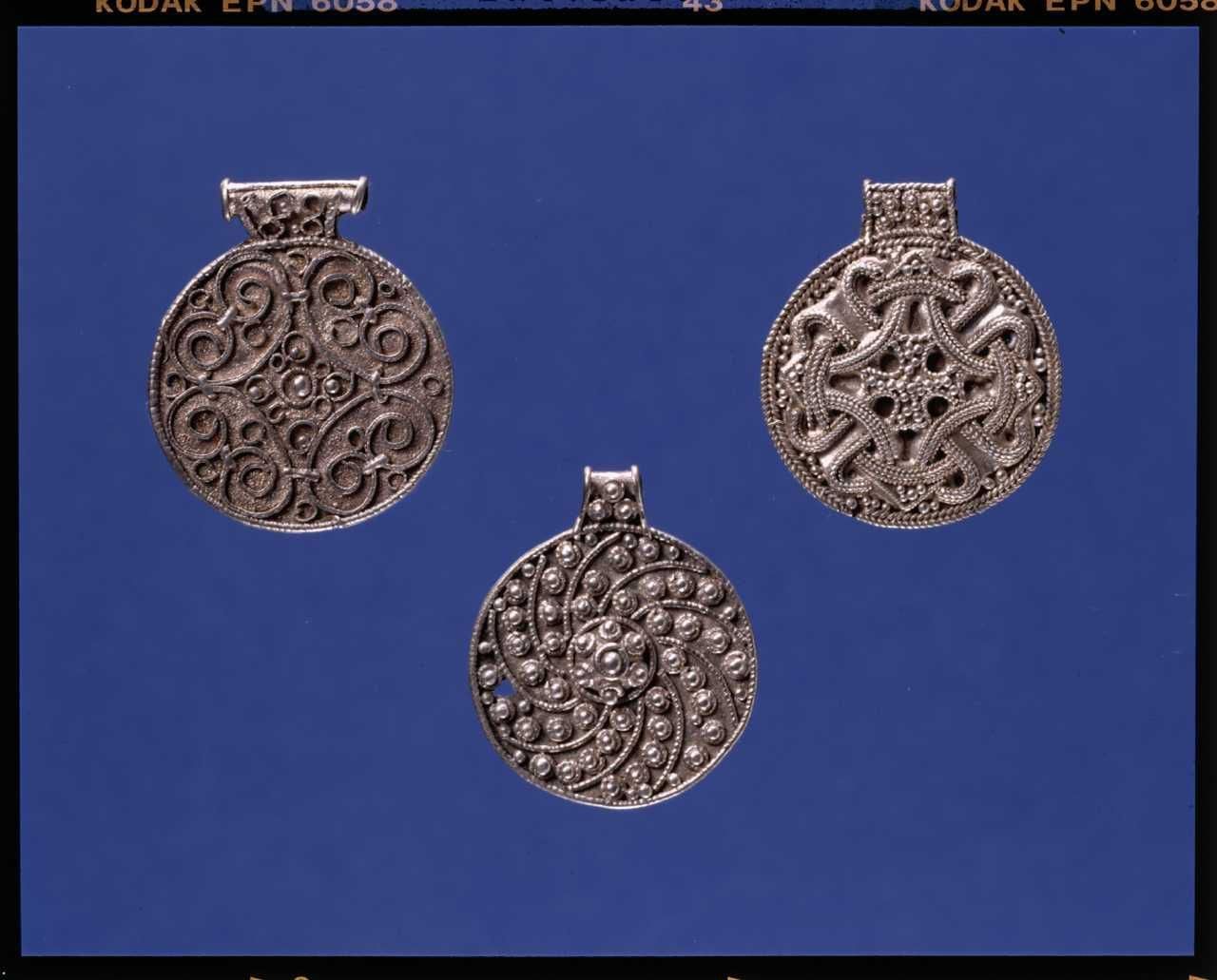
Pendants from the Terslev hoard
Three silver pendants, decorated with spirals, interlaced bands and rows of tiny silver balls.
They come from one of Denmark’s largest silver hoards. Two boys found it in 1911 while digging in a garden at Terslev. The hoard weighs over six and a half kilos and contains coins from as far apart as Iraq and England, drinking bowls, jewellery and a great deal of hacksilver.
c. 958 · Jelling, Jutland, Denmark
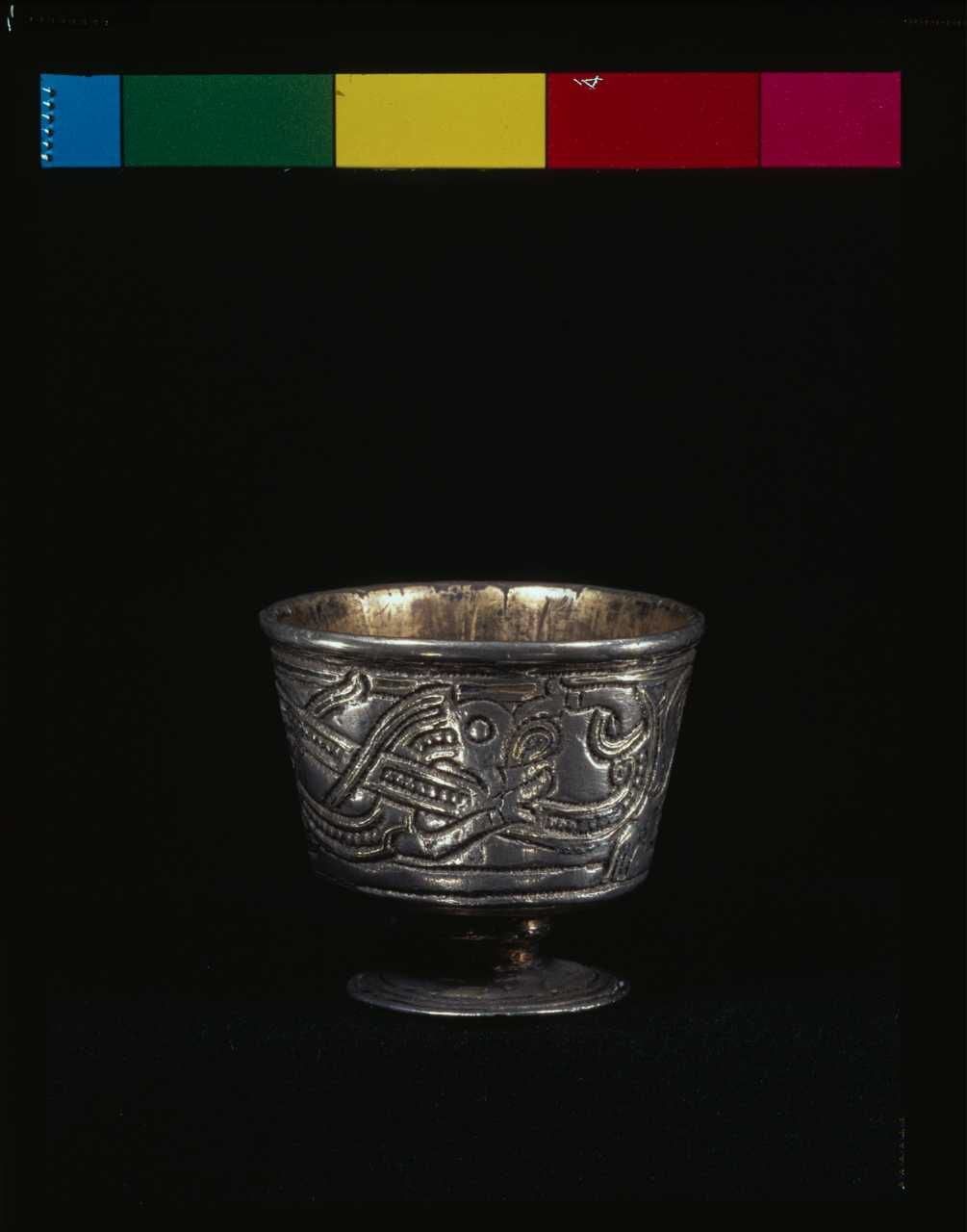
The Jelling cup
A small cup of almost pure silver, only four centimetres high. It is gilt on the inside, and around the outside two S-shaped animals twist into each other, picked out with gilding and niello. It is this cup that gave its name to the Jelling style.
The cup was found in 1820 in the burial chamber of the North Mound at Jelling. The chamber had been robbed long before, and the cup was one of the few things left.
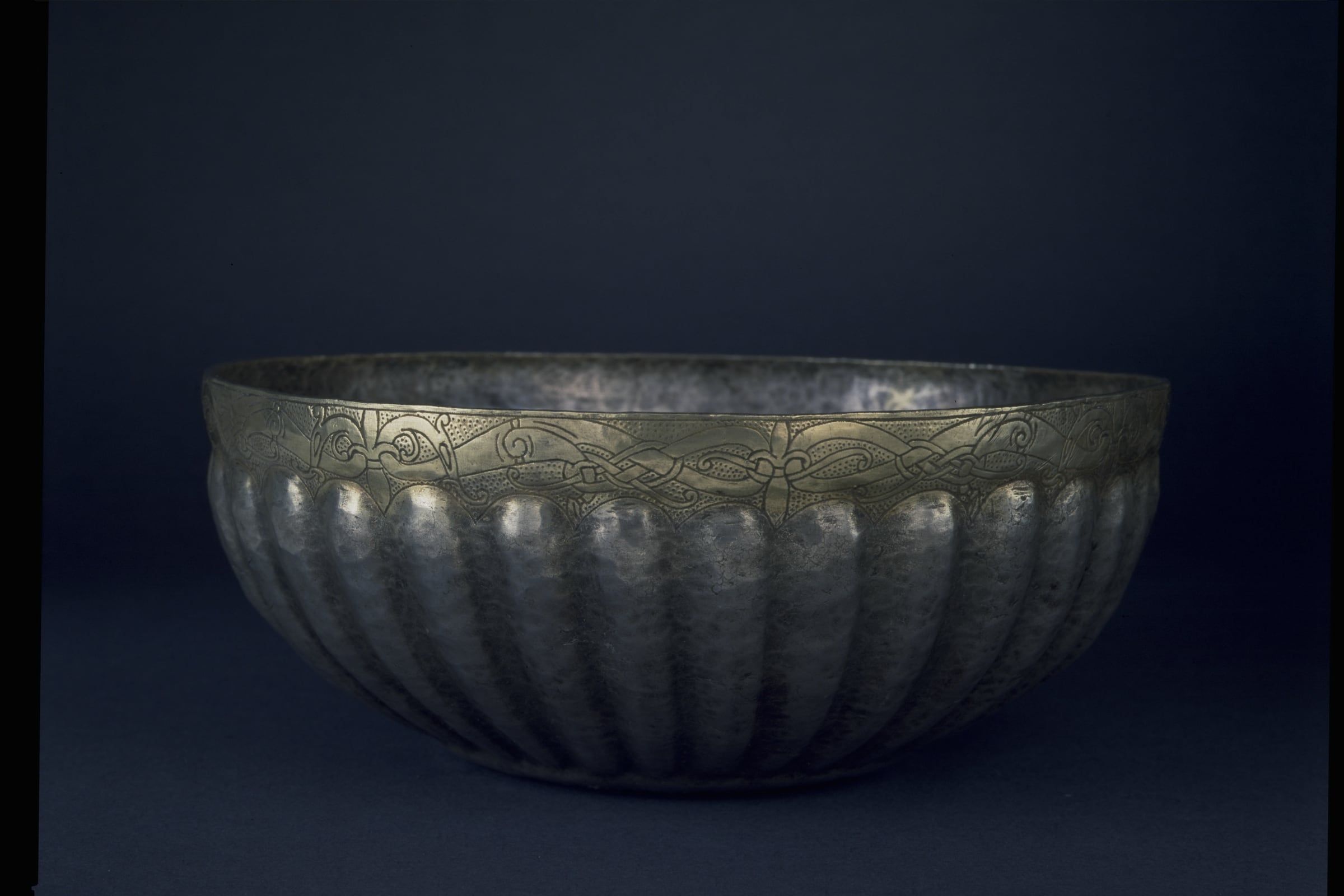
1000s · Lilla Valla, Rute, Gotland, Sweden
The silver bowl from Lilla Valla
The bowl is raised from silver, with flutes running all the way down its side. Along the rim runs a gilt band engraved with slender, intertwined animals.
It lay in a silver hoard at Lilla Valla in Rute on Gotland.
Crosses and crucifixes
When the North became Christian, the cross took the place of Thor’s hammer. The first crosses were often made by the same craftsmen and decorated with the same animals. Many are reliquary crosses: hollow crosses that could be opened, made to hold a tiny piece of something holy.
Several of the crosses here are later than the Viking Age. They show how the old animal ornament lived on for a while into the Middle Ages.
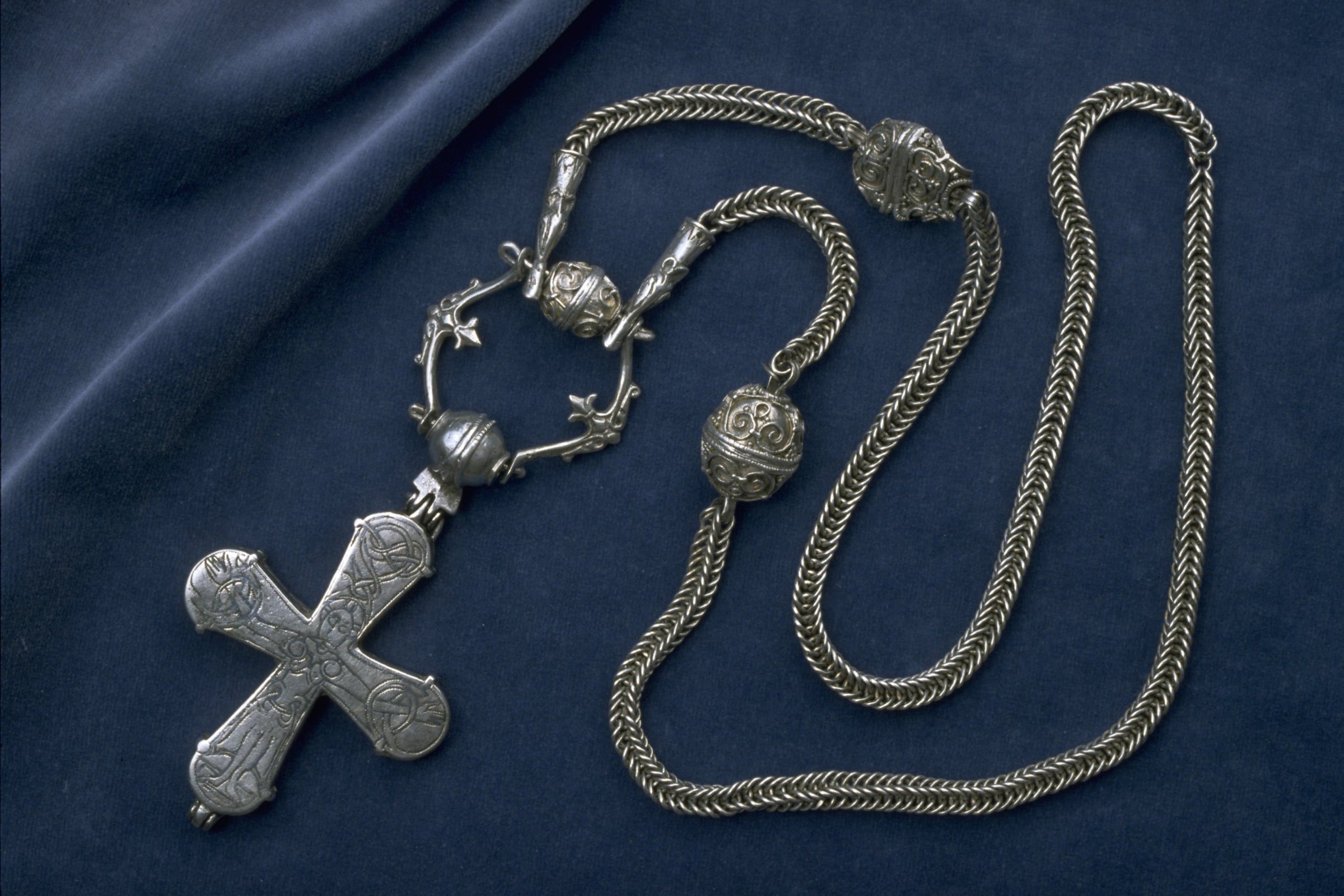
Early Middle Ages · Gåtebo, Bredsättra, Öland, Sweden
The Gåtebo cross
A reliquary cross of silver with niello, hanging from a thick braided chain. The chain is decorated with large round beads, and the cross hangs from an open holder with curved arms ending in small leaves.
With its chain it is almost half a metre long. The cross was found at Gåtebo on Öland.
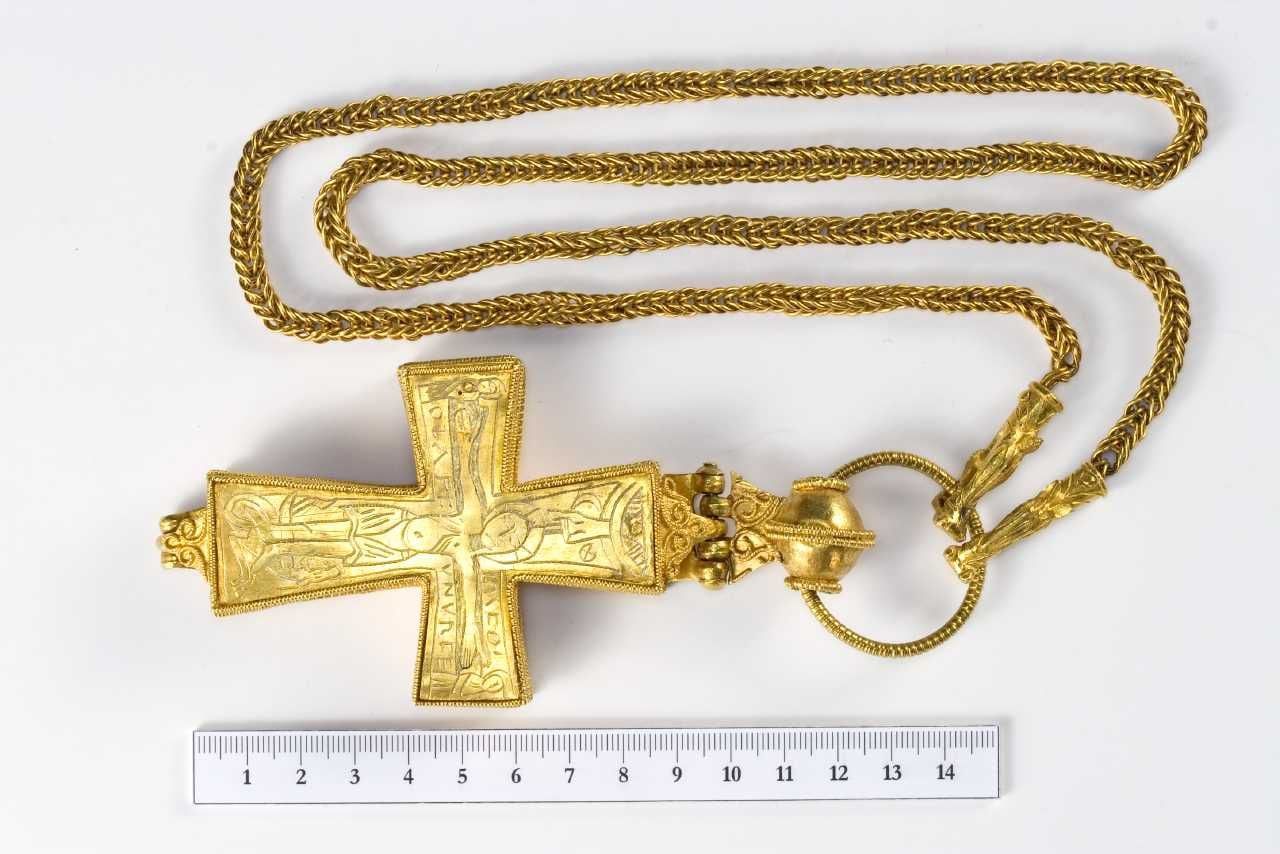
c. 1100 · Næsby, Orø, Zealand, Denmark
The Orø cross
A gold reliquary cross on a braided chain whose ends are shaped like animal heads. On the front is Christ on the cross, with the hand of God above him. One of the inscriptions names “King Olaf”, usually taken to be St Olaf of Norway.
The cross was found in 1849, sticking up out of a freshly ploughed field on Orø. It was found by a maidservant. With its chain it weighs about 310 grams.
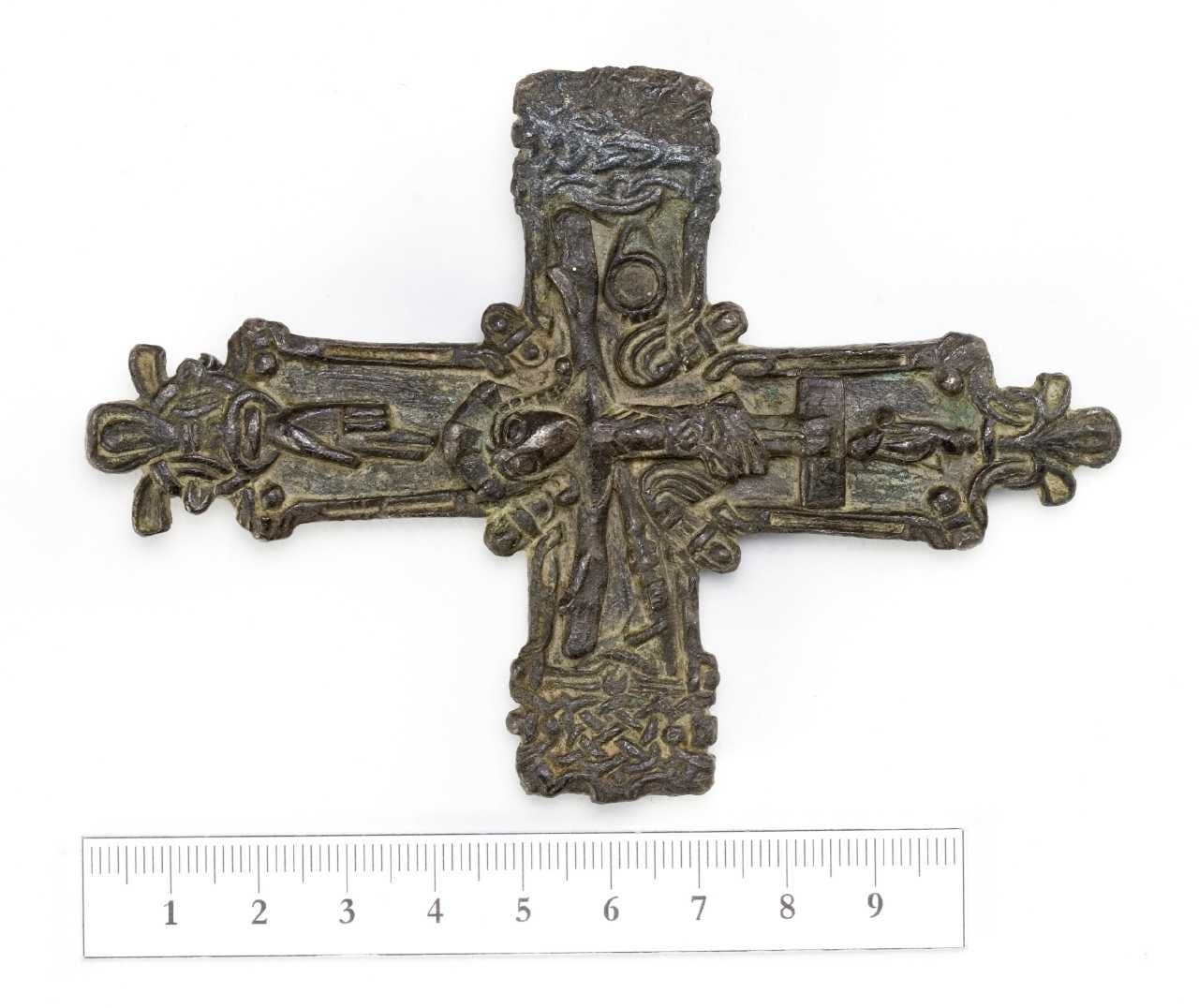
1100s or early 1200s · West Lolland, Denmark
The bronze crucifix from Lolland
This is the front of a reliquary cross. The back is lost, but small loops at the top and bottom show where the two halves were fastened together. Christ stands on the cross with his eyes open; above him is the hand of God and below him a long snake’s head.
The cross was probably gilt, and may have been worn on the chest by a priest. It was found in western Lolland.
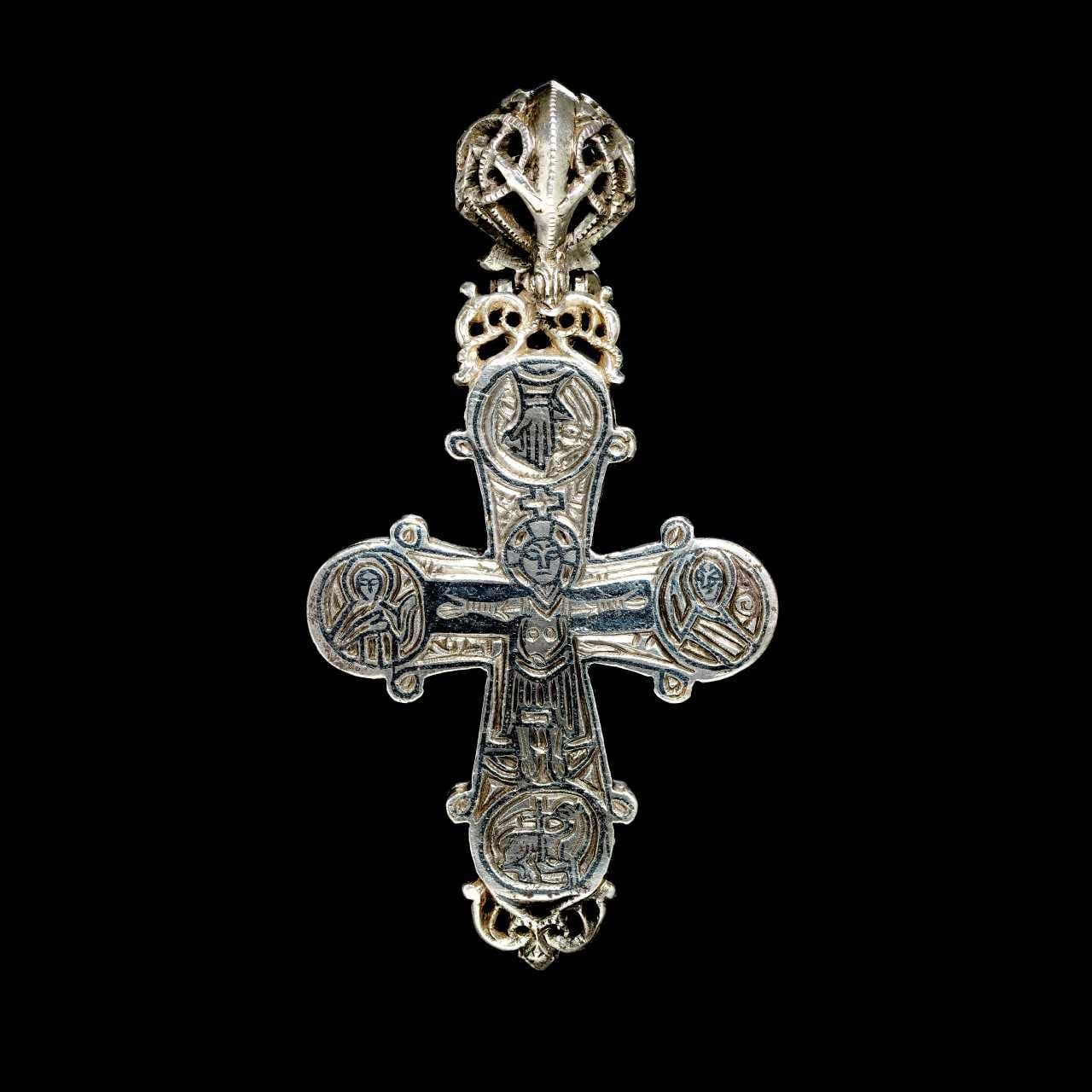
c. 1100 · Østermarie, Bornholm, Denmark
The Østermarie reliquary cross
The cross is cast in silver with pictures inlaid in black niello. On the front is Christ with Mary and John on either side, the hand of God above and the Lamb of God below. It hangs from an openwork bead shaped like a curled-up animal, and the animal heads at the hinge are in the Urnes style.
An amateur archaeologist found it with a metal detector in 2012. The cross opens and was made to hold a relic, but it was empty.
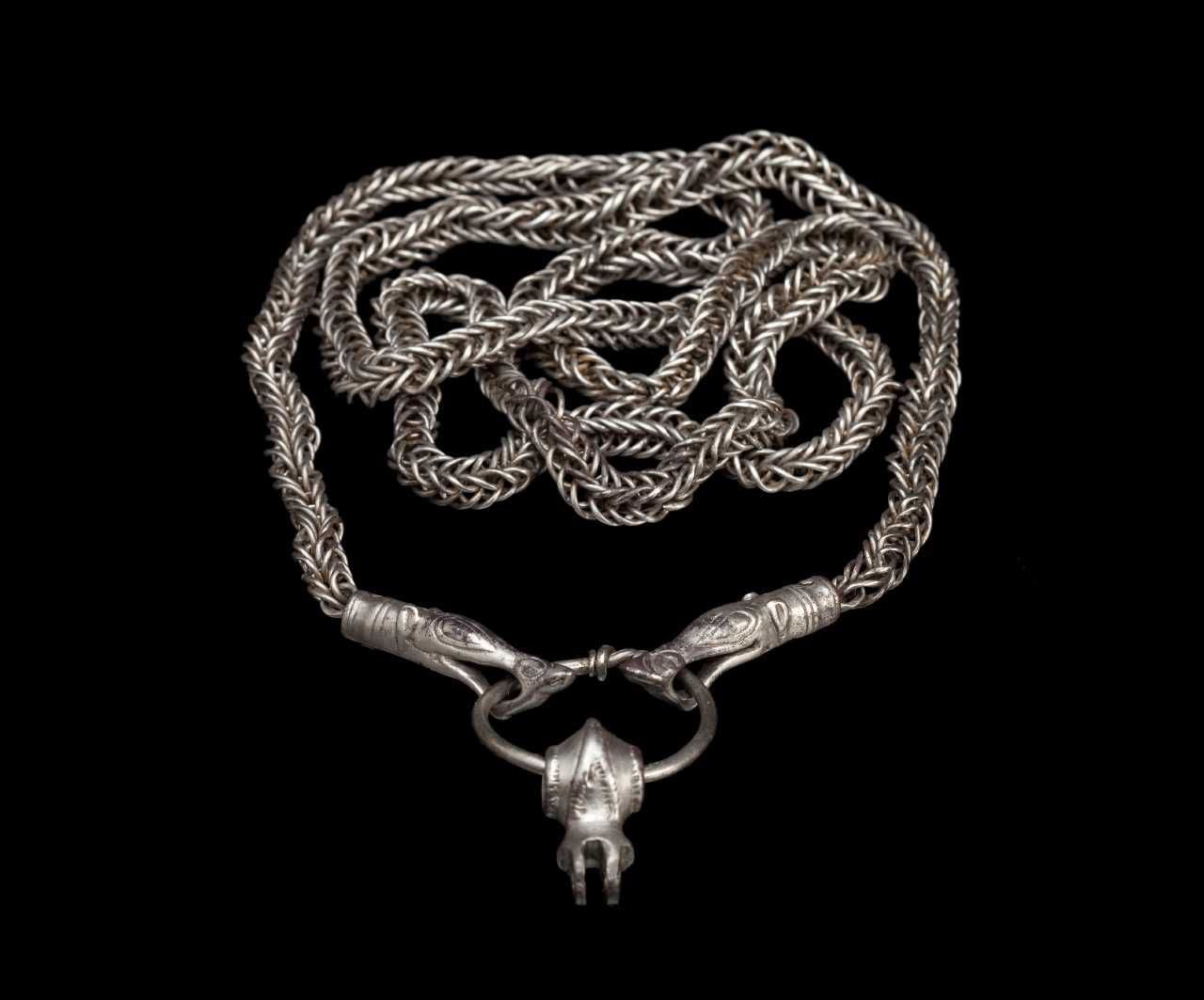
c. 1100 · Østermarie, Bornholm, Denmark
The chain of the Østermarie cross
The year after the cross was found, its chain turned up in the same field. It is almost a metre long and braided from fine silver wire. The ends are shaped like two Urnes-style animal heads holding a ring to which the cross was attached.
The images are the museums’ own and are used under the licence shown under each one. The text is our own, based on the museums’ records. See also ships and woodcarving.
Interested in runes and Norse mythology?
Get the rune of the day, new articles and news from Norse mythology straight to your inbox. Free, and you can unsubscribe at any time.