The Viking Age · 793–1066
Weapons
Sword, spear and axe were more than tools of war. They showed who you were, they were given as gifts and inherited, and they followed their owner into the grave. Here are 12 weapons from museums in Norway, Sweden and Denmark.
The sword
A sword was the most expensive weapon a man could own, and many were more showpieces than tools. The blade was double-edged and about 90 centimetres long. What set one sword apart from another was the hilt: the guards on either side of the grip and the pommel on top, often inlaid with silver, copper and brass.
Most of the Viking swords we know of have been found in graves. Norway has far more than Denmark, because the custom of burying the dead with their weapons lasted longer here. In 1919 the archaeologist Jan Petersen sorted the Norwegian swords by the shape of their hilts, and museums still use his letter types.
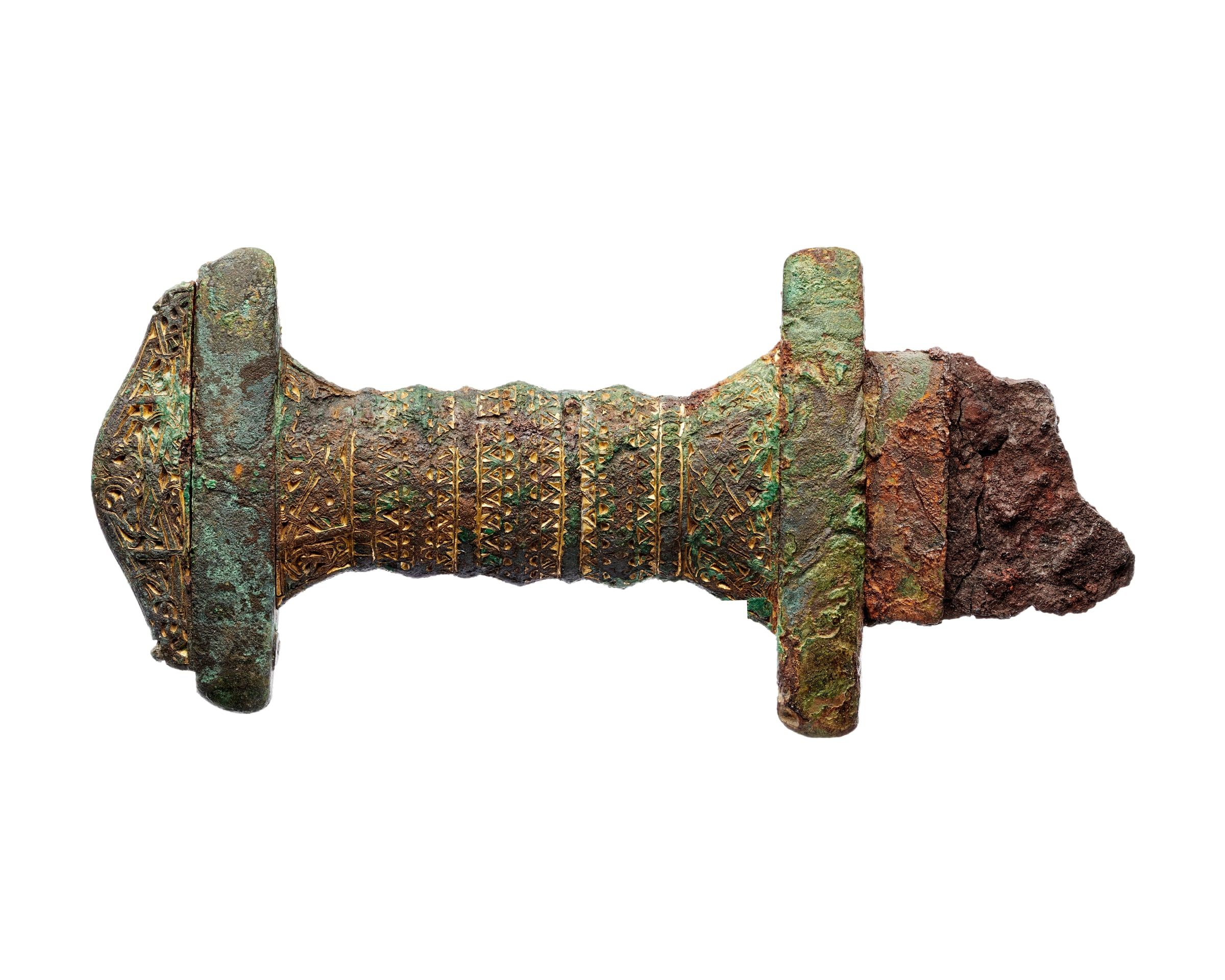
c. 800 · Broa, Halla, Gotland, Sweden
The Broa sword hilt
The hilt is of gilt bronze, covered in intertwined animals, and the grip is divided into four panels with rows of beading between them. It lay in a skeleton grave at Broa together with a set of harness mounts, and it is this find that gave its name to the Broa style, the earliest animal style of the Viking Age.
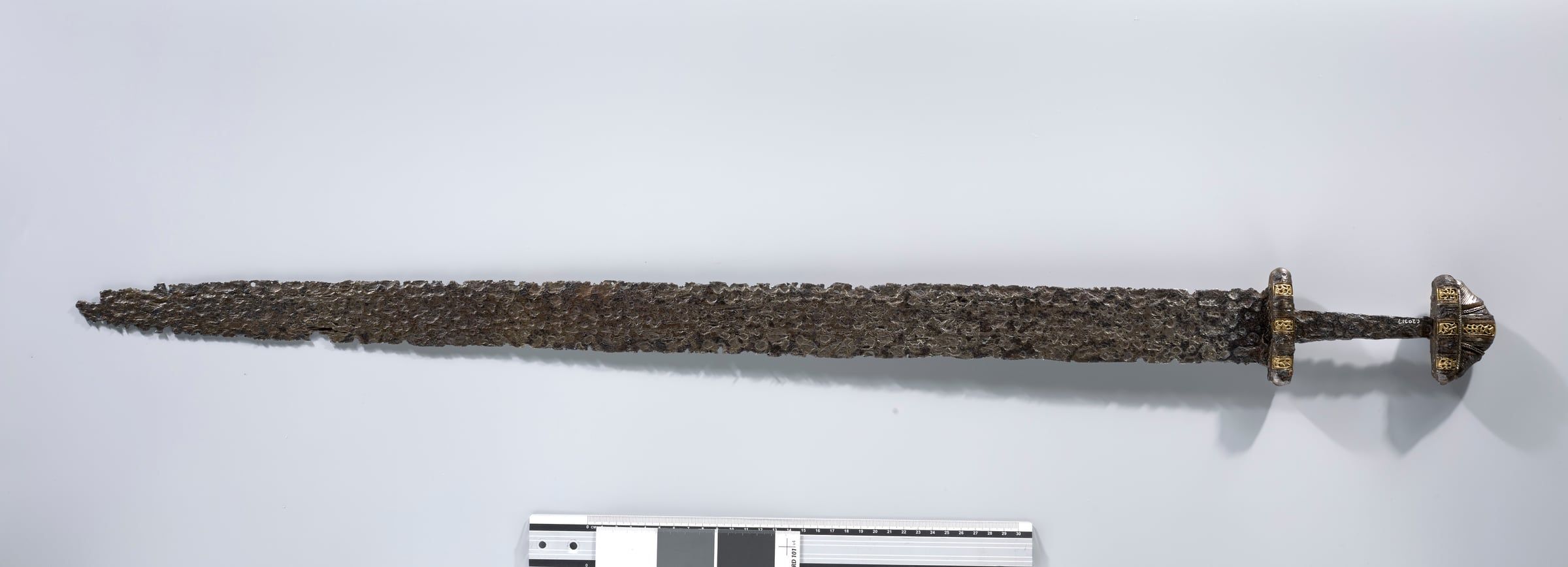
800s · Steinsvik, Tjeldsund, Troms, Norway
The Steinsvik sword
The sword is almost a metre long and well preserved. The blade is pattern-welded, and the hilt is unusually rich: inlaid bronze plates with animal ornament, braided silver wire and strips of silver and copper.
The sword lay in a grave by a small sandy mound. The dead person had been laid with the head to the east and the sword at the left side.
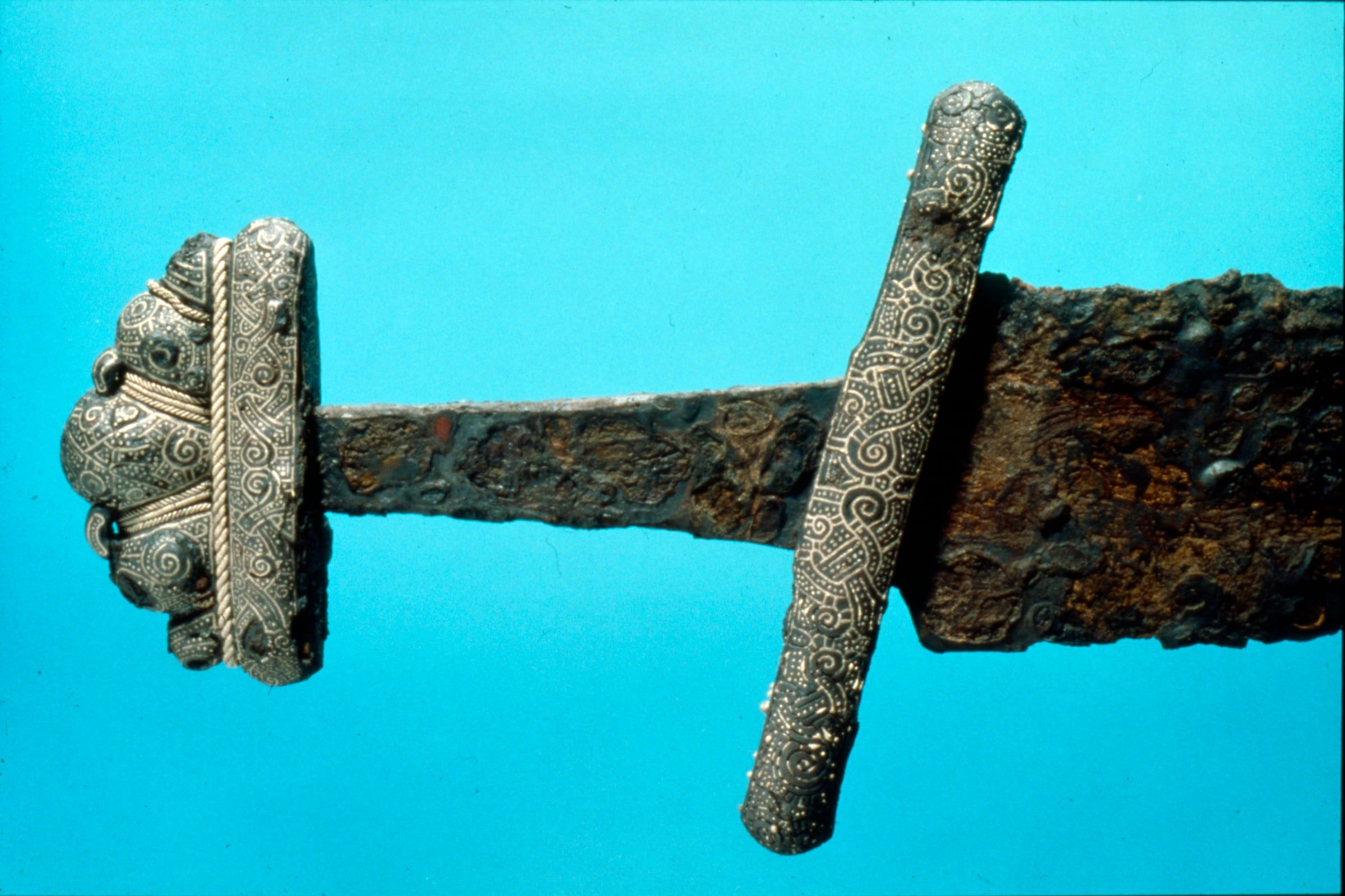
900s · Egge, Steinkjer, Trøndelag, Norway
The Egge sword
The pommel is forged in five parts, and the two outermost are shaped like animal heads turning away from each other. The guards are covered in inlaid silver bands in interlace and spirals, and on the lower guard two snakes coil around the grip.
The sword was found when a cable trench was being dug through a burial mound close to Egge church. The grave was a cremation grave.
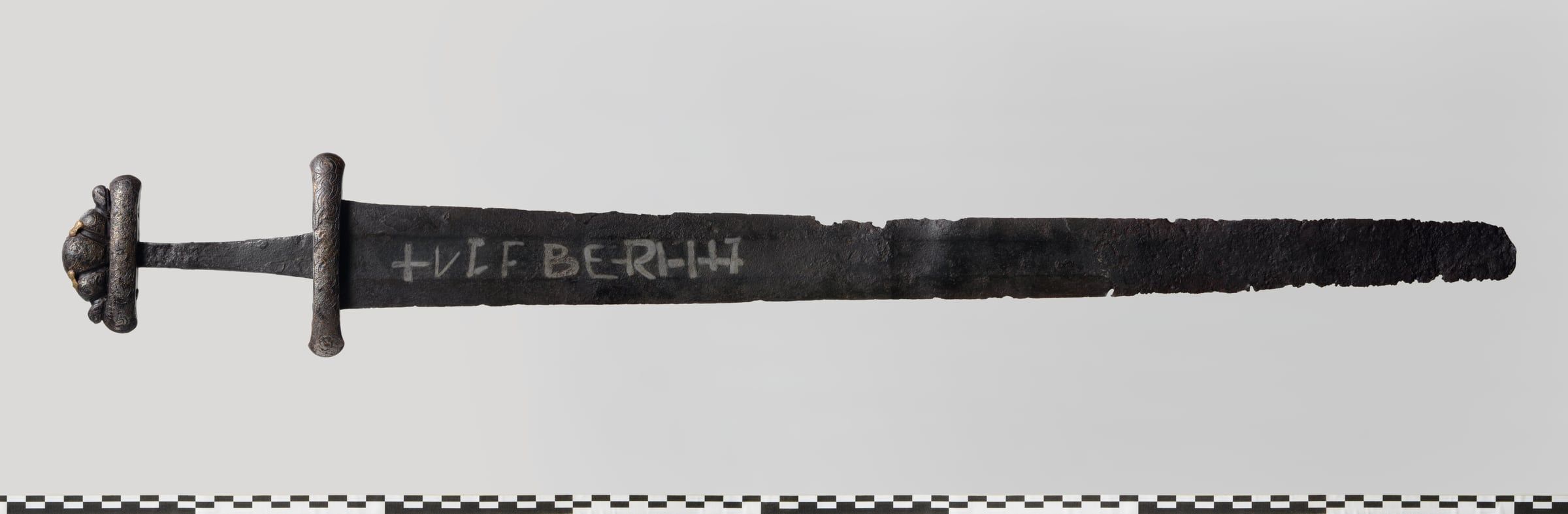
900s · Hedmarken, Innlandet, Norway
The sword with the ULFBERHT mark
Inlaid in the blade is the name ULFBERHT, written in Latin letters. Around 170 swords with this mark are known from all over northern Europe. They were probably made in the Rhineland in the Frankish kingdom, and were so sought after that the mark was also copied.
The hilt is decorated with copper in an interlace pattern. The sword came to the museum as early as 1829, with only the information that it had been found in the ground in Hedmarken.
900s · Sandbu, Vågå, Innlandet, Norway
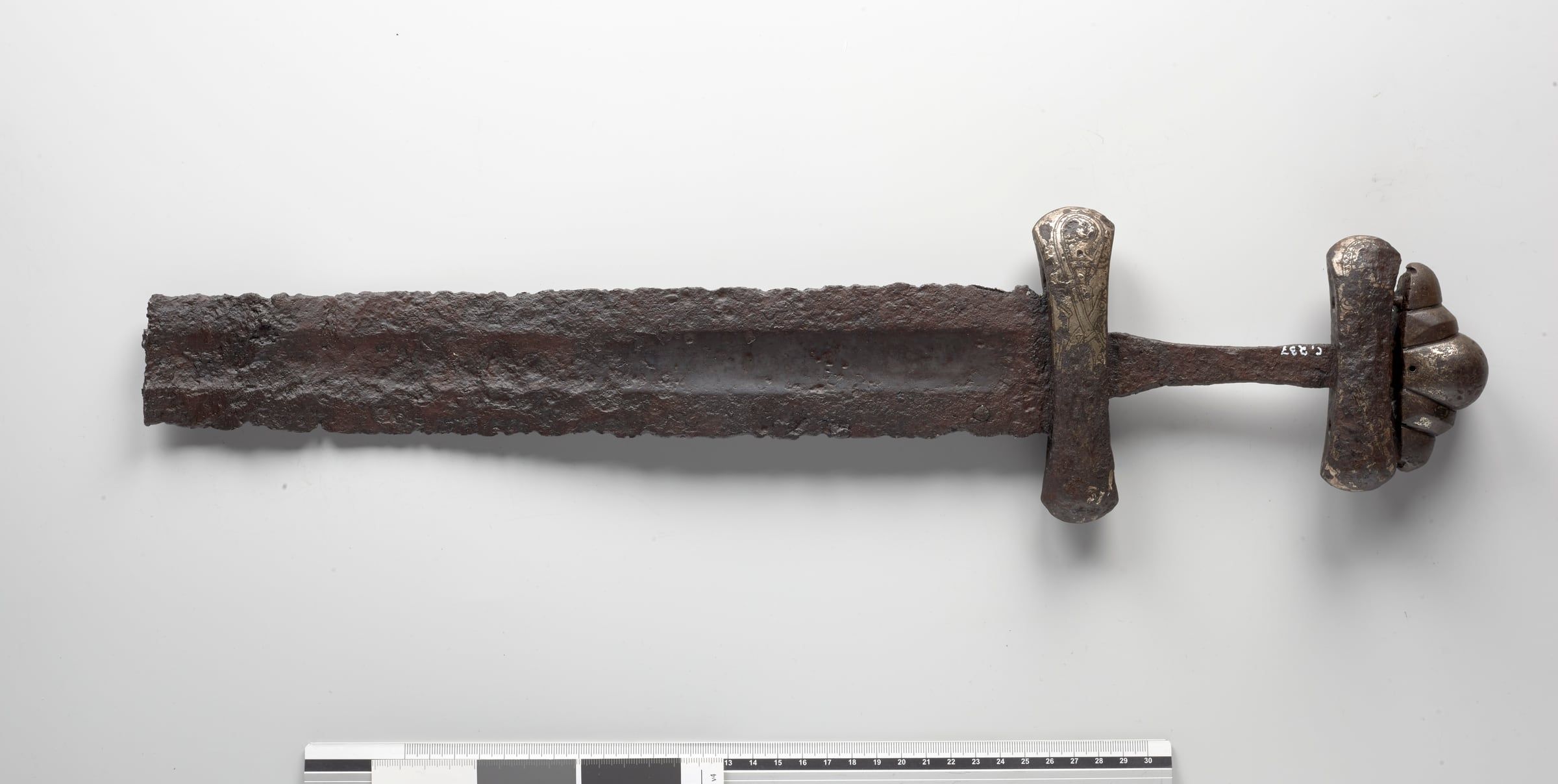
The Sandbu sword
Only the upper half of the blade survives, but the hilt is all the more impressive. The guards are heavy and were once decorated with stripes of inlaid silver, and the pommel alone weighs over 200 grams. The sword comes from a grave at Sandbu in Vågå.
Second half of the 900s · Gjermundbu, Ringerike, Buskerud, Norway
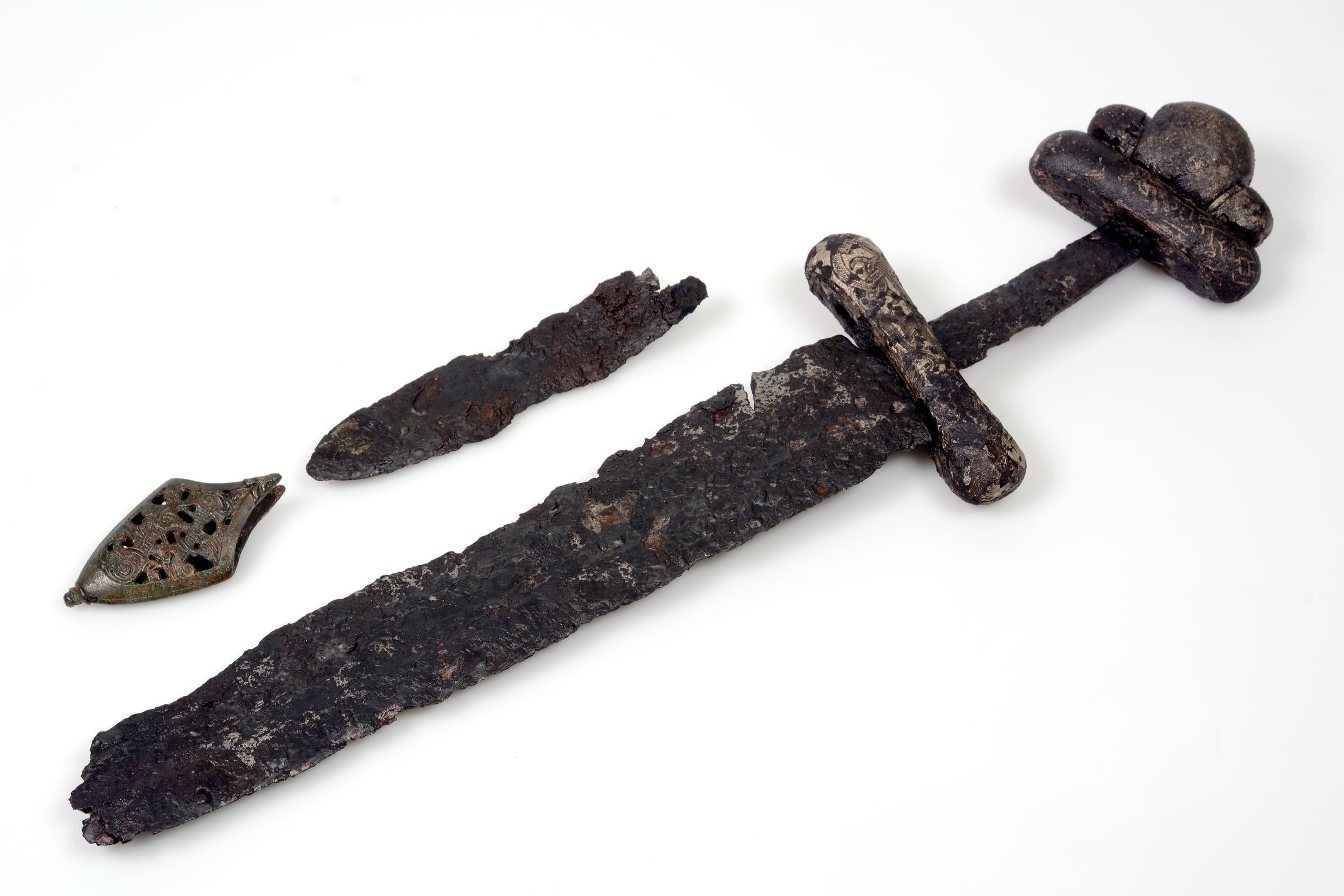
The Gjermundbu sword
The Gjermundbu find from 1943 is one of the richest male graves from the Viking Age in Norway. It held the only Viking helmet found preserved in Norway, along with the remains of a mail shirt, swords, spears, axes and shield bosses.
The sword’s blade had been bent on purpose before it was laid in the grave. The guards are inlaid with silver and copper in chequered patterns.
900s · Vold, Grue, Innlandet, Norway
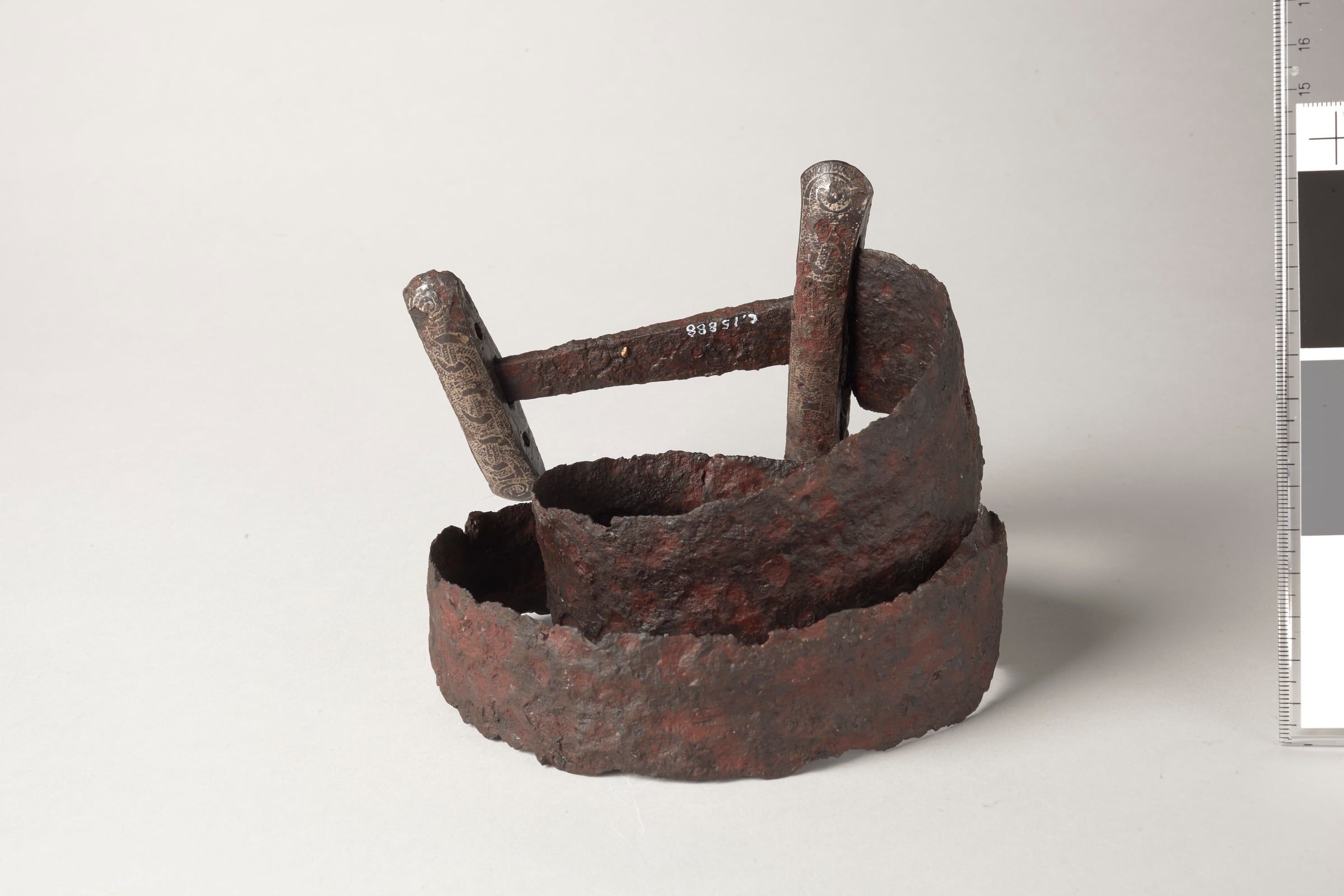
The rolled-up sword from Vold
The blade has been rolled up several times, so that the sword could no longer be used. It lay in a large burial mound together with the bones of several horses. We do not know for certain why swords were bent before they were placed in the grave. Perhaps the weapon was meant to “die” with its owner, or perhaps no one was supposed to be able to use it again.
c. 1000 · Århus, Fyresdal, Telemark, Norway
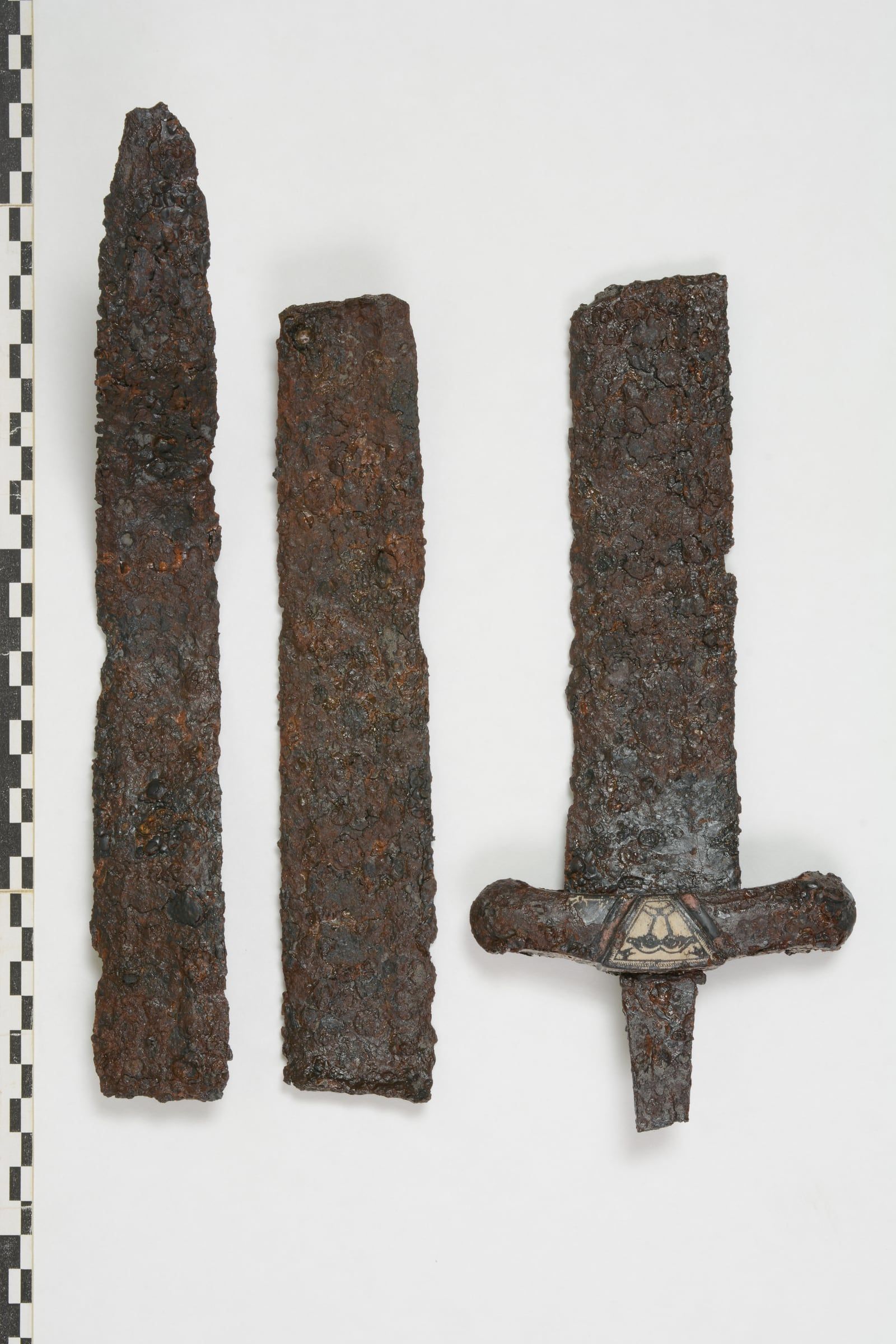
The sword from the flower bed in Fyresdal
In 1996 a gardener found the sword in a flower bed. The blade is bent and lies in three pieces. In the middle of the lower guard sits a small mask with clear eyebrows and a drooping moustache, made of inlaid silver and niello.
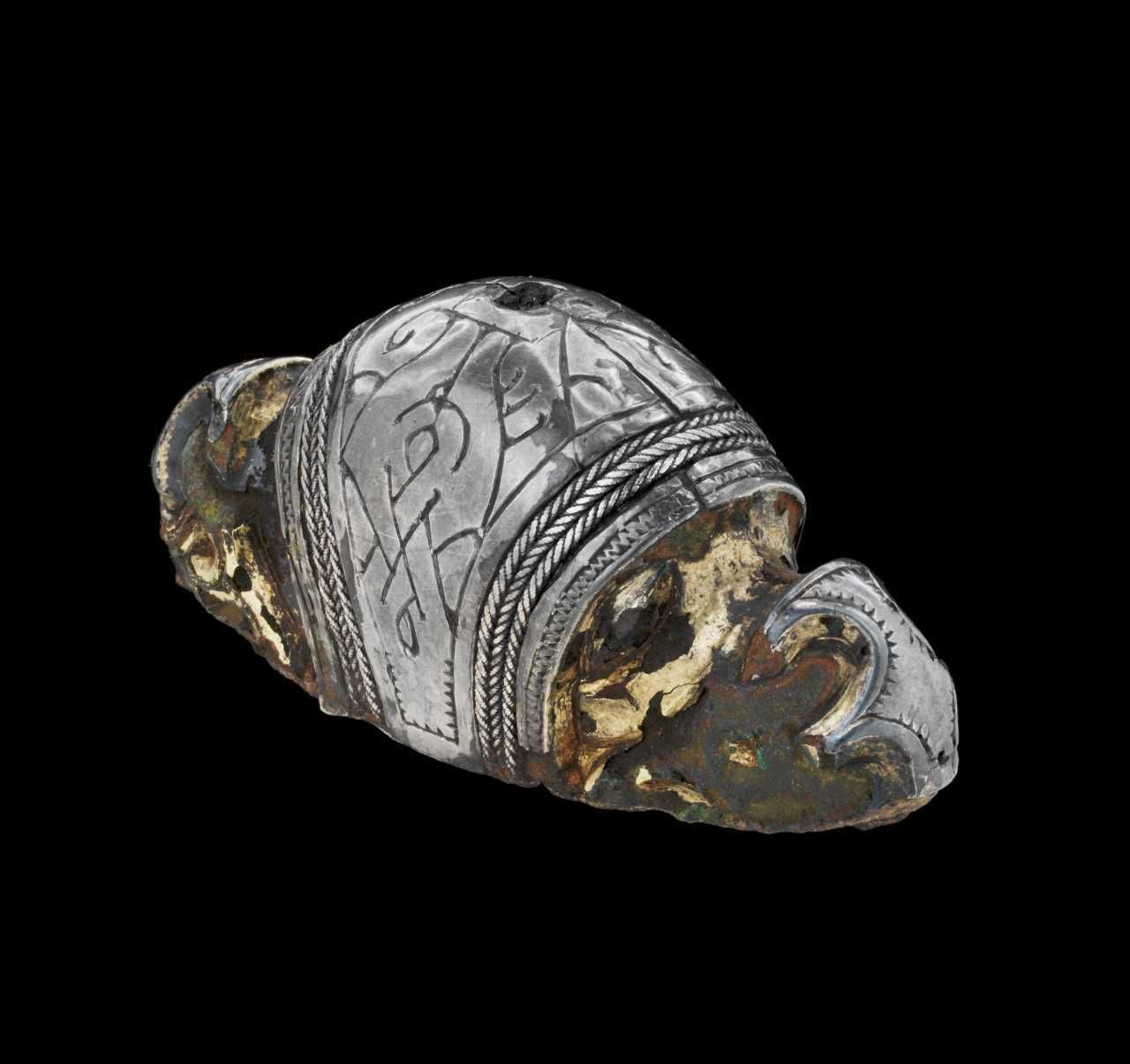
Late 900s · Gråsand, Haderup, Jutland, Denmark
The Gråsand sword pommel
Only the pommel is left of this sword. It is made of iron, clad in silver and decorated with the intertwined animals of the Mammen style. It was found in a bog in Jutland.
The spear
The spear was the most common weapon. It was cheaper to make than a sword, and could be both thrown and used for thrusting. The provincial laws required free men to keep their own weapons for when the leidang (the levy) was called out, and for most of them that meant a spear, an axe and a shield.
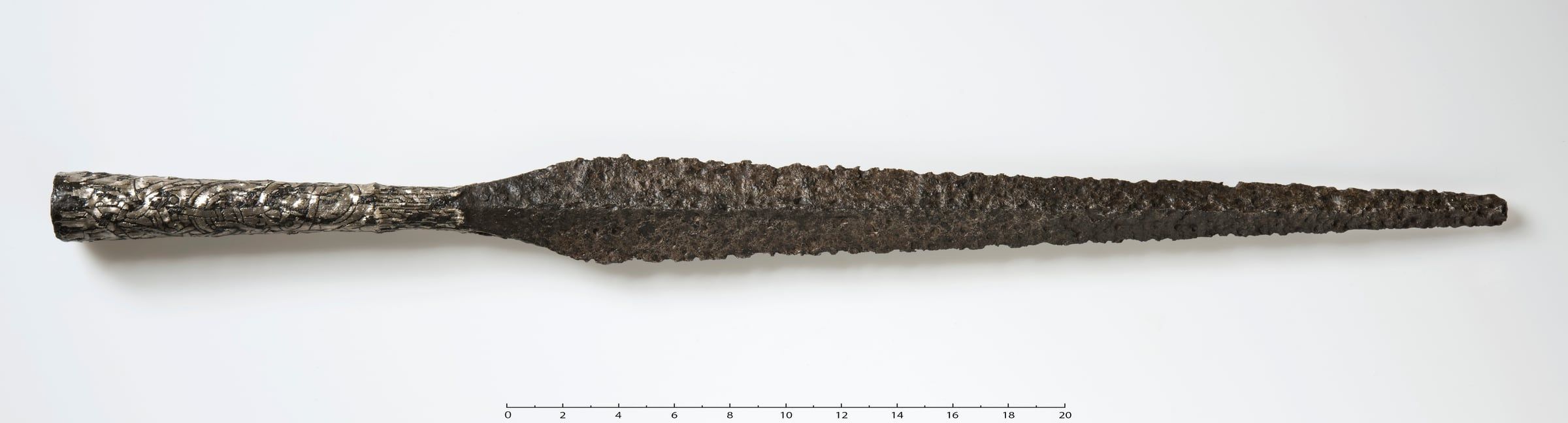
900s · Nomeland, Valle, Setesdal, Norway
Silver-clad spearhead from Nomeland
The whole socket, the part the shaft was pushed into, is clad in a silver plate with an interlace pattern drawn in niello. One of the edges bears the marks of two sword blows.
The spearhead was found in the 1890s, when some farmers in Hyllestad were digging in mounds by the post road at Nomeland. A spear, an axe and a sword lay close together, with their points to the north.
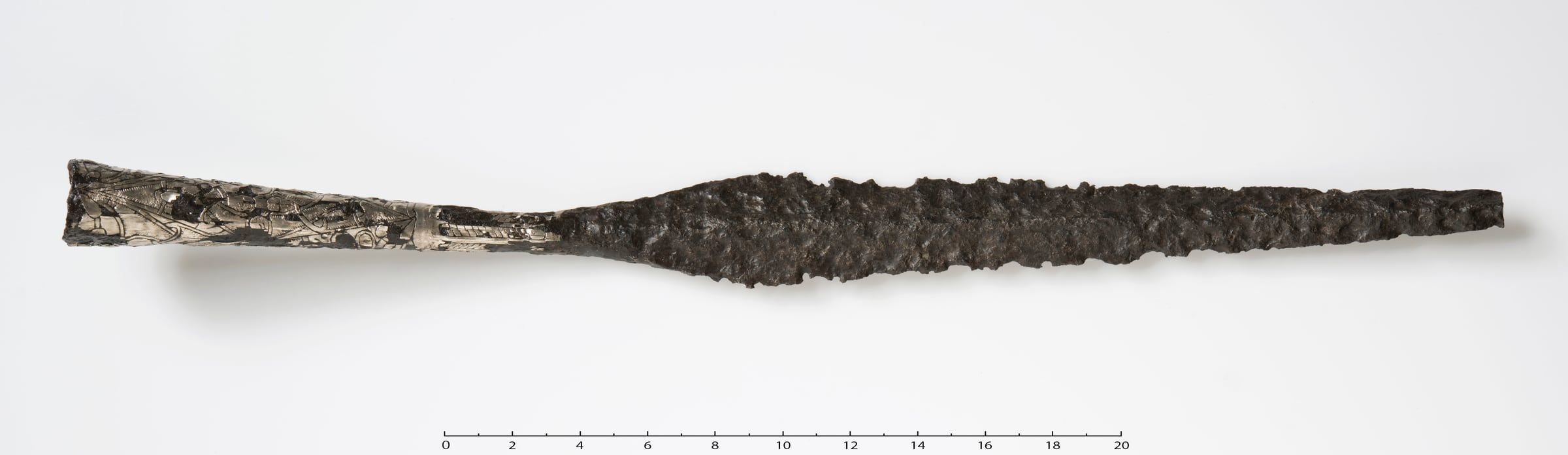
900s · Nomeland, Valle, Setesdal, Norway
The second spearhead from Nomeland
The same type, from the same find. Here the silver decoration is set in diamond-shaped frames. The spear is bent where the blade begins, and here too the edge bears the mark of a sword blow.
The axe
The axe was both a tool and a weapon. The bearded axe, with a blade that reaches down below the haft, was common from the 700s. Towards the end of the Viking Age came the broad, thin battle axes that warriors held with both hands.
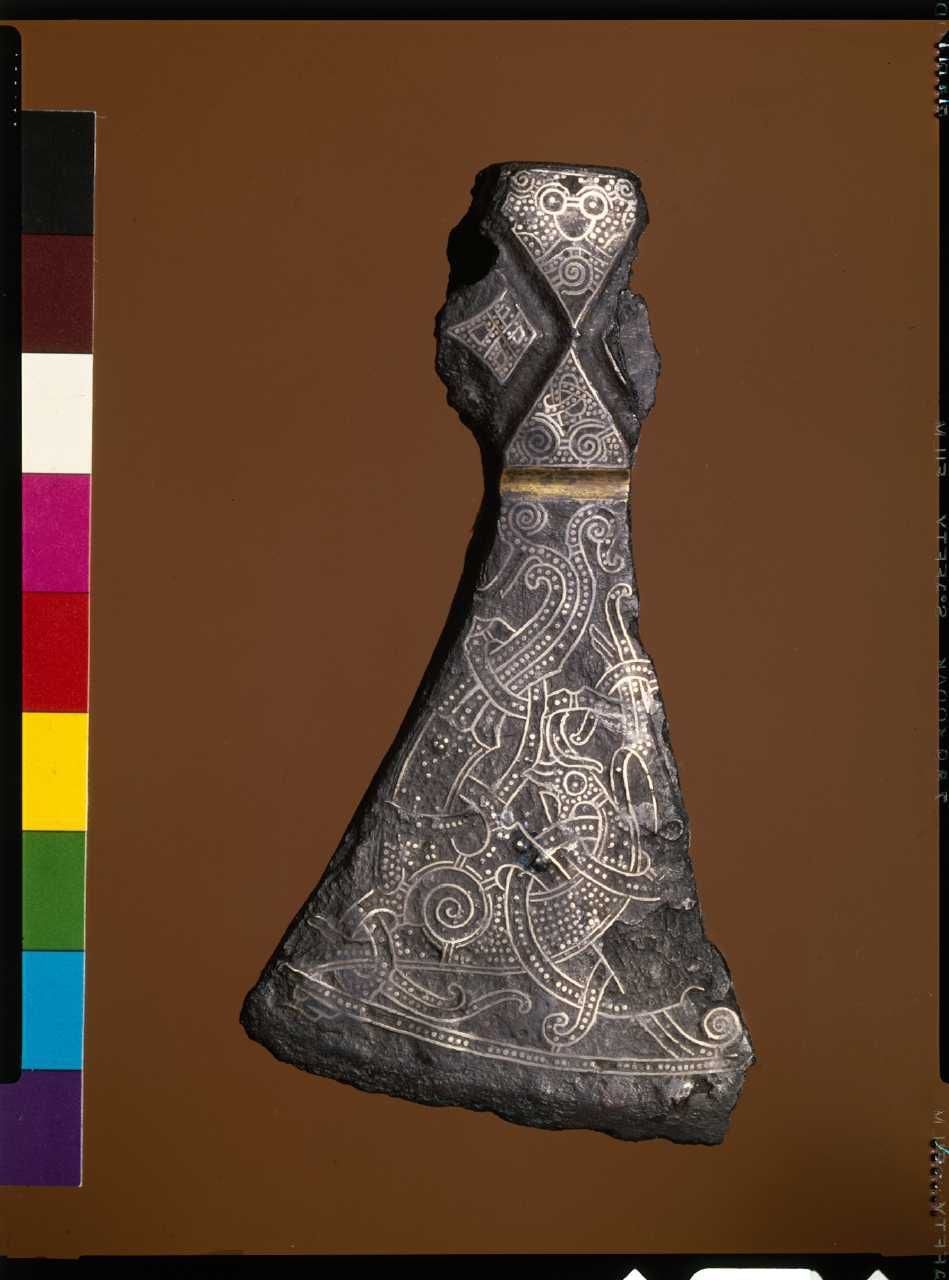
c. 970 · Bjerringhøj, Mammen, Jutland, Denmark
The Mammen axe
The most famous Viking axe, and it has given its name to a whole art style: the Mammen style. The axe head is iron, entirely covered in inlaid silver wire. One side shows a bird in a pattern of tendrils, the other only tendrils.
The axe lay in a chamber grave for a wealthy man in Bjerringhøj. The tree rings in the timber show that the burial chamber was built in the winter of 970–971, which makes the axe one of the best-dated objects from the Viking Age. It was probably not made for fighting, but to show who its owner was.
The images are the museums’ own and are used under the licence shown under each one. The text is our own, based on the museums’ records. See also the runestones.
Interested in runes and Norse mythology?
Get the rune of the day, new articles and news from Norse mythology straight to your inbox. Free, and you can unsubscribe at any time.