The Viking Age · c. 950–1100
Runestones
Most runestones were raised between the late 900s and the early 1100s. They are memorials, not gravestones: they tell who raised the stone, and for whom. Some also say who inherited the farm, or where the dead fell. Many were painted in bright colours.
Here are 16 of them, and what they say.
Norway
Norway has fewer Viking Age runestones than Sweden and Denmark, but some of the most beautiful. Many of them are carved in red sandstone from Ringerike, and it is this area that gave the Ringerike style its name.
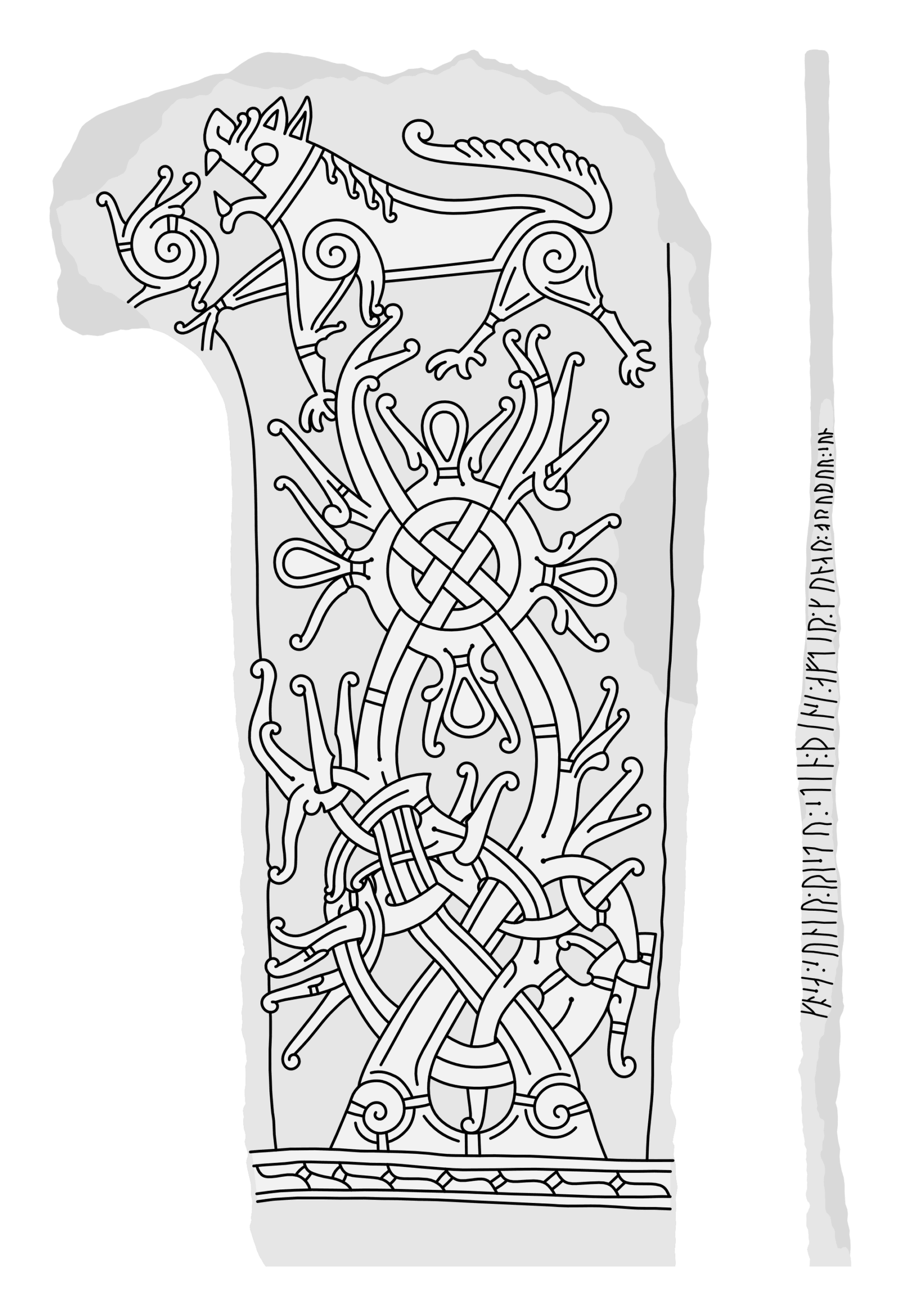
First half of the 1000s · Vang, Valdres, Norway
The Vang stone
The sons of Gasi raised this stone in memory of Gunnar, their brother’s son. That is the whole inscription, in short-twig runes along the edge.
It is the picture that has made the stone famous. A large, striding animal stands above a symmetrical pattern of tendrils growing out of two spirals. The Vang stone is considered one of the finest examples of the Ringerike style.
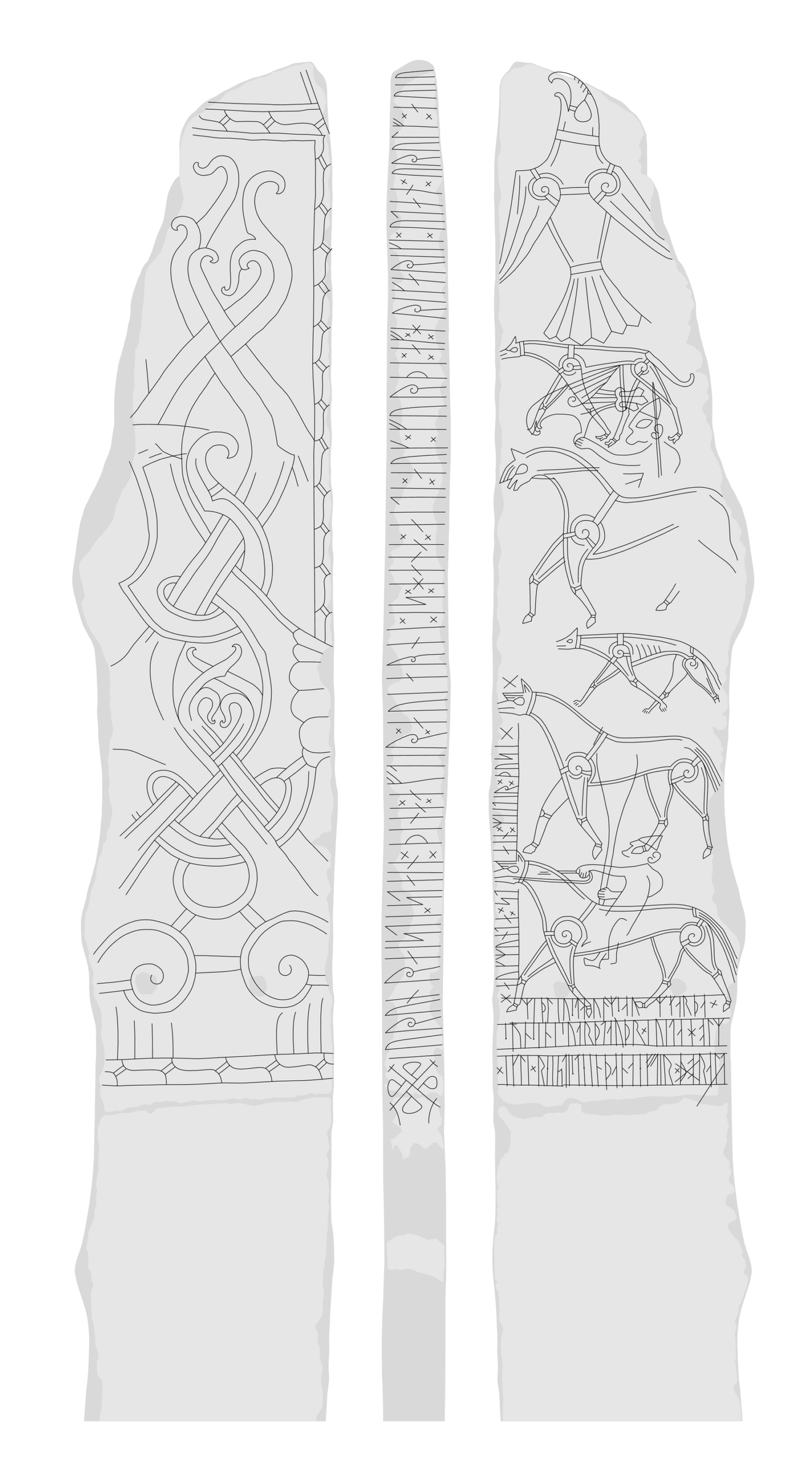
Late 900s and c. 1000 · Alstad, Toten, Norway
The Alstad stone
A stone with two inscriptions, carved about a hundred years apart. The older one says that Jorunn raised the stone in memory of her husband and brought it from Ulvøya in Ringerike. The younger one was put up by Engli in memory of his son Thorald, who died “between Vitaholm and Gardariki (the lands of the Rus’)”, that is, on the way east towards Russia.
The pictures show riders with horses and dogs and a large bird, perhaps a hunting falcon. The stone now stands in the Museum of Cultural History in Oslo.
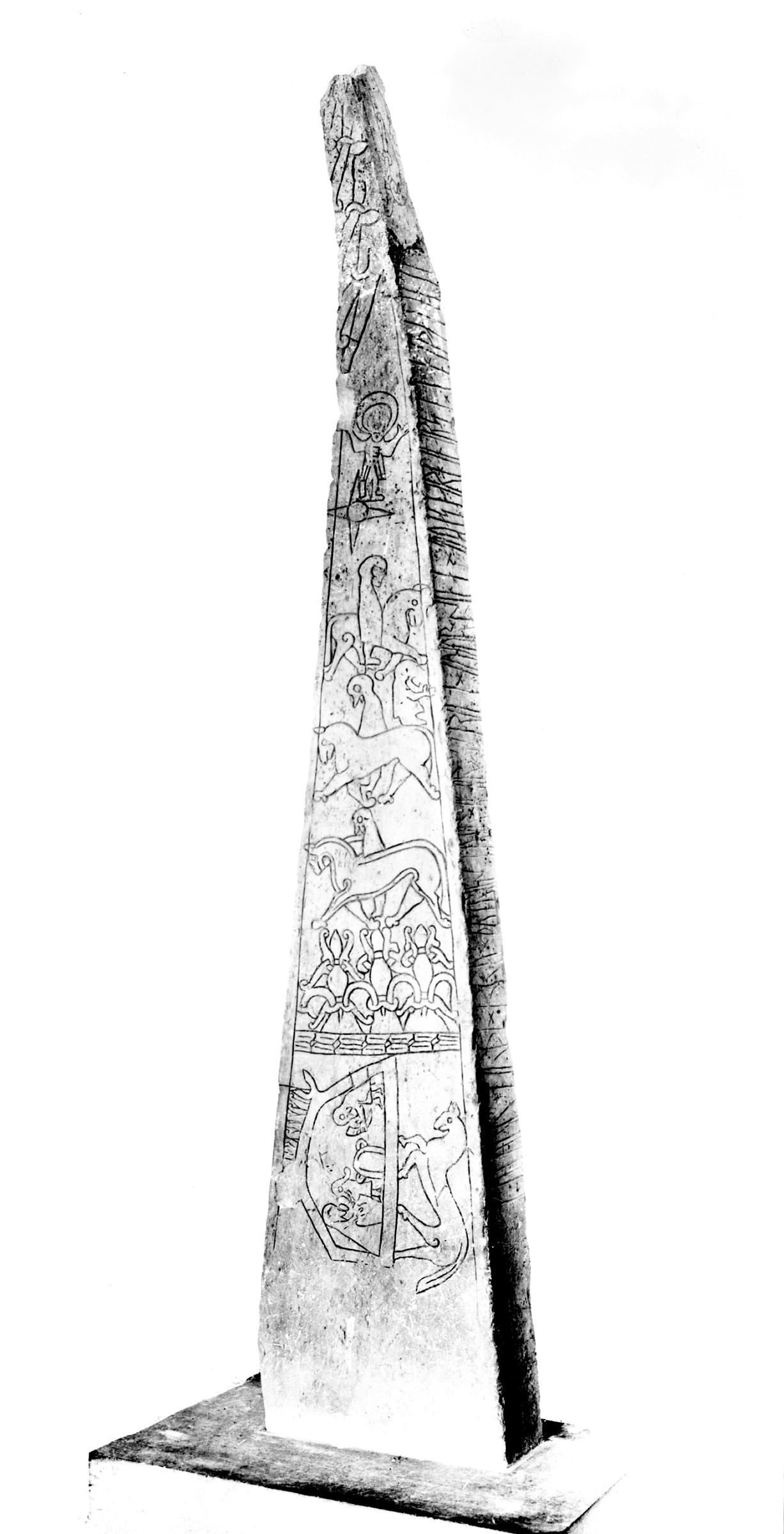
c. 1050 · Dynna, Gran, Hadeland, Norway
The Dynna stone
Gunnvor, Tryddrik’s daughter, built a bridge in memory of her daughter Astrid, “the most skilful maiden in Hadeland”. It is one of the few runestones on which a woman commemorates another woman, and parts of the inscription are written as a poem.
The picture shows the Three Wise Men riding towards the Star of Bethlehem. Building a bridge was a Christian good deed, and the stone is an early Christian memorial. It is almost three metres tall and stands in the Museum of Cultural History in Oslo.
Denmark and Scania
Scania was Danish in the Viking Age, so the stones from there count as Danish. The most famous runestone of all stands in Jelling, and after it came a wave of new stones all over Denmark.
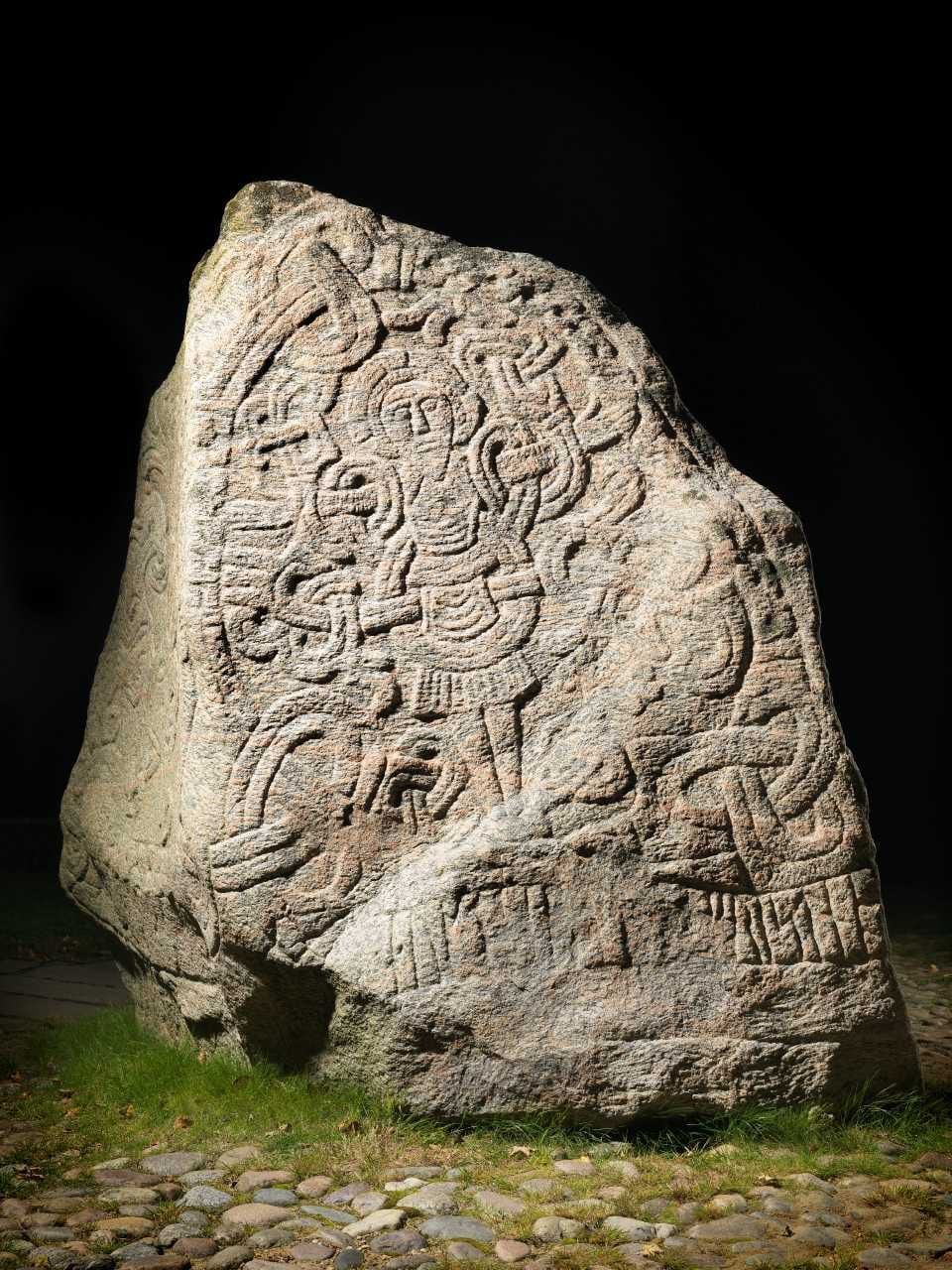
c. 965–985 · Jelling, Jutland, Denmark
The great Jelling stone
King Harald had the stone carved in memory of his father Gorm and his mother Thyra. He also writes that he won all of Denmark and Norway and made the Danes Christian. The stone has therefore been nicknamed “Denmark’s baptismal certificate”.
The stone has three sides: one with text, one with a large animal and one with the crucified Christ, the side you see here. It was originally painted in strong colours. Today it stands in a glass case by Jelling church. The Jelling monuments are on the UNESCO World Heritage List.
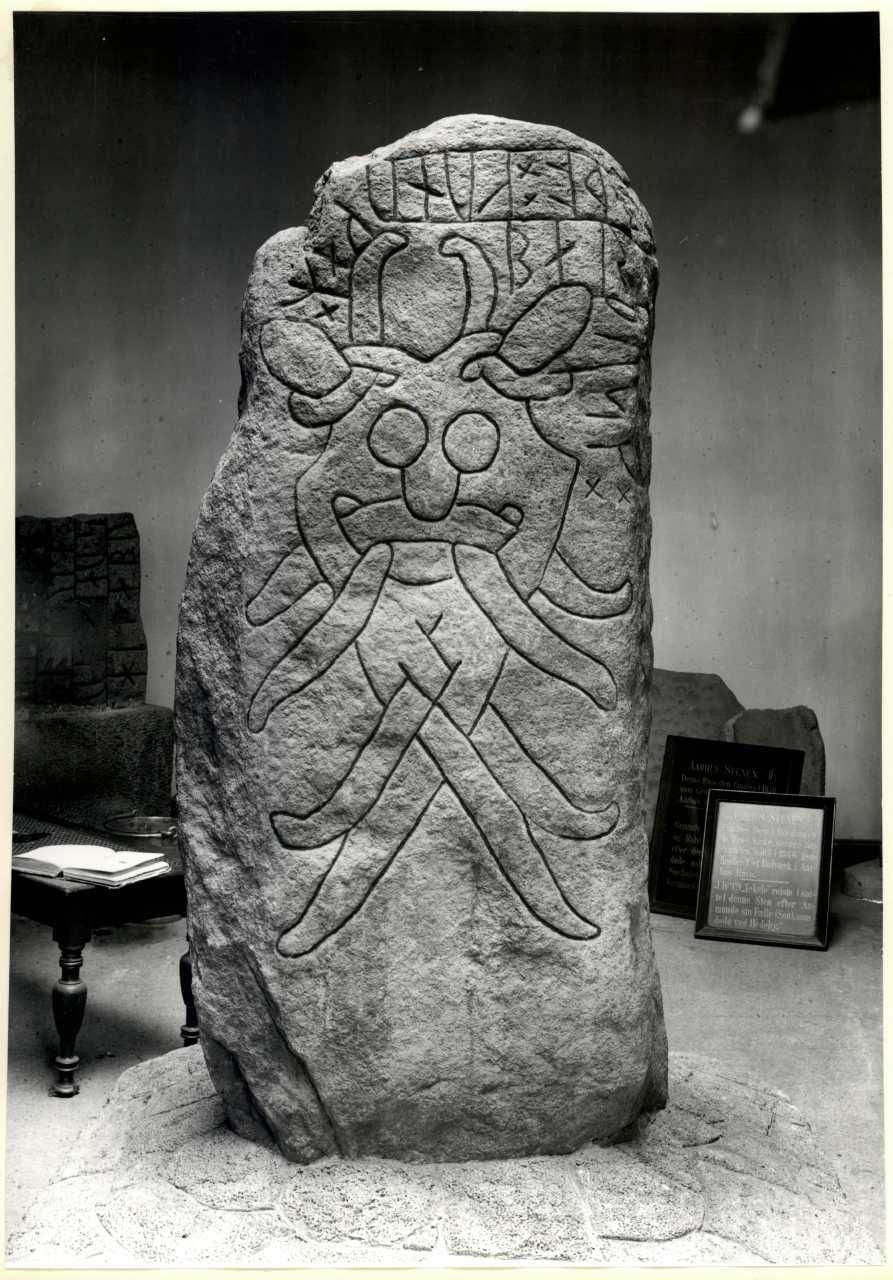
c. 1000 · Aarhus, Jutland, Denmark
The Aarhus mask stone
Gunnulf, Augot, Aslak and Rolf raised the stone in memory of Ful, their partner, who died “when the kings fought”. Which kings they were, we do not know.
The stone is dominated by a large mask with staring eyes and a beard that braids its way down the stone. It now stands in Moesgaard Museum.
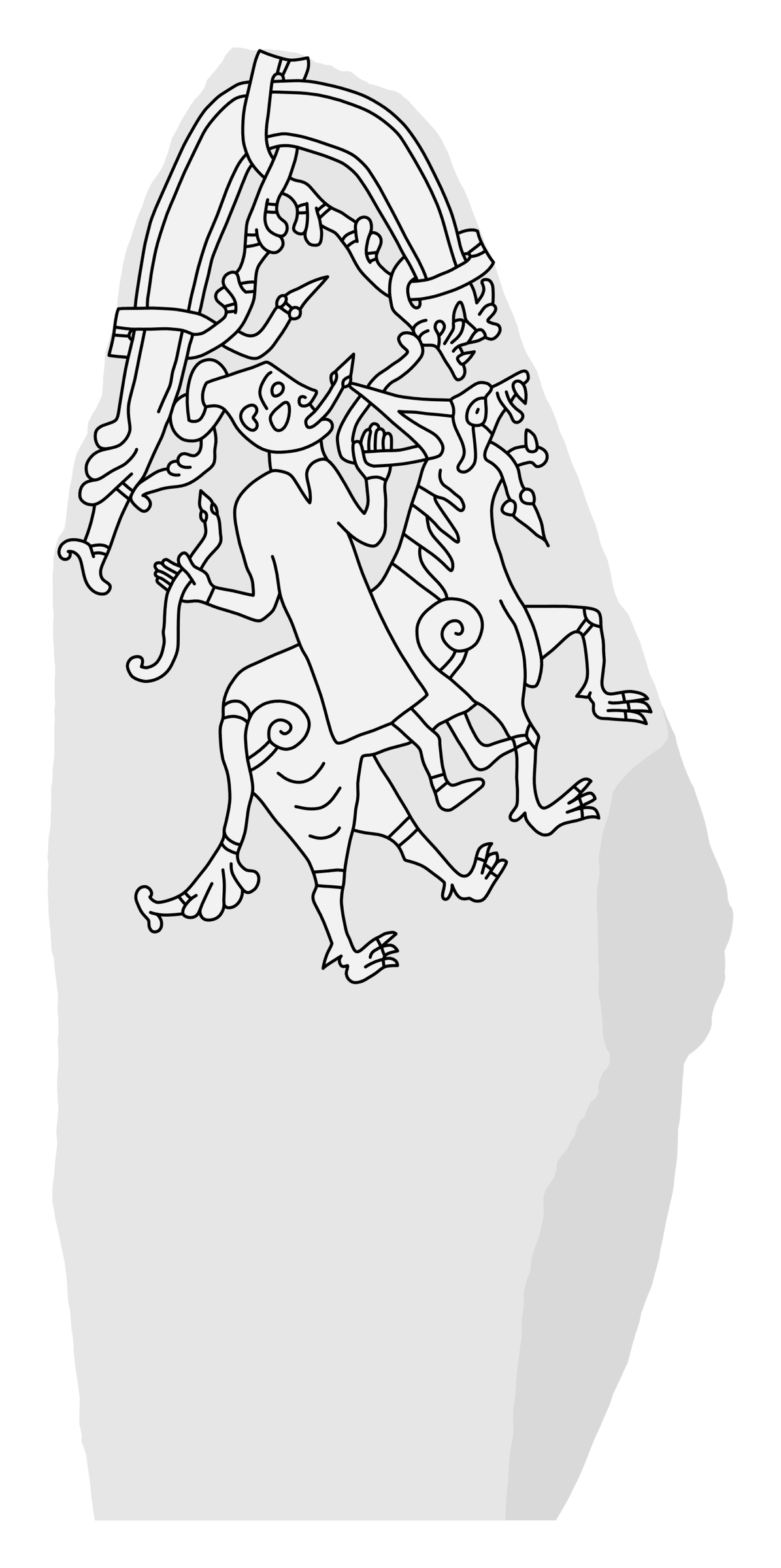
c. 1000 · Hunnestad, Scania, Sweden
The Hunnestad monument
A whole monument of stones, raised in memory of the sons of Gunni Hand. Some of the stones have only pictures. This one shows a woman riding a wolf with snakes as reins, probably the giantess Hyrrokkin, who in the myth pushed Balder’s funeral ship out to sea.
The monument was destroyed in the 1700s. One of the stones was missing for more than 200 years, until it turned up again in the foundations of a bridge in 2020.
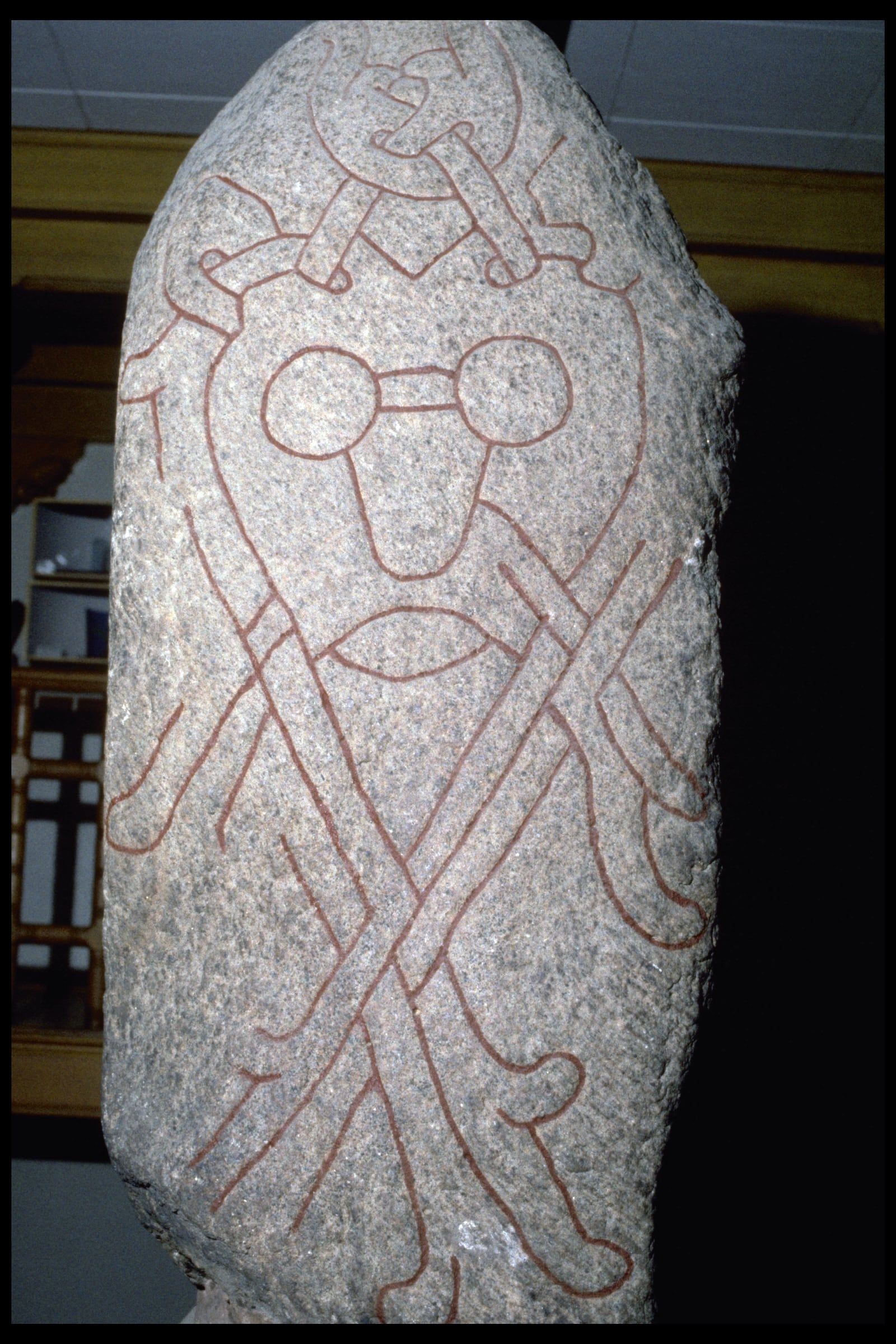
Early 1000s · Lund, Scania, Sweden
The Lundagård stone
Thorgisl, son of Asgeir Bjornsson, raised the stone in memory of his brothers, Olaf and Ottar, “good landmen”. In the middle of the stone sits a mask between two mirror-image animals.
The stone was found in the ruins of All Saints’ Abbey in Lund in 1690. It now stands in the entrance to Lund University Library.
Sweden
More than half of all runestones stand in Sweden, most of them in Uppland around Lake Mälaren. Most were raised in the 1000s, when the country became Christian, and many have both a cross and a prayer for the soul of the dead.
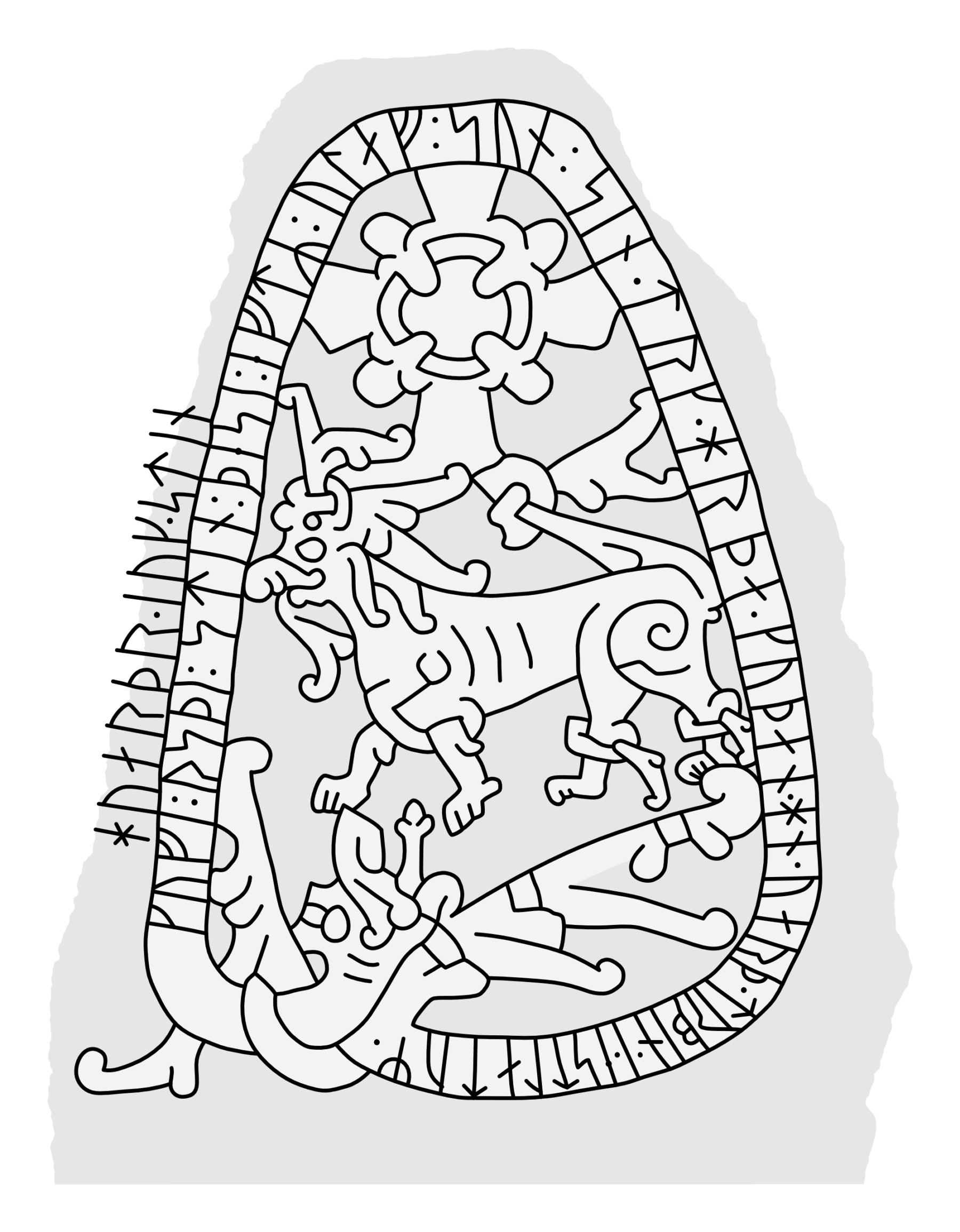
First half of the 1000s · Frugården, Norra Åsarp, Västergötland, Sweden
The Olsbro stone
Gufi raised the stone in memory of his son Olaf, “a very good drengr” (a good young warrior), who was killed in Estonia.
The animal in the middle is a large, lion-like beast with its legs knotted into the ornament. The stone still stands outdoors, on a mound by Frugården.
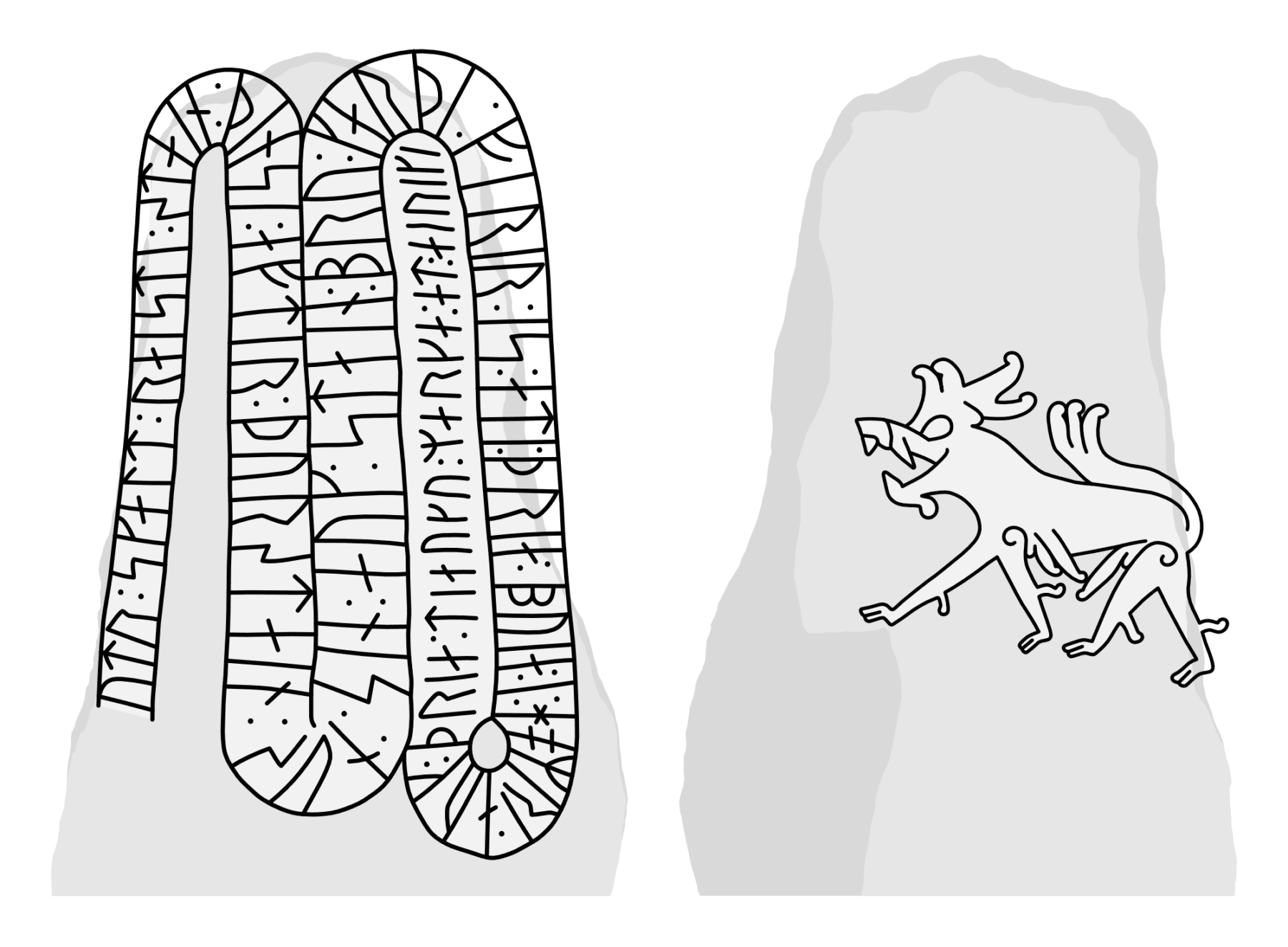
First half of the 1000s · Stora Ek, Mariestad, Västergötland, Sweden
The Stora Ek stone
Odd the skald raised the stone in memory of his son Thorstein and built a bridge. The inscription also says that the son owned three farms and was owed money by a man called Eirik.
The stone is more than a memorial. It establishes who inherits, and it has been called a Viking Age inheritance document.
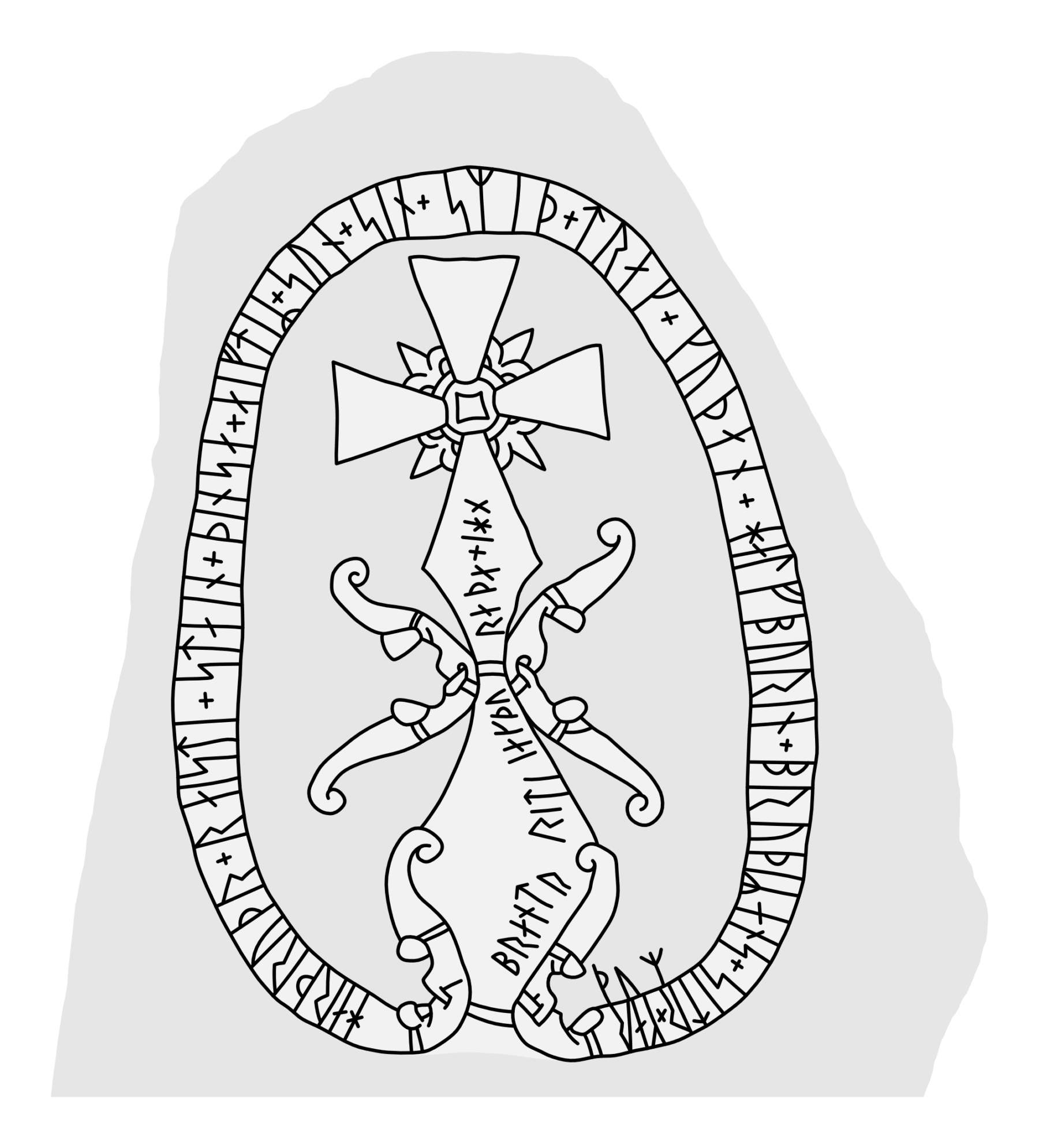
First half of the 1000s · Gårdby, Öland, Sweden
The Gårdby stone
Hertrud raised the stone in memory of her son Smid, a good young man. His brother “sits in Gardariki”, that is, in Russia. Finally the carver Brand writes that he has carved the runes correctly, so that they can be read.
The large cross in the middle shows that the family was Christian.
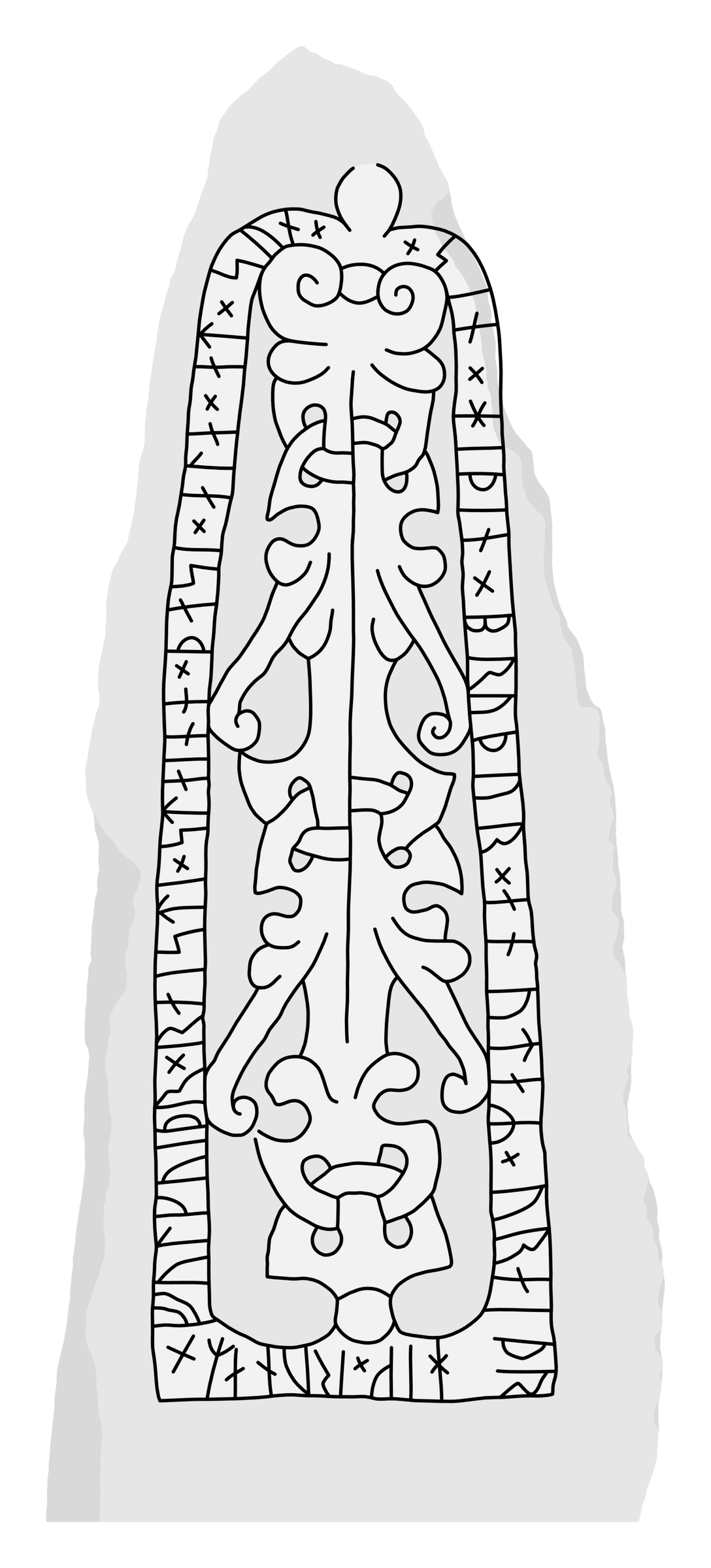
c. 1000–1050 · Anundshög, Västerås, Västmanland, Sweden
The runestone at Anundshög
Folkvid raised “all these stones” in memory of his son Heden, brother of Anund. The runes were carved by Vred, and the stone still stands in its original place.
It stands by the great burial mound of Anundshög, together with a row of standing stones and several stone settings shaped like ships.
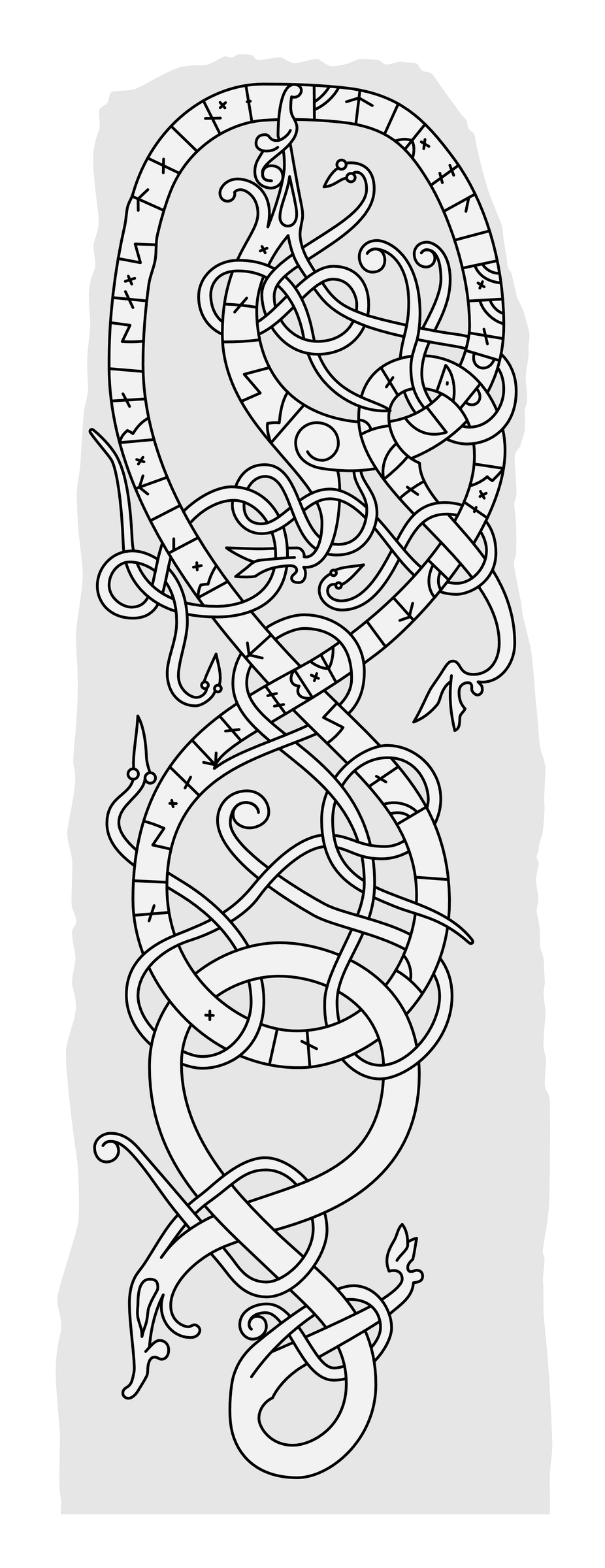
Second half of the 1000s · Skråmsta, Haga, Uppland, Sweden
The Skråmsta stone
Ingefast had the stone raised in memory of his father Olev, and Eyd in memory of her husband.
The long, slender animal that weaves in loops across the whole stone is typical of the Urnes style, the last art style of the Viking Age.
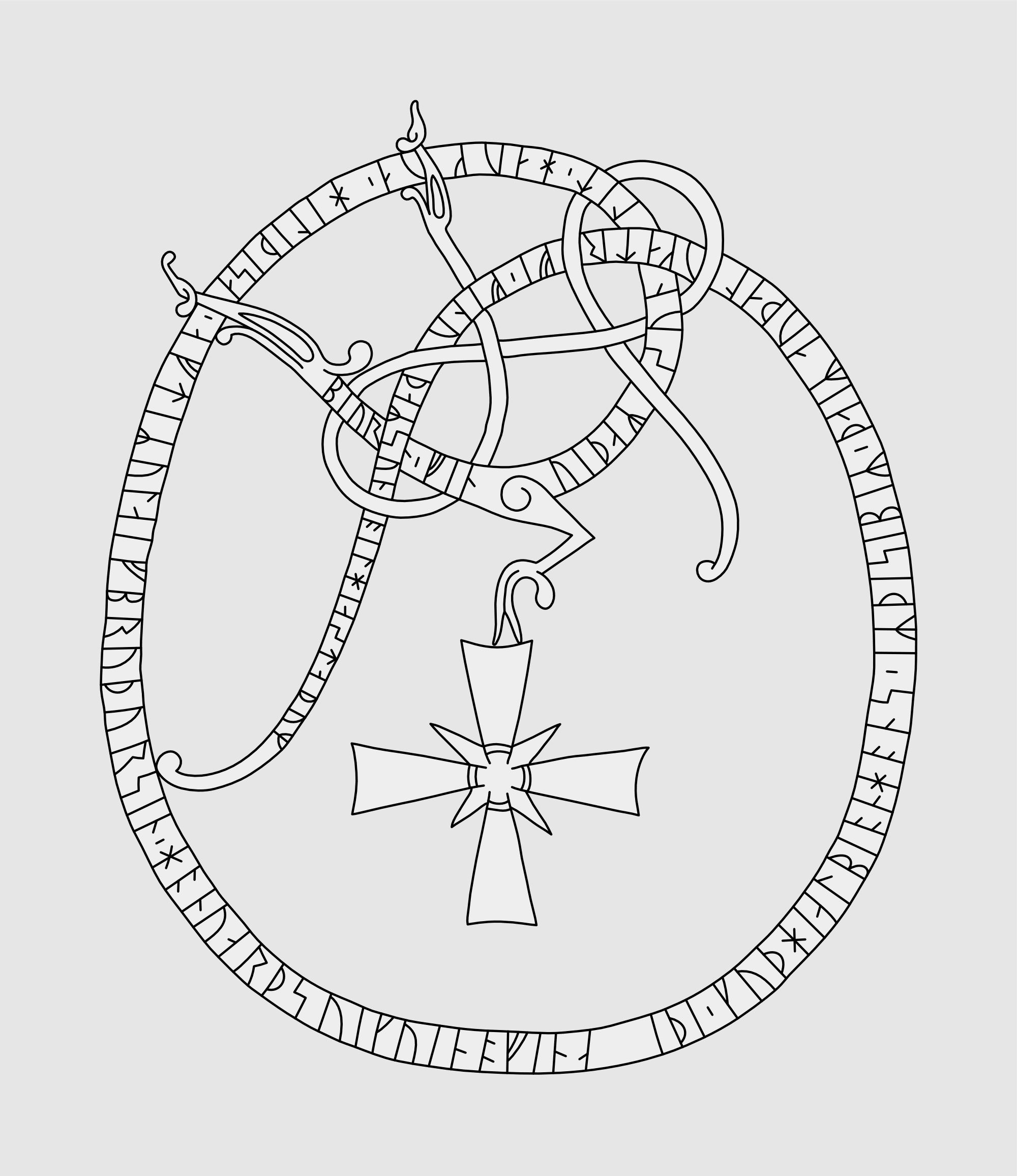
Second half of the 1000s · Nora, Danderyd, Uppland, Sweden
The Nora rock slab
Here the runes are carved straight into the bedrock. Bjorn, Finnvid’s son, had the slab carved in memory of his brother Olaf, who was treacherously killed at Finnheid. The inscription ends with a prayer for his soul.
Then comes what makes the slab special: it states that the farm is odal (family land) and the inheritance of Finnvid’s sons. So the slab is also a title deed.
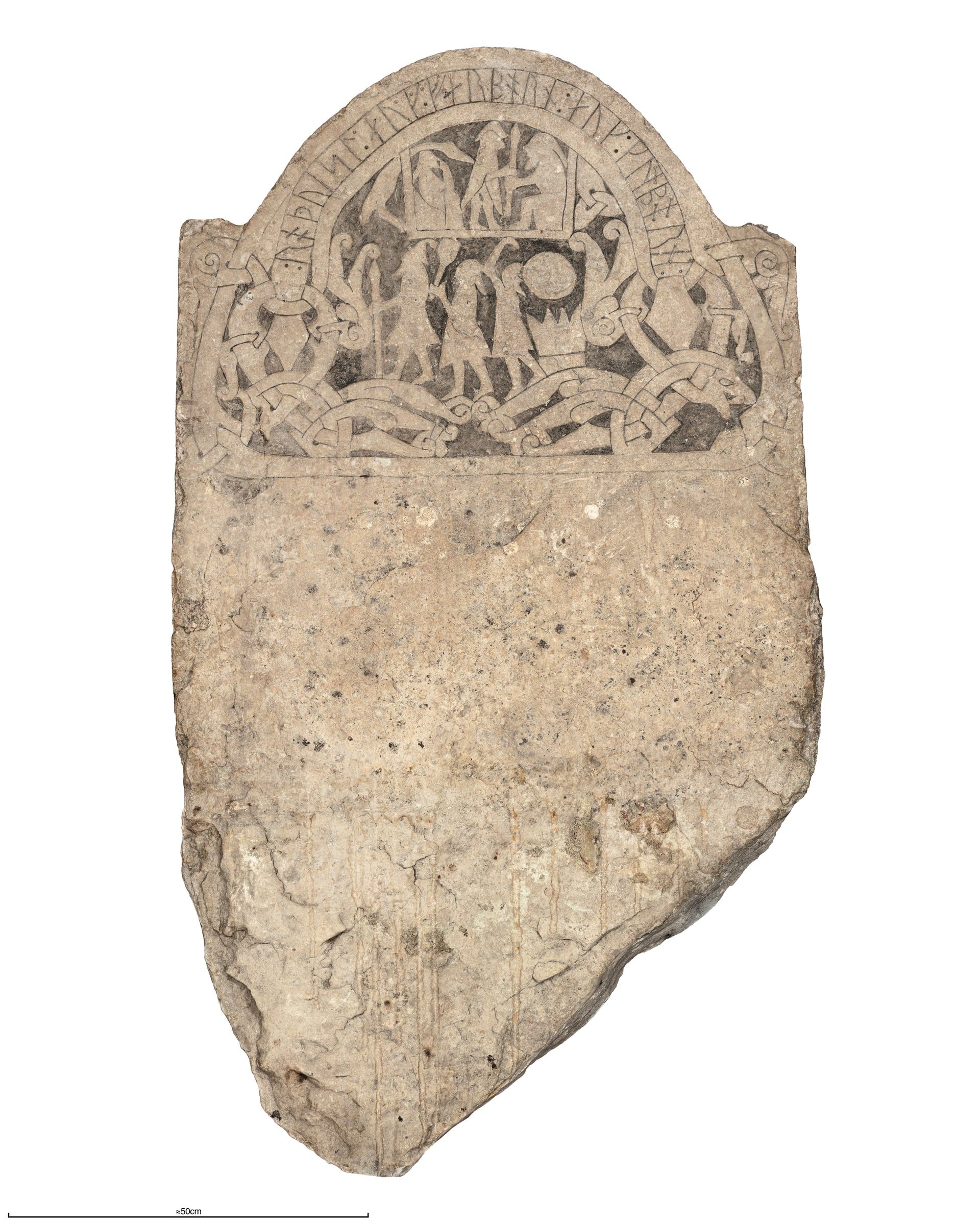
1000s · Sanda, Gotland, Sweden
The Sanda stone
A picture stone with runes, typical of Gotland. The inscription is just three names: Rodvisl, Farbjorn and Gunnbjorn.
The pictures at the top show a couple on a high seat, a spear changing hands and three men walking with a spear, a sickle and a club. Some interpret the three as Odin, Thor and Frey, but that is uncertain.
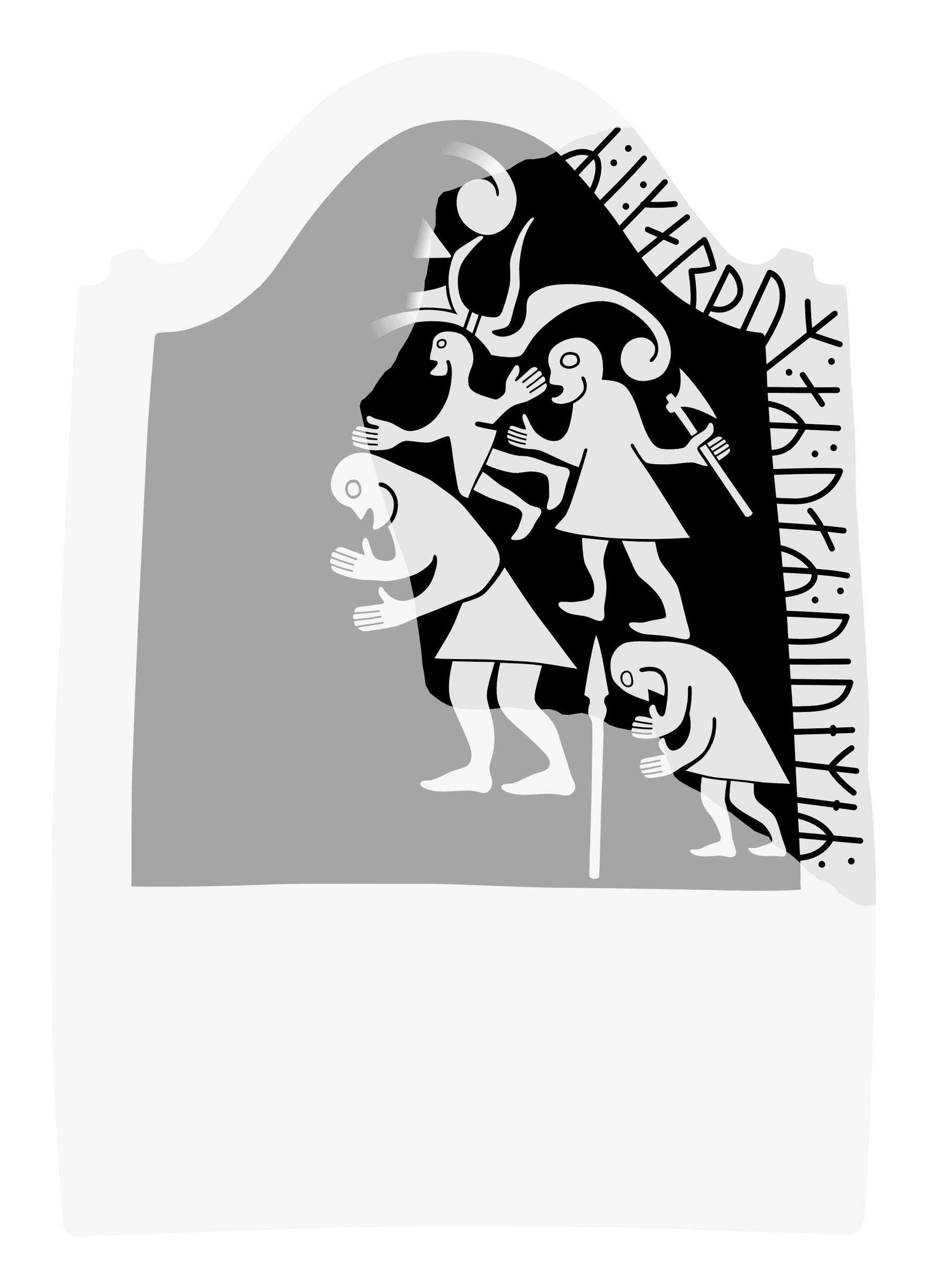
c. 1100–1130 · Ardre church, Gotland, Sweden
The Ardre coffin
Not a standing stone, but the slabs of a sandstone coffin from Ardre church. It was painted in colours. The sons of Likvatr made it for their mother Ailikn, and the inscription asks God to have mercy on her.
Although the inscription is Christian, the pictures show scenes from the old stories.
Beyond Scandinavia
The Vikings took their runes with them wherever they travelled. Runic inscriptions have been found in England, Ireland, on the Isle of Man, in Russia and as far away as Istanbul.
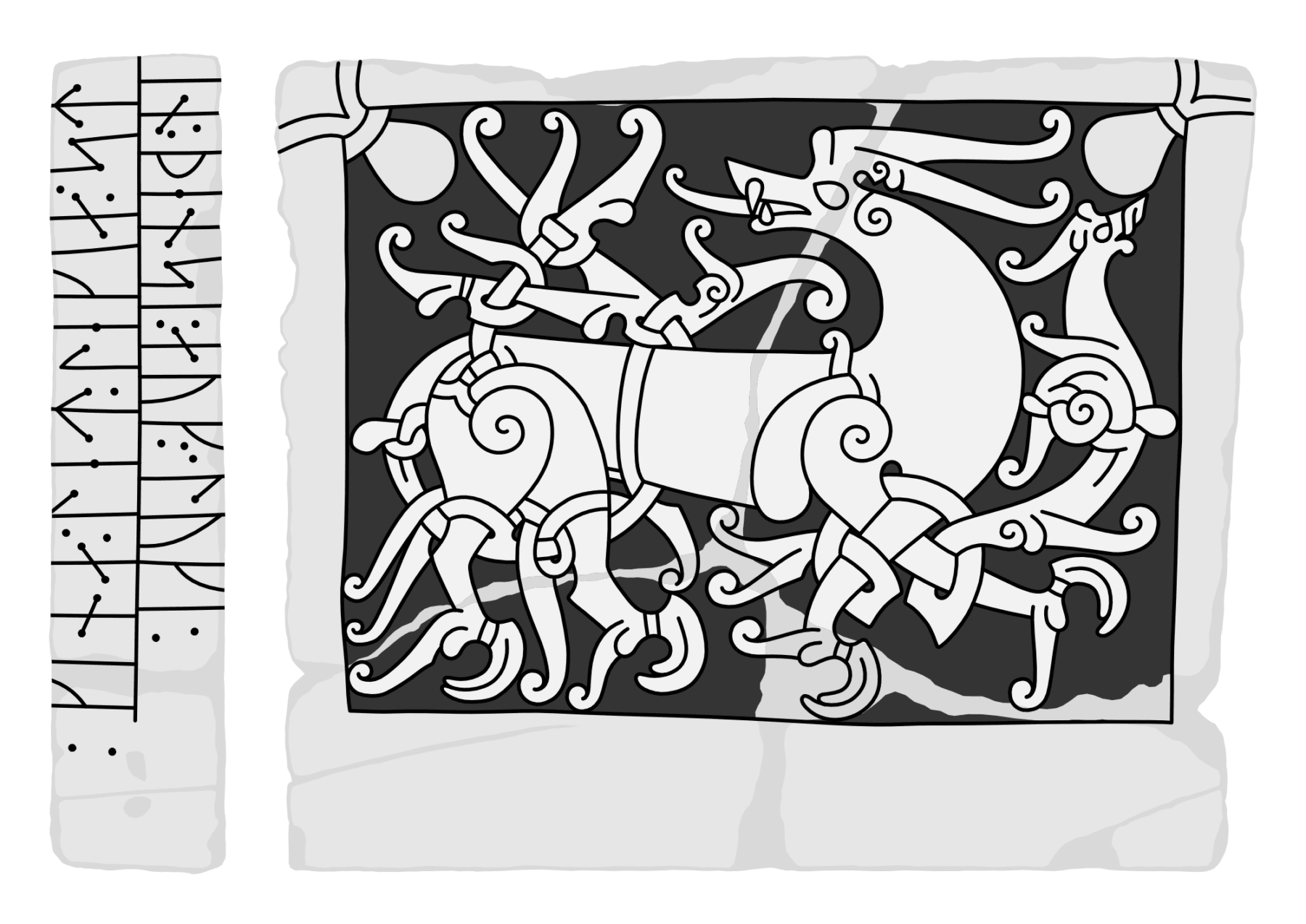
Early 1000s · St Paul’s Churchyard, London
The St Paul’s stone in London
Gina and Toki had this stone laid. It was the end slab of a coffin at St Paul’s Cathedral, and the animal is carved in the Ringerike style. There are traces of blue and red paint on it.
The stone probably dates from the time when Cnut the Great was king of both England and Denmark, and there were many Scandinavians in London.
The inscriptions are retold in our own words, not word for word. The photos are the museums’ own, and the drawings are by Jonas Lau Markussen, shared under a CC BY licence. The licence is shown under each image. See also Viking weaponsand the rune rows.
Interested in runes and Norse mythology?
Get the rune of the day, new articles and news from Norse mythology straight to your inbox. Free, and you can unsubscribe at any time.